
Class Aves
Order Suliformes
Family Phalacrocoracidae
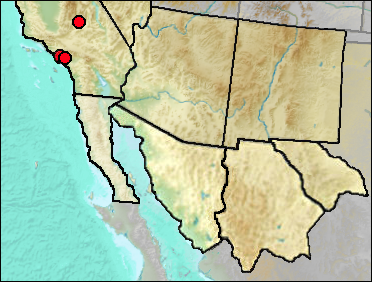
Sites.
?Late Irvingtonian/Rancholabrean: Emery Borrow Pit (Jefferson 1991a).
Sangamon: Naval Fuel Reserve Quarry (Jefferson 1991a).
Mid/Late Wisconsin: Rancho La Brea (Stock and Harris 1992).
Late Wisconsin: China Lake (Jefferson 1991a).
Literature. Jefferson 1991a; Stock and Harris 1992.
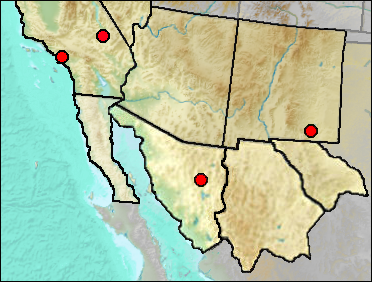
 Fig.
1.Phalacrocorax auritus. Photograph by Lee Karney, US Fish & Wildlife Service.
Fig.
1.Phalacrocorax auritus. Photograph by Lee Karney, US Fish & Wildlife Service.
Cormorants are large fish-eaters that are reliant on extensive areas of water to support their prey. Dark Canyon Cave is close to the Pecos Valley, where aquatic habitats should have been plentiful. Howard (1971) indicated that the single cormorant bone, an ulna, was larger than that of local cormorants, being nearer in size to that of the Alaskan subspecies.
A Pleistocene cormorant from Crypt Cave, in Nevada, also appeared similar in size and proportions to the Alaskan subspecies (Howard 1958). Situations where Pleistocene taxa are more similar in size to more northern populations are not uncommon. The Big Brown Bat (Eptesicus fuscus) is a good example (Guilday 1967).
Sites.
Irvingtonian/Rancholabrean: Manix Lake (Jefferson 1991a).
Rancholabrean: Salt Springs (Jefferson 1991a).
Sangamon: Long Wharf Canyon (Jefferson 1991b); San Pedro Lumber Co. (Jefferson 1991a)
Mid Wisconsin: Térapa (Steadman and Mead 2010).
Mid/Late Wisconsin: Dark Canyon Cave (Howard 1971).
Literature. Guilday 1967; Howard 1958, 1971; Jefferson 1991a; Steadman and Mead 2010.
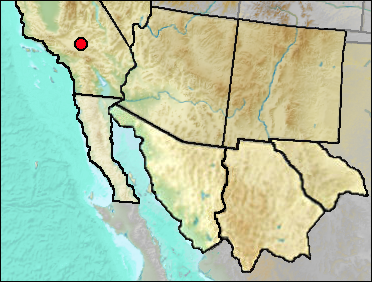
Sites.
Irvingtonian/Rancholabrean: Manix Lake (Jefferson 1991a).
Literature. Jefferson 1991a.
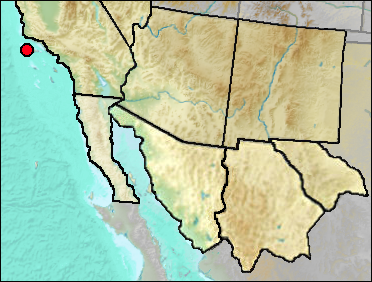
Sites.
Mid/Late Wisconsin: San Miguel Island (Guthrie 1998).
Literature. Guthrie 1998.
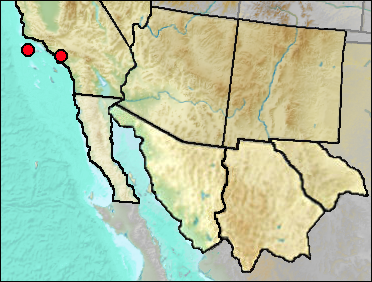
Sites.
Rancholabrean: San Pedro Lumber Yard (Jefferson 1991a: ?).
Sangamon: San Pedro Lumber Co. (Jefferson 1991a).
Wisconsin: Zuma Creek (Jefferson 1991a).
Mid/Late Wisconsin: San Miguel Island (Guthrie 1998).
Literature. Guthrie 1998; Jefferson 1991a.
Last Update: 11 Mar 2014