
Class Aves
Order Gruiformes
Family Rallidae
Fulica—Coots // Gallinula sp.—Moorhens // Gallinula chloropus—Common Moorhen // Porzana carolina—Sora // Porphyrio martinicus—Purple Gallinule // Rallus sp.—Rails // Rallus limicola—Virginia Rail
The general requirement of emergent aquatic vegetation for cover limits the areas suitable for these birds to river valleys, ponds, lakes, and any other area of permanent water with suitable plants. Regional forms migrate, which may increase the places where they may be found.
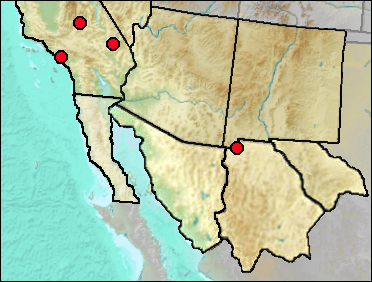
Sites.
Rancholabrean: Wilmington Blvd. and San Pedro Road (Jefferson 1991a).
Rancholabrean/?Early Holocene: Mitchell Caverns (Jefferson 1991a).
Late Wisconsin: China Lake (Jefferson 1991a); U-Bar Cave 18-20 ka (Harris 1989: ?).
Literature. Jefferson 1991a.
Synonyms. Fulica hesterna.
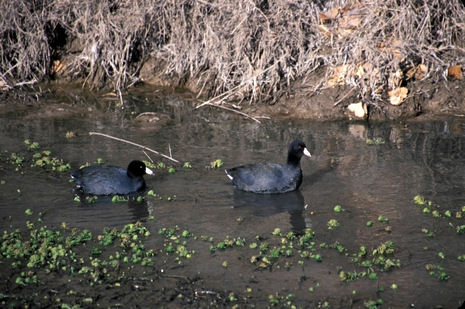 Coots are virtually ubiquitous in
our area where proper aquatic conditions are found.
Coots are virtually ubiquitous in
our area where proper aquatic conditions are found.
Fig. 1. American Coots, Bosque del Apache National Wildlife Refuge, New Mexico. Photograph by John J. Mosesso, courtesy of the National Biological Information Infrastructure.
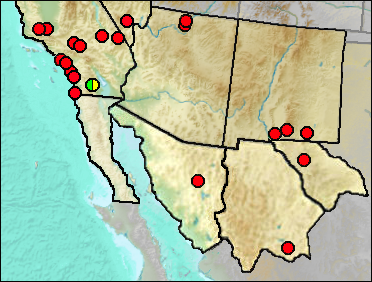
Sites.
Late Blancan/Irvingtonian: Vallecito Creek, Anza-Borrego Desert (Howard 1963).
?Late Irvingtonian/Rancholabrean: Emery Borrow Pit (Jefferson 1991a).
Irvingtonian/Rancholabrean: Manix Lake (Jefferson 1991a).
Rancholabrean: National City West (Jefferson 2014); Salt Springs (Jefferson 1991a: cf.); Tule Springs 4 (Jefferson et al. 2015); Tule Springs Scraper (Jefferson et al. 2015).
Late Pleistocene: Rancho del Oro (Jefferson 2014).
Sangamon: San Pedro Lumber Co. (Jefferson 1991a).
Wisconsin: Costeau Pit (Jefferson 1991a); Zuma Creek (Jefferson 1991a).
Early/Early-Mid Wisconsin: Rm Vanishing Floor (Harris 1993c).
Mid Wisconsin: McKittrick (Jefferson 1991a); Térapa (Steadman and Mead 2010: cf.).
Mid/Late Wisconsin: Rancho La Brea (Stock and Harris 1992); Sandblast Cave (Emslie 1988).
Mid/Late Wisconsin/Holocene: Jimenez Cave (Messing 1986); Sierra Diablo Cave (UTEP).
Mid Wisconsin-Holocene: Shelter Cave (Howard and Miller 1933).
Late Wisconsin: Charlies Parlor (Harris 1989); Maricopa (Jefferson 1991a);.
Late Wisconsin/Holocene: Kokoweef Cave (Reynolds, Reynolds, et al. 1991); Newberry Cave (Jefferson 1991a); Pendejo Cave (Harris 2003); Schuiling Cave (Jefferson 1991a); Tule Springs (Mawby 1967); Stanton's Cave (Rea and Hargrave 1984).
Literature. Emslie 1988; Harris 1989, 1993c, 2003; Howard 1963; Howard and Miller 1933; Jefferson 1991a,2014; Jefferson et al. 2015; Messing 1986; Rea and Hargrave 1984; Reynolds, Reynolds, et al. 1991; Steadman and Mead 2010; Stock and Harris 1992; Mawby 1967.
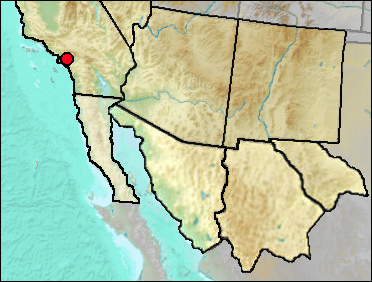
Sites.
?Late Irvingtonian/Rancholabrean: Emery Borrow Pit (Jefferson 1991a).
Literature. Jefferson 1991a.
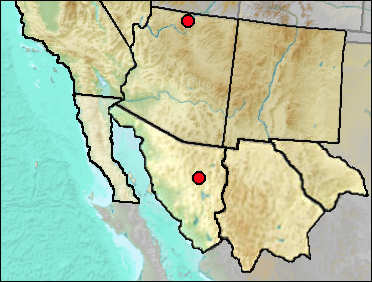
Sites.
Mid Wisconsin: Térapa (Steadman and Mead 2010).
Late Wisconsin/Holocene: Stanton's Cave (Rea and Hargrave 1984).
Literature. Rea and Hargrave 1984; Steadman and Mead 2010.
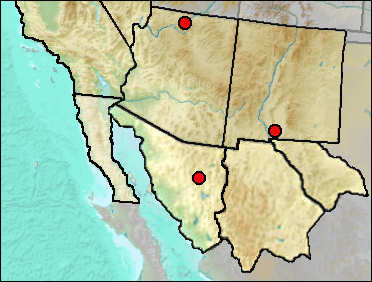
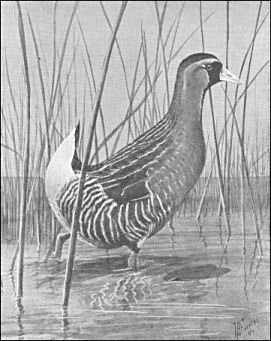 The
Sora is associated with marsh habitats at all elevations in the region, though most
common historically in the major river valleys (Ligon 1961)
The
Sora is associated with marsh habitats at all elevations in the region, though most
common historically in the major river valleys (Ligon 1961)
Fig. 1. Sora. Illustration after Coues (1903).
Sites.
Mid Wisconsin: Térapa (Steadman and Mead 2010).
Mid/Late Wisconsin: Sandblast Cave (Emslie 1988: cf. gen. et sp.).
Mid Wisconsin-Holocene: Shelter Cave (Howard and Miller 1933).
Literature. Emslie 1988; Howard and Miller 1933; Ligon 1961; Steadman and Mead 2010.
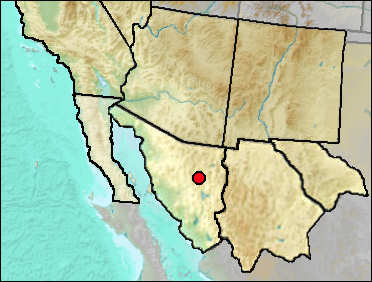
Sites.
Mid Wisconsin: Térapa (Steadman and Mead 2010).
Literature. Steadman and Mead 2010.
Sites.
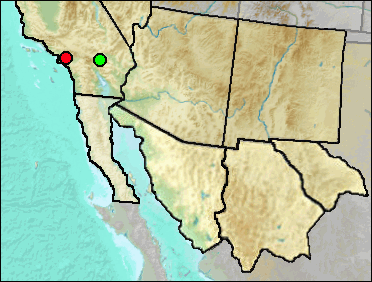
Early Irvingtonian: Gypsum Ridge (Wagner and Prothero 2001).
?Late Irvingtonian/Rancholabrean: Emery Borrow Pit (Jefferson 1991a).
Literature. Wagner and Prothero 2001; Jefferson 1991a.
Sites.
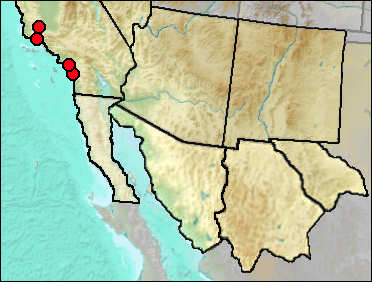
Late Pleistocene: Rancho del Oro (Jefferson 2014).
Wisconsin: Carpinteria (Guthrie 2009).
Mid Wisconsin: McKittrick (Jefferson 1991a); Pacific City (Wake and Roeder 2009).
Sites.
Guthrie 2009; Jefferson 1991a; Wake and Roeder 2009.
Last Update: 6 Jan 2016