
Class Mammalia
Order Artiodactyla
Suborder Ruminantia
Family Bovidae
Bison/Bos—Bison or Cattle // Bison sp.—Bison // Bison antiquus—Ancient Bison // Bison bison—American Bison // Bison latifrons—Giant Bison // Bison priscus—Steppe Bison
In common with the taxonomy of many of the large herbivores of North America, Bison taxonomy supports many disagreements among systematists and a plethora of synonyms. The genus originated in Eurasia and entered North America through one or more invasions through Beringia. The classification scheme followed here departs from that of Kurtén and Anderson (1980) and that of most earlier synthesizers, following the taxonomy of McDonald (1981). Under his classification, five species of North American Bison are recognized (B. alaskensis, B. priscus, B. latifrons, B. antiquus, and B. bison); the last four have been reported from our region.
Part of the confusion over Bison taxonomy involves the relationships of late Wisconsin Bison. Kurtén and Anderson (1980) recognized B. bison antiquus and B. bison occidentalis as subspecies of B. bison; B. taylori, among others, were listed as synonyms of B. bison. McDonald (1981) considered B. antiquus to be a separate species ancestral to B. bison and to include B. occidentalis as a subspecies (B. antiquus occidentalis); the earlier form of B. antiquus thus was B. antiquus antiquus. He considered B. taylori as a synonym of B. antiquus occidentalis.
Literature.
Kurtén and Anderson 1980; McDonald 1981.
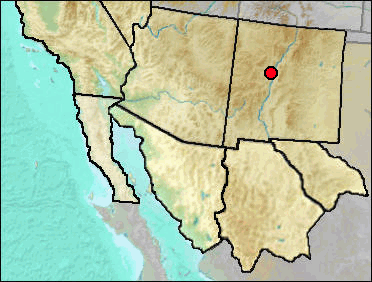
Material insufficient to separate Bison from Bos is available from the Isleta Cave No. 1, but most likely pertains to modern Bos.
Sites.
Late Wisconsin/Holocene: Isleta Cave No. 1 (Harris 1993c).
Literature.
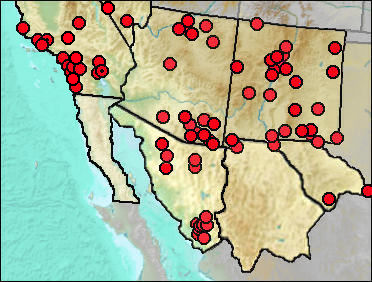
As with many bovids, horn cores are vital for identification to species. As a result, there are a number of records of fossils that can be identified as Bison, but not to a specific level. Many of these likely are B. antiquus.
A mandibular fragment from Dark Canyon Cave was indicated Tebedge (1988) to compare well with Bison bison.
Sites.
Late Irvingtonian/Early Rancholabrean: Rancho California (Jefferson 1991b).
Rancholabrean: 17th Street between Broadway and C Streets, San Diego (Jefferson 1991b); Agua Fria (Morgan and Lucas 2005); Alameda St. and Sepulveda Blvd., Carson (Jefferson 1991b); Amargosa Desert (Jefferson et al. 2015); Anaheim Blvd. and Henry Ford Blvd. (Jefferson 1991b); Arizpe (White et al. 2010); Arroyo de Humo (White et al. 2010); Bachoco (White et al. 2010); Badger Springs (McDonald 1981); Badlands Ranch (Morgan and Lucas 2003); Bajimari (White et al. 2010); Black Rock (Morgan and Lucas 2005); Bolsa Chica State Park (Jefferson 1991b); Boquillas Station (Mead et al. 2005); Brophy Cienega (Mead et al. 2005); CC:5:6 (Mead et al. 2003); Charley Day Spring (Lindsay and Tessman 1974); Chinobampo (White et al. 2010); Cochiti Dam (Morgan and Lucas 2005); Coachella Canal 1 (Jefferson 1991b); Corona, California (Jefferson 1991b); Corralitos Canyon (Jefferson 1991b); Dana Point (Jefferson 1991b); Decker Road, Malibu (Jefferson 1991b); Detention Basin, Upper Las Vegas Wash (Jefferson et al. 2015); El Carrizal (White et al. 2010); El Fin del Mundo (Sanchez et al. 2009); Encino Blowouts ((Morgan and Lucas 2005); Fenn Site (Mead et al. 2005); Galivan (Jefferson 1991b); Gallina Arroyo (Morgan and Lucas 2005); Hicks Canyon (Jefferson 2014); Hilltop Quarry, Cabrillo and Gatun streets, San Pedro (Jefferson 1991b); Huntington Beach (Jefferson 1991b); Hyde Park, School House (Jefferson 1991b); Jal (Morgan and Lucas 2005); Keams Canyon (Lindsay and Tessman 1974); La Angostura (White et al. 2010); La Botana (White et al. 2010); La Brea Blvd. and 13-14th streets (Jefferson 1991b); La Brisca (White et al. 2010); Laguna Hills (Jefferson 1991b); Laguna Niguel (Jefferson 1991b); La Jolla Shores (Jefferson 1991b); Lake San Agustín (Morgan and Lucas 2005); Las Areniscus (White et al. 2010); Lindsay Ranch (Mead et al. 2005); La Playa (White et al. 2010); Las Vegas Wash, Big Wash (Jefferson et al. 2015: aff. occidentalis); Llano Prieto (White et al. 2010); Long Beach (Jefferson 1991b: cf. gen.); Los Angeles Brick Yard No. 3 (Jefferson 1991b); Magnolia Ave. and 11th St., Long Beach (Jefferson 1991b); Manchester and Airport boulevards (Jefferson 1991b); Melrose Ave. and La Cienega Blvd. (Jefferson 1991a); Moreno Valley (Jefferson 2014); Mutica (White et al. 2010); Oceanside (Jefferson 1991b); Opposite Ysleta (UTEP); Palos Verdes Hills, Green Hills Memorial Park (Jefferson 1991b); Pierpoint Bay (Jefferson 1991b: cf. gen.); Puercera (White et al. 2010); Quiriego (White et al. 2010); Rosamond Boulevard (Jefferson 2014); Roswell (Morgan and Lucas 2005); Ruidoso (Morgan and Lucas 2005); Sahuaro (White et al. 2010); San Pedro Lumber Yard (Jefferson 1991b); San Rafael Aqueduct (Mead et al. 2005); Santa Cruz (Morgan and Lucas 2005); Snow Ranch (Morgan and Lucas 2005); Socorro (Morgan and Lucas 2005); Sparklets Mammoth, Lincoln Blvd. and 45th St., Pasadena (Jefferson 1991b); Sulphur Creek Reservoir (Jefferson 1991b); Surprise Springs (Jefferson 1991b); Terlingua (Cockerell 1930); Tramperos Creek (Morgan and Lucas 2005); Tucson Brickyard (Mead et al. 2005); Tule Springs General (Jefferson et al. 2015); Twenty Five Mile Stream (Morgan and Lucas 2005); Van Norman Reservoir, Upper (Jefferson 1991b); Van Nuys Clay Pit (Jefferson 1991b); Venice Blvd. and Vineyard Ave., Los Angeles (Jefferson 1991b); White Rock (Morgan and Lucas 2005); Whitewater Draw (Mead et al. 2005); Willcox (Mead et al. 2005); Wilshire Blvd. and La Cienega (Jefferson 1991b).
Early Rancholabrean: Albuquerque Gravel Pits (Morgan and Lucas 2005).
Late Pleistocene: Wanis View (Jefferson 2014).
Sangamon: Anaheim Blvd. and Normandy Ave., Harbor City (Jefferson 1991b); Bonito Creek (Jefferson 1991b); Chandler Sand Pit, Rolling Hills Estates (Jefferson 1991b); Costa Mesa Santa Isabel (Jefferson 2014); Long Beach (Jefferson 1991b: cf. gen.); La Brisca (Van Devender et al. 1985); Naval Fuel Reserve Quarry (Jefferson 1991b); Naval Housing Unit (Jefferson 1991b); San Pedro Lumber Co. (Jefferson 1991b).
Wisconsin: Carpinteria (Wilson 1933: ?); La Brea Blvd. near Pico Blvd. (Jefferson 1991b: ? Wisconsin); La Brea Blvd. and San Vicente St. (Jefferson 1991b); Malaga Cove School, Palos Verdes Estates (Jefferson 1991b: ? Wisconsin); Palos Verdes Hills (Jefferson 1991b: ? Wisconsin); Mesa Vibora (Morgan and Lucas 2005).
Mid Wisconsin: Central Park West, Irvine (Smith 2006); Shonto (Agenbroad and Downs 1984).
Mid/Late Wisconsin: Dark Canyon Cave (Tebedge 1988); Sandblast Cave (Emslie 1988); U-Bar Cave (Harris 1993c).
Late Wisconsin: Balcony Room (UTEP); Big Manhole Cave (Harris 1993c); Bison Chamber (Harris 1970a); Camel Room (Harris 1993c); China Lake (Jefferson 1991b [large]); Cueva Quebrada (Lundelius 1984); Double Adobe (Mead et al. 2005); Fain Ranch (Pasenko and Agenbroad 2012); Harris' Pocket (Harris 1989); La Mirada (Jefferson 1991b>; Lehner Site (Mead et al. 1979); Naco (Mead et al. 2005); Navajo Lake (Morgan and Lucas 2005); Pendejo Cave (Harris 2003); Pacific City, Huntington Beach (Jefferson 2014); Placitas (Morgan and Lucas 2005); Salt Creek (UTEP: cf.); U-Bar Cave 18-20 ka (Harris 1989: cf.); Ventana Cave (Colbert 1950).
Late Wisconsin/Holocene: Black River (Harris 1993c); Conkling Cavern (Conkling 1932); Howell's Ridge Cave (Harris 1993c): cf.); Sandia Cave, Folsom Level (Hibben 1941); Stanton's Cave (Harington 1984); Tule Springs (Springer et al. 2008); Werner Ranch (Mead et al. 2005).
Literature.
Agenbroad and Downs 1984; Agogino and Stevens 1972; Cockerell 1930; Colbert 1950; Conkling 1932; Emslie 1988; Harington 1984; Harris 1970a, 1989, 1993c, 2003; Hibben 1941; Jefferson 1991b, 2014; Lindsay and Tessman 1974; Lundelius 1984; McDonald 1981; Mead et al. 1979; Mead et al. 2003; Mead et al. 2005; Morgan and Lucas 2003, 2005; Pasenko and Agenbroad 2012; Sanchez et al. 2009; Smith 2006; Springer et al. 2008; Tebedge 1988; Van Devender et al. 1985; White et al. 2010; Wilson 1933).
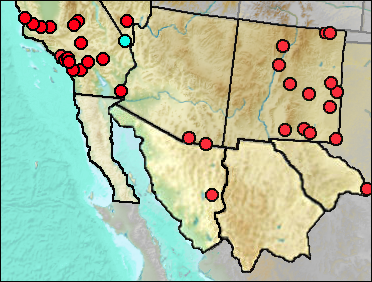
Synonyms: Bison occidentalis, Bison taylori.
This is the common late Pleistocene species in our region and extends into the Holocene, transitioning into Bison bison in the Middle Holocene (McDonald 1981). Changes in morphology, however, became apparent in very late Wisconsin and early Holocene times, producing what is recognized in much of the earlier literature as B. occidentalis or B. taylori (the B. antiquus occidentalis of McDonald 1981). The primary range was south of a line from about northern California to northern Florida, with records as far south as Nicaragua; scattered records to the north into Canada probably are late Wisconsin to middle Holocene (McDonald 1981).
Where horn cores are lacking, identification generally has been made on chronological grounds.
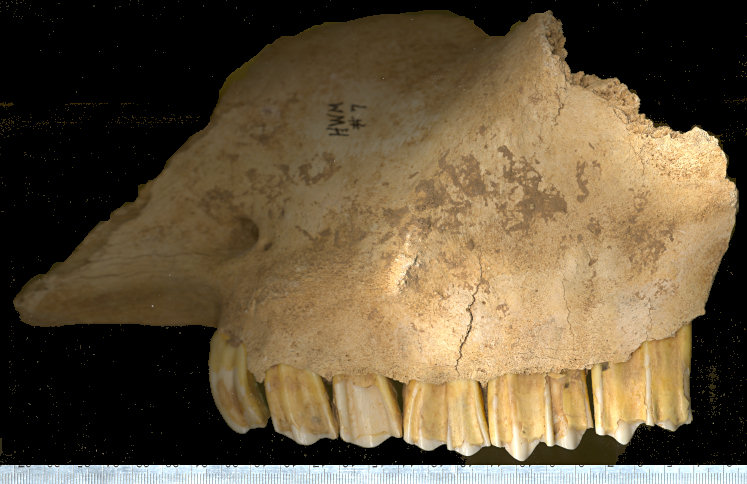
Fig. 1. Left maxilla with dentition, Bison antiquus. UTEP 54-1252, TT II, Dry Cave. Metric scale.
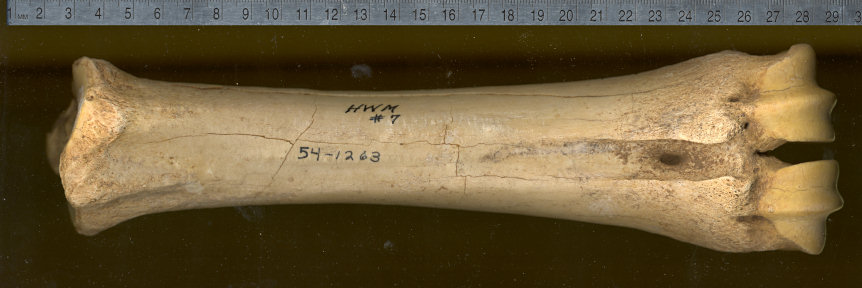
Fig. 2. Right posterior cannonbone, Bison antiquus. UTEP 54-1253, TT II, Dry Cave. Metric scale.
Sites.
Rancholabrean: Arbogast Ranch (Jefferson 1991b: cf.); Arivechi (White et al. 2010: cf.); Beaumont (Jefferson 1991b); Blue Diamond Company, Alameda and 16th streets (Jefferson 1991b: cf.); Campbell Hill (Jefferson 1991b: cf.); Chino (Jefferson 1991b: cf.); Coachella Canal 2 (Jefferson 1991b); Harbor Freeway and 112-113th streets (Jefferson 1991b: cf.); Irish Canyon (Jefferson 1991b); Lea County (McDonald 1981); Long Beach near Belmont Pier (Jefferson 1991b; cf.); Metro Rail Hollywood Tunnel (Jefferson 2014); Metro Rail U.C. Station (Jefferson 2014); Model T (Morgan and Lucas 2005); Outfall Sewer, Culver City (Jefferson 1991b); Outfall Sewer North, Trench 19, Culver City (Jefferson 1991b); Piute Valley (removed Jefferson 2014); Santa Monica Freeway near Gramercy St. (Jefferson 1991b); Tonner Canyon (Jefferson 1991b: cf.); Tule Springs 2 (Jefferson et al. 2015); White Mesa (Morgan and Rinehart 2007); Wilshire Blvd. and Orange Grove Dr., Los Angeles (Jefferson 1991b: cf.); Yeso Arroyo (Agogino and Stevens 1972).
Late Rancholabrean: Abiquiu (Morgan and Lucas 2005).
Sangamon: Newport Bay Mesa (Jefferson 1991b: cf.); Paseo Del Mar St., Palos Verdes Estates (Jefferson 1991b).
Wisconsin: Costeau Pit (Jefferson 1991b).
Mid Wisconsin: McKittrick (Schultz 1937); Papago Springs Cave (Czaplewski and Mead et al. 1999: as Bison sp.; Skinner 1942); Pendejo Cave (Harris 2003).
Mid/Late Wisconsin: Diamond Valley (Springer et al. 2009); Lake Manix (Jefferson 1991b: cf.; Scott and Cox 2008: limited to younger deposits); Rancho La Brea (Stock and Harris 1992).
Late Wisconsin: Anderson Basin et al. (Morgan and Lucas 2005); Archuleta Creek (Meltzer et al. 2004); Big Bear (Morgan and Lucas 2005); Blackwater Draw Fauna (Lundelius 1972); Bonfire Shelter (Frank 1968); China Lake (Jefferson 1991b); Dove Springs Megafaunal Loc. (Jefferson 2014); Folsom (Morgan and Lucas 2005); Jal Horse Quarry (Schultz 1943); Lucy (Morgan and Lucas 2005); Maricopa (Jefferson 1991b); McCullum Ranch (Morgan and Lucas 2005); Milnesand (Morgan and Lucas 2005); Murray Springs (Hemmings 2007a); Park Place, Irvine (Jefferson 2014); San Jon (Morgan and Lucas 2005); Sandia Cave, Folsom and Sandia Levels (Hibben 1941); San Jon (Morgan and Lucas 2005); TT II (Harris 1993c).
Late Wisconsin/Holocene: Burnet Cave (Schultz and Howard 1935).
Withdrawn. Piute Valley (Jefferson 1991b): misidentification according to Scott and Cox (2008).
Literature.
Agogino and Stevens 1972; Czaplewski and Mead et al. 1999; Frank 1968; Harris 1993c, 2003; Hemmings 2007a; Hibben 1941; Jefferson 1991b, 2014; Jefferson et al. 2015; Lundelius 1972; McDonald 1981; Meltzer et al. 2004; Morgan and Lucas 2005; Morgan and Rinehart 2007Schultz 1937, 1943; Schultz and Howard 1935; Scott and Cox 2008; Skinner 1942; Springer et al. 2005, 2009); Stock and Harris 1992); White et al. 2010.
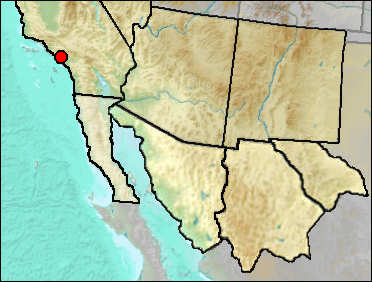
Sites.
Rancholabrean: Chandler Oil Field, Puente Hills, Whittier (Jefferson 1991b).
Literature. Jefferson 1991b.
Bison latifrons was the largest of all bison, with dramatically large horns. McDonald (1981) recorded the spread of the horn cores (from tip to tip) as ranging from 1.445 to 2.235 m (4.7 to 7.3 ft); horns normally extend for some distance beyond the horn cores in bovids.
Giant Bison are known from New Mexico by two specimens: Near Raton and north of Bernalillo. The latter is from gravels of the Los Durantes Formation, which is bracketed by ages of 156 ka and 98 ka (Morgan and Lucas 2005).
Sites.
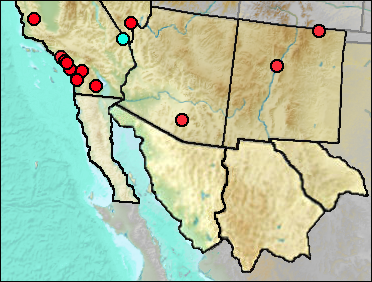
Rancholabrean: Bow Willow (Jefferson 2014); Carizzo Plains (Jefferson 1991b); Campbell Hill (Jefferson 1991b); Century Blvd. and Van Ness Ave. (Jefferson 1991b); Greaterville (Mead et al. 2005); Hollywood (Jefferson 1991b); La Cienega Blvd. near Colgate Ave. (Jefferson 1991b); Las Vegas Basin, Las Vegas NW (Jefferson et al. 2015); Martinez Gravel Pit (Smartt et al. 1991); Metro Rail U.C. Station (Jefferson 2014); Pala Mesa (Jefferson 2014); Piute Valley (removed Jefferson 2014); Raton (Morgan and Lucas 2005); Seal Beach (Jefferson 1991b).
Sangamon: Newport Bay Mesa (Jefferson 1991b: cf.); San Pedro Lumber Co. (Jefferson 1991b: cf.).
Wisconsin: Agua Amarga Canyon, Palos Verdes Hills (Jefferson 1991b: possibly not Wisconsin); Costeau Pit (Jefferson 1991b).
Mid/Late Wisconsin: Diamond Valley (Springer et al. 2009); Rancho La Brea (Stock and Harris 1992).
Withdrawn. Piute Valley (Jefferson 1991b): misidentification according to Scott and Cox (2008).
Literature.
Jefferson 1991b, 2014; Mead et al. 2005; McDonald 1981; Morgan and Lucas 2005; Scott and Cox 2008; Smartt et al. 1991; Springer et al. 2009); Stock and Harris 1992).
McDonald (1981) indicated that this is an Old World species that entered North America via Beringia, moving southward when glacial retreat made this possible.
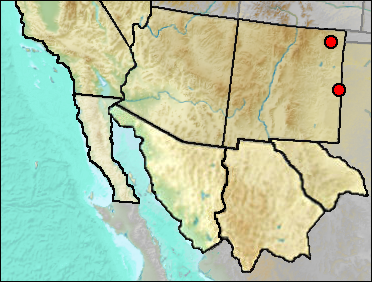
Sites. Rancholabrean: Clovis area (McDonald 1981); Wetherly (Morgan and Lucas 2005: cf.).
Literature.
McDonald 1981; Morgan and Lucas 2005.
Last Update: 29 May 2015