
Class Mammalia
Order Perissodactyla
Family Tapiridae
Tapirus sp.—Tapirs // Tapirus californicus—California Tapir // Tapirus merriami—Merriam's Tapir
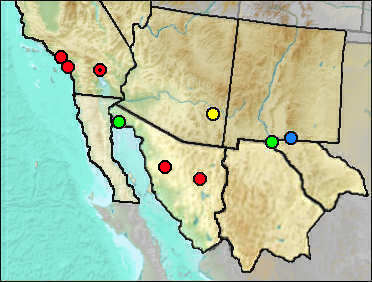
Likely, these records refer to Tapirus merriami and, in the case of one of the El Golfo taxa, T. californicus, but are listed here pending further data.
Sites.
Pleistocene: Cornudas Mountains (Harris 1993c).
Late Blancan: 111 Ranch (Morgan and White 2005); San Simon Fauna (Morgan and White 2005).
Irvingtonian: El Golfo (Croxen et al. 2007: as T. cf. californicus); El Golfo (Croxen et al. 2007: as T. cf. haysii); El Paso (Richardson 1909); Juarez (UTEP).
Irvingtonian/Rancholabrean: Rancho California (Jefferson 1991b).
Rancholabrean: El Fin del Mundo (Sanchez et al. 2009); Long Beach near Belmont Pier (Jefferson 1991b); Salt Creek, California (Jefferson 1991b).
Mid Wisconsin: Térapa (Mead et al. 2006).
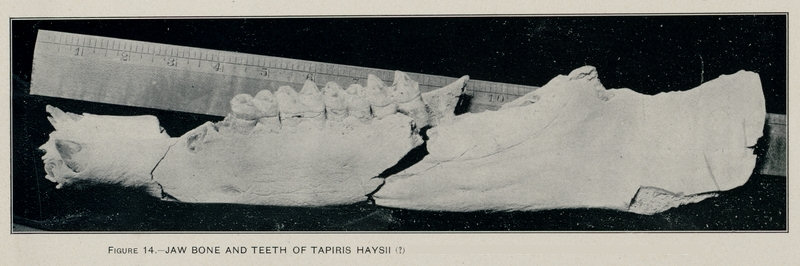
Fig. 1. Lower jaw of Tapirus sp. (probably T. merriami) from El Paso (Richardson 1909).
Literature. Croxen et al. 2007; Harris 1993c; Morgan and White 2005; Richardson 1909; Sanchez et al. 2009.
Sites.
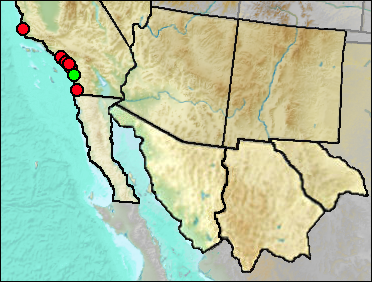
Late Irvingtonian: Elsinore: Pauba Formation (Pajak et al. 1996).
Rancholabrean: Anaheim Blvd. and Vermont Ave., San Pedro (Jefferson 1991b; cf.); Corralitos Canyon (Jefferson 1991b: cf.); Hicks Ranch (Jefferson 2014); Laguna Niguel (Jefferson 1991b: cf.); National City (Jefferson 1991b: cf.); Sun-Cal Olinda Heights (Jefferson 2014).
Late Pleistocene: Wanis View (Jefferson 2014).
Sangamon: Bonito Creek (Jefferson 1991b: cf.); Chandler Sand Pit, Rolling Hills Estates (Jefferson 1991b: cf.); Newport Bay Mesa (Jefferson 1991b: cf.).
Wisconsin: Zuma Creek (Jefferson 1991b).
Mid/Late Wisconsin: Rancho La Brea (Stock and Harris 1992).
Literature.
Jefferson 1991b, 2014; Pajak et al. 1996; Stock and Harris 1992).
The Cornudas Mts. specimen (cited here as Tapirus sp.) is labeled "Cave in Cornudas Mts." The Cornudas are igneous and not known to have caves, so the locality data are suspect. The collector is unknown. The other cave remains consist of an upper second incisor (Dark Canyon Cave) and a third metapodial (Lost Valley). Conkling (1932) mentioned tapir from El Paso, but this likely referred to Richardson's (1909) specimen.
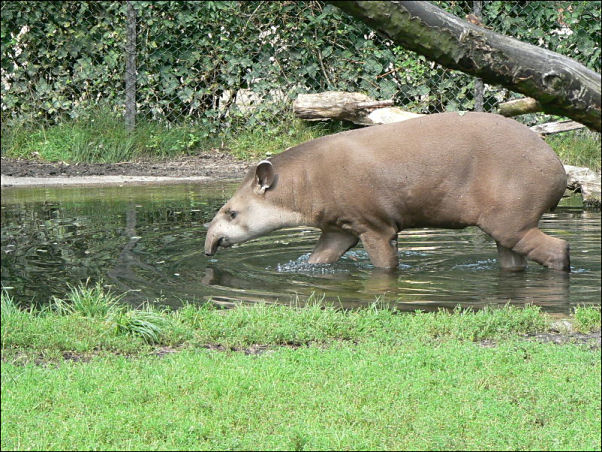
Fig. 1. South American Tapir Tapirus terrestris. Photograph from Wikimedia Commons (by "LadyofHats": released to public domain).
Ray and Sanders (1984) very tentatively recognized two North American Pleistocene tapirs, the larger Tapirus haysii and the smaller T. veroensis. This conclusion was based largely on the recognition that only T. veroensis was reasonably characterized by diagnostic skull material. The larger tapirs are known primarily from early to middle Pleistocene, though possibly to latest Pleistocene, whereas the smaller tapirs are from the late Pleistocene, but probably also occurred earlier.
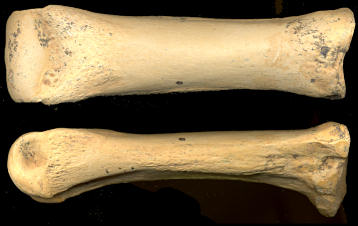
Fig. 2. Anterior and side views of the third metatarsal of Tapirus from Lost Valley, Dry Cave, Eddy Co., NM. UTEP 1-827.
Jefferson (1989), however, made the case for the western tapirs to be assignable to two species, one larger and one smaller. The larger, which includes fossils pretty much throughout the region covered here, was assigned to Tapirus merriami, with the smaller limited to the western portion of the region assigned tentatively to T. californicus. Jefferson (1989: 19-20) summarizes as follows: "A large species, here referred to Frick's Tapirus merriami, typically occurs in upper Pliocene (upper Blancan) and lower to middle Pleistocene (Irvingtonian) deposits along the Pacific coast. It is poorly known from upper Pleistocene (Rancholabrean) deposits in California, but is found in the Rancholabrean of Arizona." The Rancholabrean specimens from Arizona and New Mexico are assigned here to T. merriami, as is the record from La Union identified as T. haysii. Other Blancan and Irvingtonian specimens are listed as Tapirus sp. pending further data.
Sites.
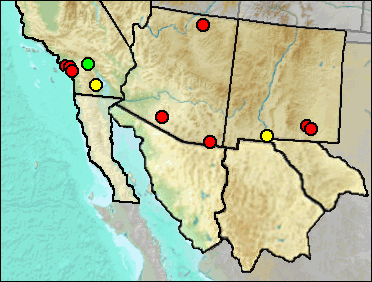
Late Blancan: Anza-Borrego (Murray 2008); La Union (Morgan and Lucas 2003).
Irvingtonian: Bautista Badlands (Frick 1921).
Early Irvingtonian: El Casco, San Timoteo Badlands (Albright 2000).
?Late Irvingtonian/Rancholabrean: Emery Borrow Pit (Jefferson 1991b).
Sangamon: Newport Bay Mesa (Jefferson 1991b); Newport Beach (Jefferson 1991b).
Early/Early-Mid Wisconsin: Lost Valley (Harris 1993c).
Mid Wisconsin: Shonto (Agenbroad and Downs 1984).
Mid/Late Wisconsin: Dark Canyon Cave (Tebedge 1988).
Late Wisconsin: Lehner Ranch (Lindsay 1978); Murray Springs (Lindsay 1978); Ventana Cave (Colbert 1950).
Literature. Agenbroad and Downs 1984; Albright 2000; Colbert 1950; Conkling 1932; Frick 1921; Harris 1993c; Jefferson 1989, 1991b; Lindsay 1978; Morgan and Lucas 2003; Murray 2008; Ray and Sanders 1984; Richardson 1909; Tebedge 1988.
Last Update: 29 May 2015