
Staff
Jacob Setera

A CASSMAR employee through the Amentum JETSII contract, Dr. Setera is a geochemist at the Center for Isotope Cosmochemistry and Geochronology (CICG) at NASA’s Johnson Space Center. He develops and applies novel elemental and isotopic techniques to study the formation of the solar system and the evolution of planetary bodies. His research interests also explore terrestrial processes, including igneous evolution, volatile budgets & degassing, and thermochronology, among others. While collaborating broadly cross disciplines, Dr. Setera specializes in solution and laser ablation mass spectrometry, with additional expertise in geochronology, petrology, and geologic mapping.
Dr. Setera earned his B.S. in Geology from the University of New Hampshire in 2012, where he subsequently held dual appointments at UNH and the New Hampshire Geological Survey. He completed his Ph.D. at Rutgers University in 2020, focused on the thermal and magmatic evolution of the Bushveld Complex in South Africa. He also managed the LA-ICPMS and Noble Gas laboratories at Rutgers, with projects ranging from forensic anthropology to lunar formation. Before joining CASSMAR, he was a Postdoctoral Associate at Cornell University working to elucidate Earth’s volatile budget using olivine-hosted melt inclusions from the Galapagos mantle plume.
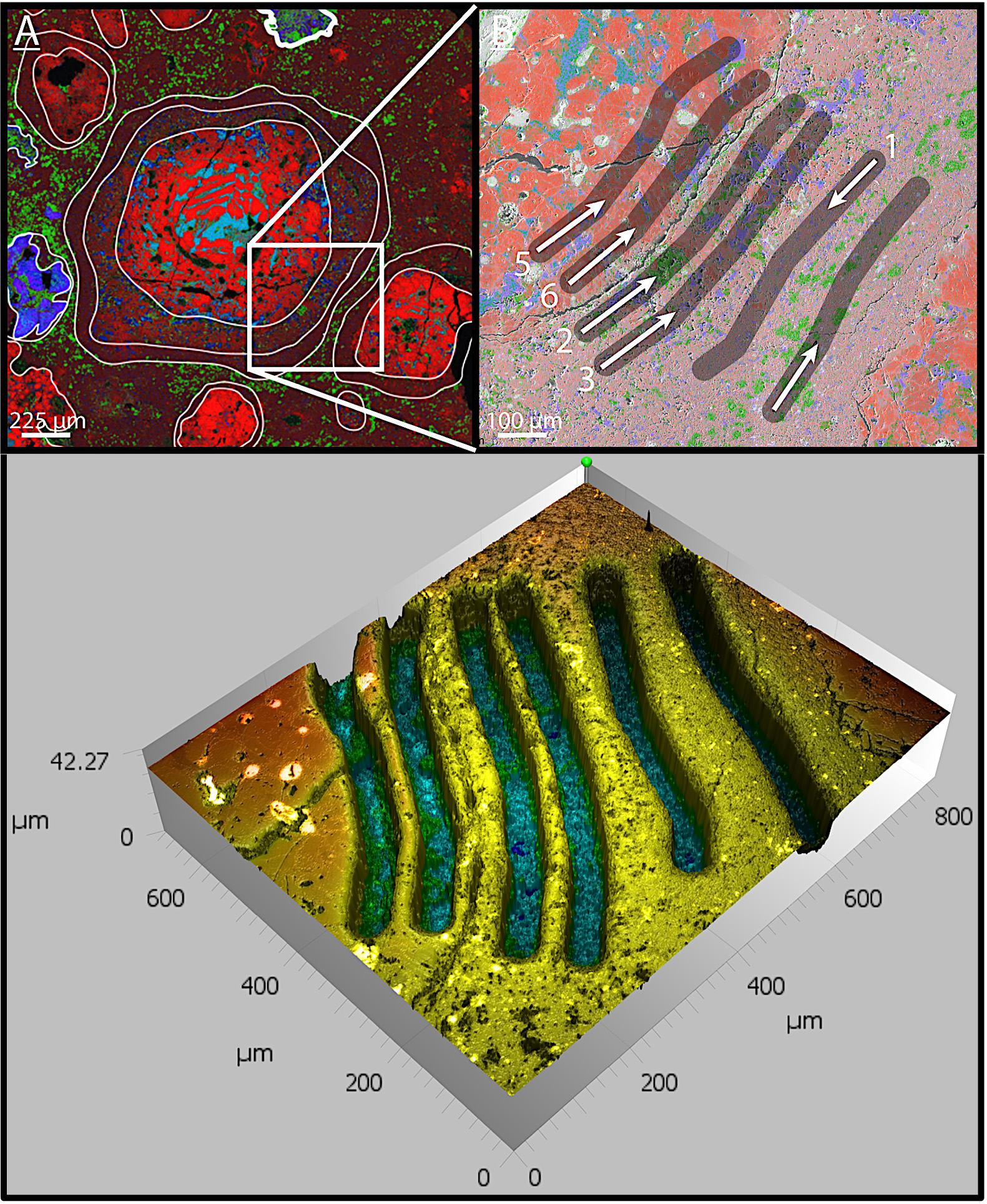
Chondrule, one of first Solar System solids, with laser ablation trenches for targeted geochemical analyses (Setera et al. 2024, LPSC)
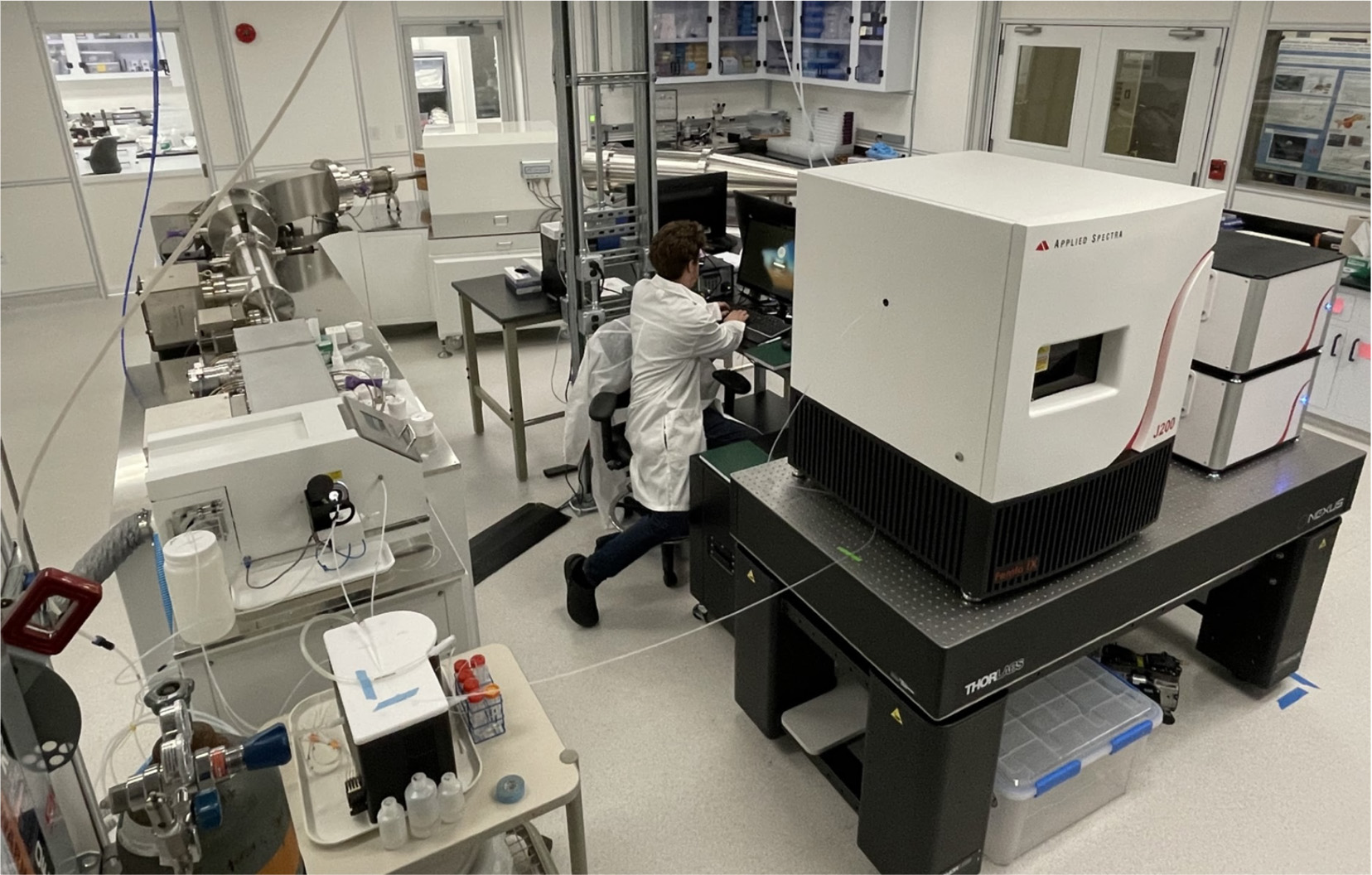
The Nu Sapphire 1700 MC-ICPMS and the Applied Spectra tandem LA/LIBS instruments measuring Lu-Hf isotopic ratios in lunar zircon
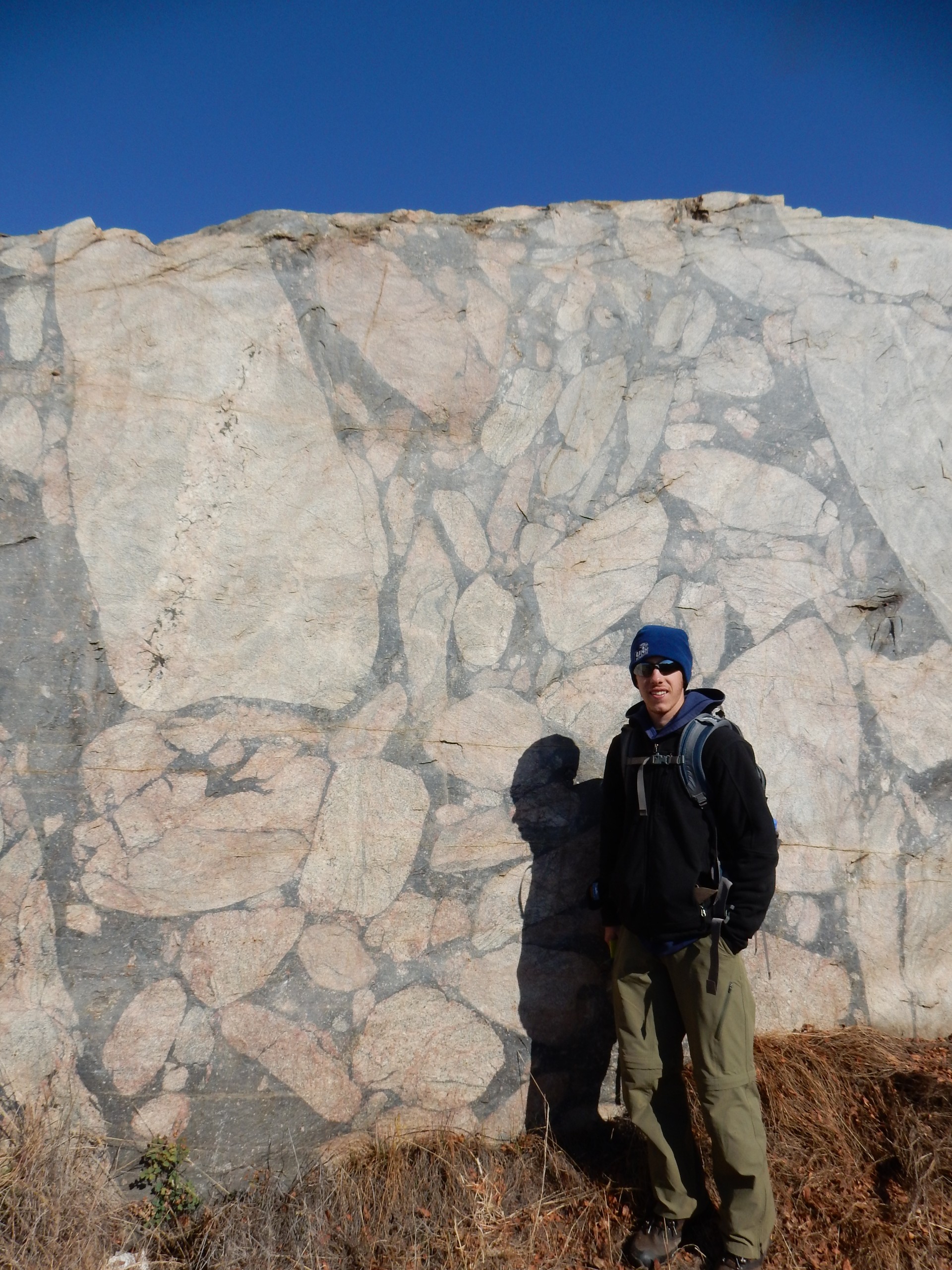
During fieldwork in South Africa, an outcrop of pseudotachylite formed during the Vredefort meteorite impact over 2 billion years ago.


