

UTEP College of Education Summit Explores the Future of AI Education and Work in El Paso
After training more than 700 educators and reaching 25,000 students in AI education, the UTEP College of Education launches next phase of programming
EL PASO, Texas (Aug. 11, 2026) – Artificial intelligence is changing how students learn, how employees work and how government and business services are delivered. Rather than waiting for others to define how AI will shape El Paso’s future, The University of Texas at El Paso College of Education convened over 100 leaders Tuesday to help build it.
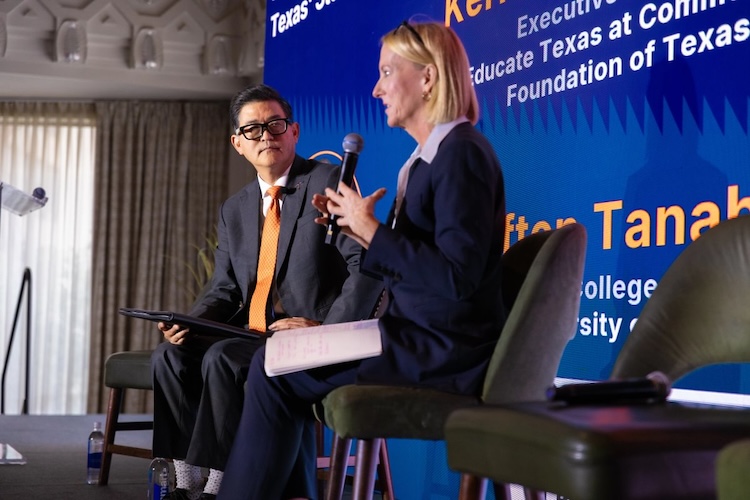
Today, the UTEP College of Education hosted the “Built Here Summit: The Future of AI, Education and Work in El Paso,” a regional convening that marked the culmination of El Paso Computes, an initiative that aimed to build capacity for computer science and AI education in the Paso del Norte region. The summit also marked the launch of the next phase of collaboration among education, industry, government and community leaders.
“Conversations about AI focus so much on the technology and platforms being utilized, but we know that at the end of the day it is our people we need to focus on. We are not waiting for the technology to shape El Paso’s future but rather bringing together diverse leaders to ensure it is our students and workers who will be shaping the jobs, platforms, and work of the future,” said Clifton Tanabe, Ph.D., dean of the UTEP College of Education. “This summit reflects an inflection point in our journey to ensure El Paso’s students, educators and workers are equipped with the skills, training and experience they’ll need to prosper in a rapidly changing workforce.”
Since its launch in 2025, El Paso Computes has helped position El Paso as one of the state’s emerging leaders in AI. In just 22 months, El Paso Computes:
- Trained over 721 regional educators in AI and computer science principles;
- Equipped 500 students with advanced computing skills, including machine learning and cybersecurity tracks, through summer camps;
- Impacted 131 schools;
- Embedded AI skills and certification pathways into regional teacher prep programs;
- And ultimately reached over 25,000 K-12 students.
Supported by a grant from the City of El Paso and partnerships with school districts, employers and community organizations, El Paso Computes created a sustainable talent pipeline that prepares students for a variety of careers in technology, cybersecurity, healthcare innovation and other high-growth industries.
“From the beginning, the City of El Paso saw El Paso Computes as an investment in our people and our economic future,” said El Paso Mayor Renard Johnson. “We were proud to work with UTEP to bring this grant to our community and turn this investment into real opportunities for educators and thousands of students across our region. This partnership shows that El Pasoans can come together to make sure our community is prepared to compete, lead and create the jobs of the future.”
The Built Here Summit focused on how the region can build a coordinated AI framework that prepares students and workers for tomorrow’s economy while keeping people at the center of every decision.
The Summit included:
- A fireside chat between Tanabe and Kerri Briggs, executive director of Educate Texas at the Communities Foundation of Texas, highlighted the importance of a new type of collaboration that brings education and business leaders, entrepreneurs, government representatives, students and community leaders to advance people-centered AI policies and practices at the school site, district and city level.
- The Making AI Work for Every Student panel featured educators and district leaders who touched on the ways teachers, superintendents, college students and education nonprofits are responding to AI in education settings. Panelists reinforced the importance of critical thinking and other foundational soft skills students will still need to prosper in addition to the AI skills they develop.
- The panel, Preparing El Paso’s Workforce for the Age of AI, featured employers and workforce leaders from Microsoft, Workforce Solutions Borderplex and more to discuss how employers and their workforce are using AI to help address backlog, carry out administrative tasks and locate new audiences and customers for their businesses. The panel also touched on practices and policies regulators are exploring to protect workers and ensure people can prosper and not be displaced by AI.
“AI is a tool for educators and students to use; it cannot teach. Educators are still needed in the classroom to introduce students to the pursuit of knowledge and a love of learning. By working together to identify which AI skills students can learn, we’re helping to maintain important critical thinking skills while making processes more efficient,” said Catherine Tabor, president of the Computer Science Teachers Association.
“We’re seeing more and more local businesses lean into AI, but that doesn’t equate to a loss in jobs. Businesses still need employees, and an employee proficient in AI can help our region lead the way. Now is the time to make our employees the forefront of innovation,” said Leila Melendez, CEO, Workforce Solutions Borderplex.
Tanabe said, “Today’s summit represented a regional commitment to ensuring every student and every worker has the opportunity to prosper in an AI-enabled future. By bringing together educators, employers, workforce leaders and policymakers, we are helping position El Paso as a model for how communities can embrace innovation while advancing equity and economic opportunity.”
Last Updated on August 11, 2026 at 12:00 AM | Originally published August 11, 2026
By MC Staff UTEP Marketing and Communications


