
MinerAlert
MinerAlert
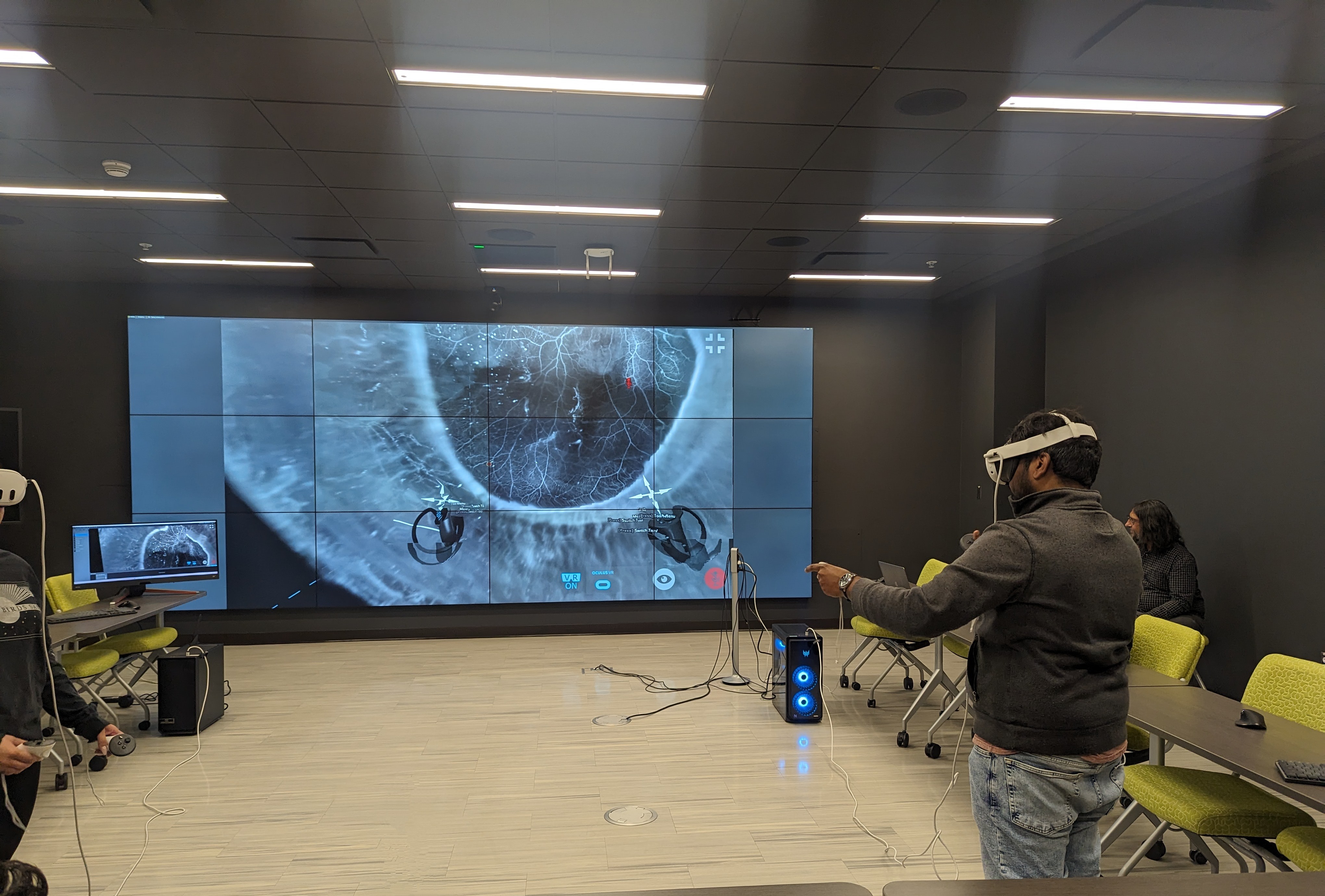
VizInC is a state-of-the-art space outfitted with hardware geared for ultra-high resolution data visualizations and analysis. VizInC provides a 100-million-pixel visualization wall that allows researchers to collaboratively explore large complex datasets, a high-performance rendering node for intensive computations, a multi-touch system to facilitate exploration of models and a 3D projection system for immersive stereoscopic rendering of scientific data. VizInC is available to the UTEP research community requiring such capabilities.
View Details Reservations
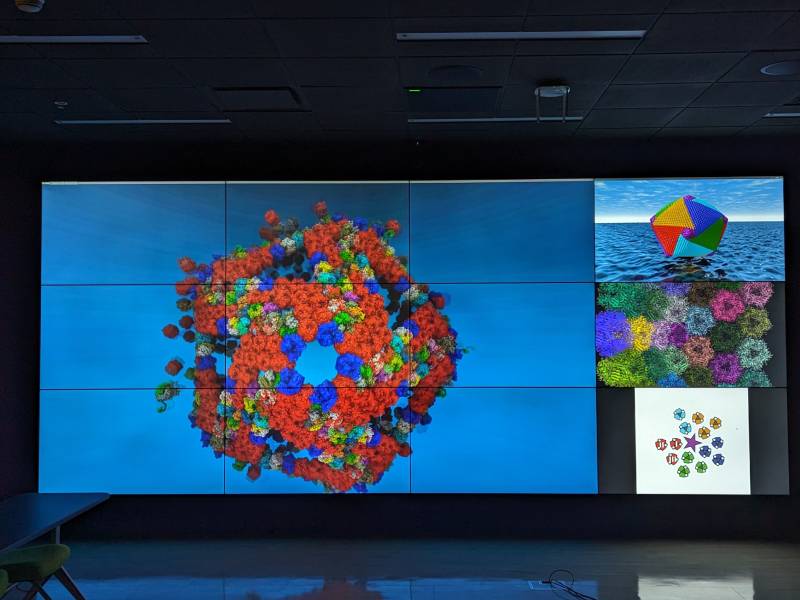
Aquatic giant viruses or giruses, have important ecological roles within water systems to maintain biodiversity, regulate microorganism populations, and accelerate the recycling of nutrients. Due to their large size, study of these viruses has posed a challenge to current techniques. Our team tackles the visualization challenges of Cafeteria roenbergensis virus (CroV), a giant marine virus consisting of a 120 million atom protein shell. We generated various 3-D and stereoscopic images and animations to mimic the virus assembly by automatically load large number of virus capsid proteins, position them, and simulate Brownian motion using codes developed by programming languages such as Python, C, and TCL.
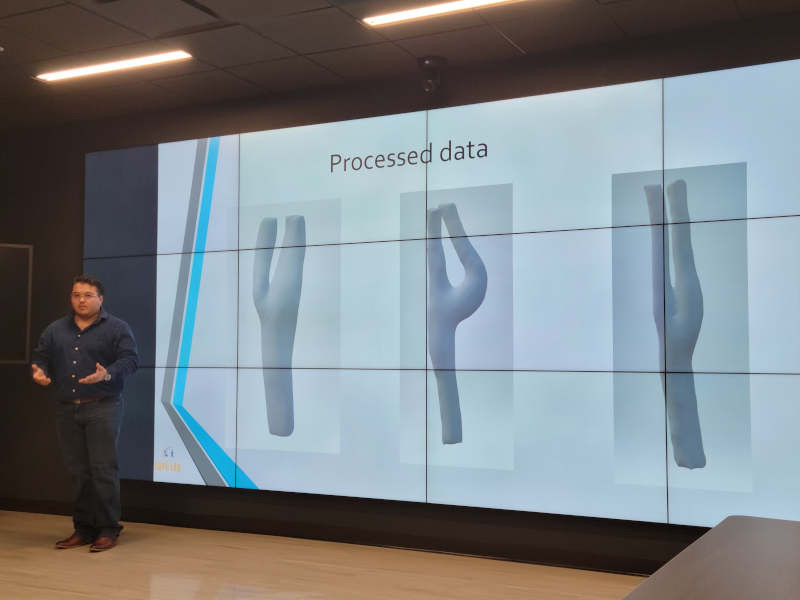
The carotid arteries are major arteries in the neck, which supply blood to the brain, and are commonly implicated in vascular diseases. MRI and DICOM file processing were done to generate a bilateral 3D model of the carotids via the usage of the modeling software 3D Slicer and 3-D stereoscopic visualization using Paraview.
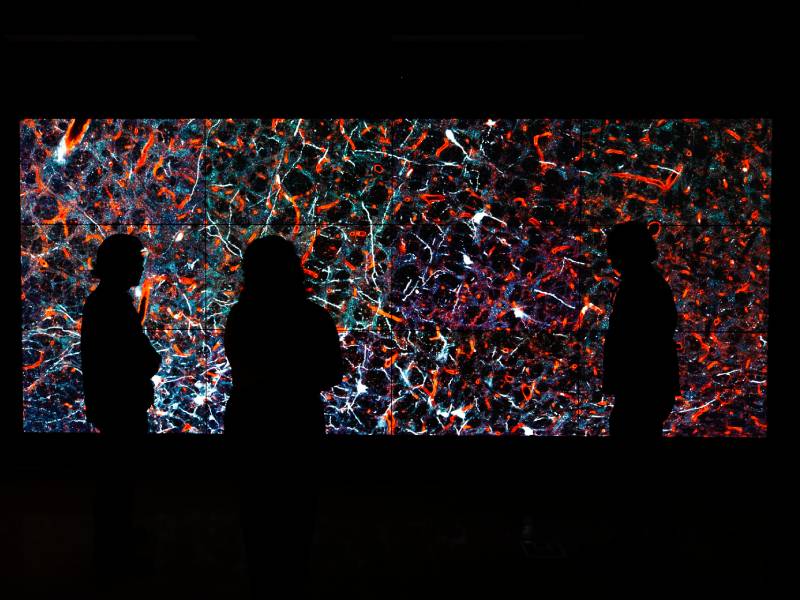
The medulla oblongata is the most posterior topographic division of the lower brainstem. It continuously receives information from the bodily organs and regulates their function through several physiological systems, including the cardiovascular system. 3-D visualization of intact rat lower brainstem samples was accomplished utilizing light sheet microscopy to examine neural and vascular architecture of the medulla and revealed a new perspective as to how the brain is structurally organized and how it may be coordinating cardiovascular function.