
CTIS |November, 2025
UTEP/EPCC CTIS Research Students and Faculty Present at ASPIRE 2025 Annual Meeting


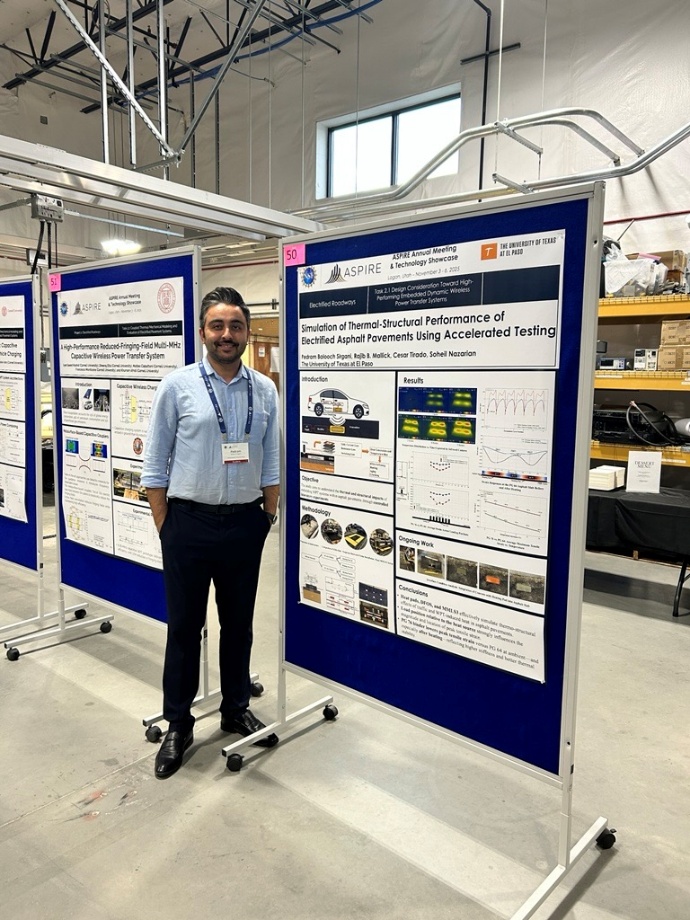
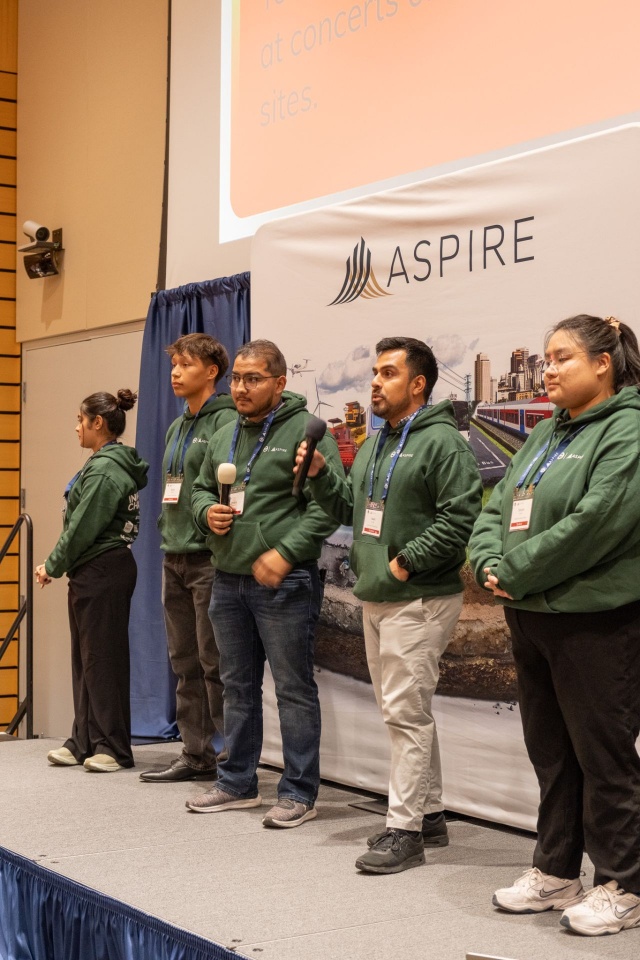
On November 2nd – 5th, the UTEP and CTIS research students and staff participated in the ASPIRE Annual Meeting 2025. The ASPIRE Annual Meeting 2025 in Logan, Utah, was a week-long event of collaboration and innovation, bringing together researchers, students, industry partners, and leaders from core and affiliated universities to advance the future of electrified transportation infrastructure. This year's meeting highlighted the innovative research, exciting technology, and meaningful connections that are the foundation of the ASPIRE community. From the first-ever Innovation Challenge to insightful discussions on the future of electrified transportation, the meeting showcased the momentum driving the research forward with poster presentations from students working at the CTIS with projects associated with ASPIRE.
Among the students who presented where Pedram Balooch with his project of “Simulation of Thermal-Structural Performance of Electrified Asphalt Pavements Using Accelerated Testing.” Elyan Flores and Tatiana Tellez-Rodriguez (both affiliated students from EPCC) also presented the “Evaluating Flexural and Shear Strengths in Pavements with Embedded Dynamic Wireless Power Transfer (DWPT) Module” and the “Use of Distributed Strain Sensing (DSS) Fiber Optic System for Structural Monitoring of Pavements with Embedded DWPT,” respectively.
In this annual event, Isaac Zuñiga and Pedro Chavez, CTIS research graduate students, were participants of the Innovation Challenge while also being members of the Council of Presidency in the ASPIRE Student Association. CTIS Alumni Missel Sanchez served as Master of Ceremony for the Industry and Innovation Day, facilitating conversations on barriers and potential solutions for ASPIRE's next major milestone.
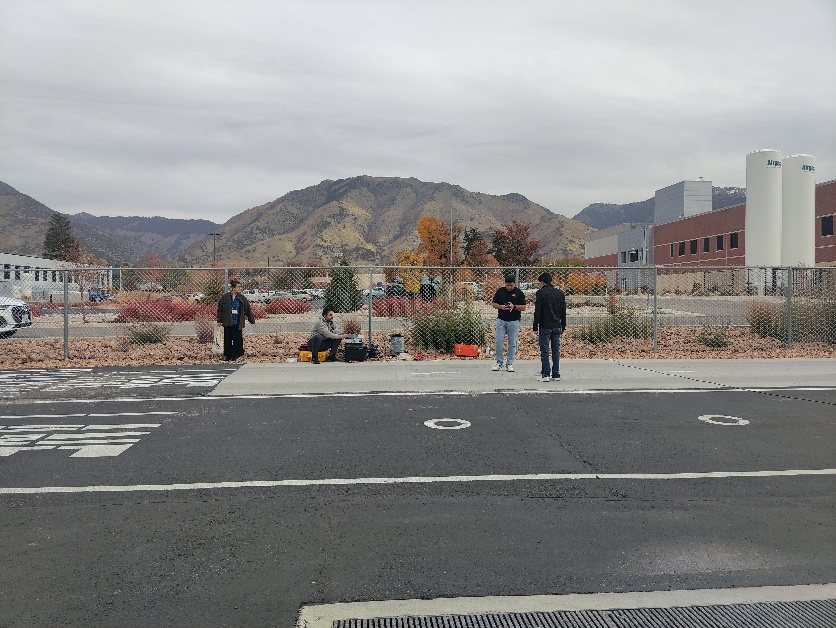
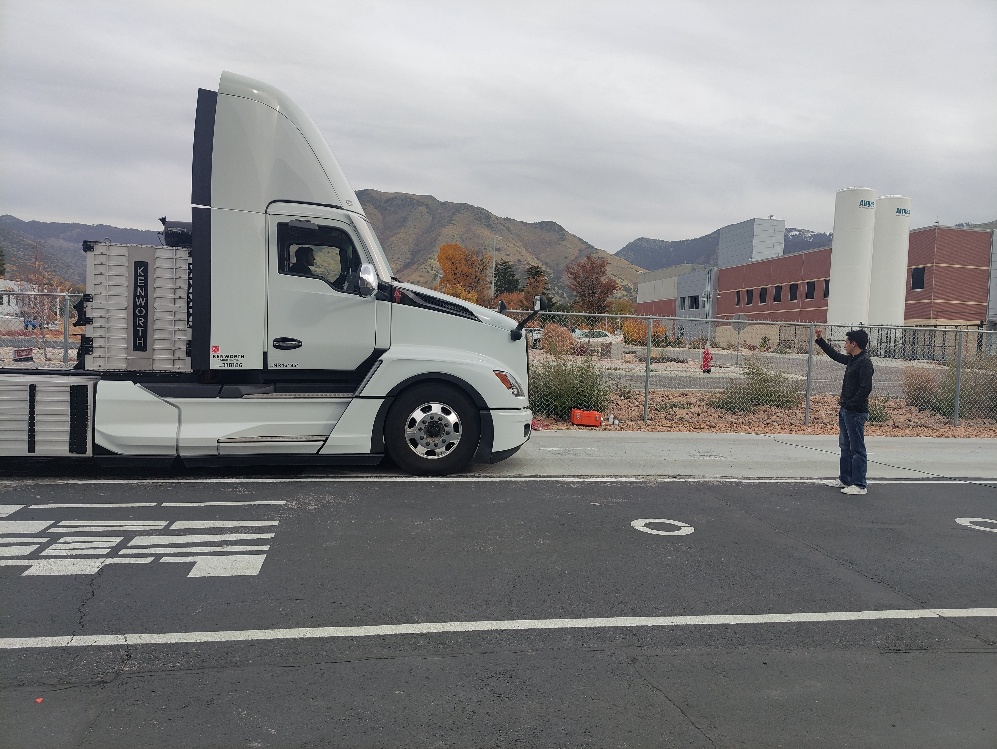
The UTEP research team- Pedram Balooch, Elyan Flores, Dr. Hector Cruz, and Dr. Cesar Tirado- visited the Electric Vehicle Roadway (EVR) to conduct follow-up testing on fiber optic sensors that were installed in September 2024. The purpose of this visit was to evaluate the functionality of the distributed fiber optic strain sensors embedded at the EVR track and to assess the quality and reliability of the data they provide, along with strain measurements obtained when trafficked by Class 6 and Class 8 EV trucks.
For the testing, both trucks were driven over the instrumented section. The collected measurements provide real-time information on pavement responses, helping evaluate the structural response that can support the calibration of pavement response models.


