
Making Relations Visible
This digital humanities symposium, held at the Borderlands Digital Humanities Center in Library 201, explores the relationships between technology, place, and community and how they manifest or interact with social and cultural activism, community memory work, and humanistic data practices.
Schedule
8:45 Welcome
9:00 Panel: Sensing Community in Traces and Stitches
“What ‘Community’ Means in a Border City: A Close Reading of El Paso News" Prakriti Adhikari
“Casa de Acogida: Living Archive of a Resistance” Claudia Granados
“Understanding Cultural Networks in the Juárez–El Paso Borderlands: A Preliminary Social Network Analysis” Oscar Bueno Carbajal
10:15 Panel: Mapping Spiritual and Sensual Experiences in Borderspaces
“Making Civic and Sacred Relations Visible: Thick Mapping the Kathmandu Valley with ArcGIS StoryMaps” Hari Prasad Acharya
“Beyond the Soundmap: Listening, Relational Mapping, and Ludic Exploration in Border Soundscapes” José Manual Flores
“Mapping the Dance Scene on The El Paso-Juárez Border” Michelle Ramirez
11:30 Interactive Project Discussion and Critique
“Victim/Survivor Knowledge in Nepal: What happens when a digital archive is designed not simply to preserve information but to challenge who has the authority to produce, interpret, and preserve knowledge?” Ambir Khadka and Renuka Khatiwada
12:45 Lunch (RSVP by 10/15 at https://forms.cloud.microsoft/pages/responsepage.aspx?id=0iF8hRYapEOQz9V_P6udLyIsIdhYIZlHq3JIpGz7HSBUQU9WSE5NRUVSSFEyS0dFVDJJMzVHMjdJSC4u&route=shorturl)
2:00 Lightning talks: Local Archives and Embodied Knowledge
“What Counts as an Archive? Small Data and Kitchen Stories from El Paso’s Segundo Barrio” Daniel Rios Lopera
“Mapping Menstrual Histories in the UTEP Special Collection” Sanjana Srivastava
“Digitizing Immaterial Data: An Affective Approach to Metadata” Isabella Sanchez
3:15 Roundtable Discussion
“How do images become powerful enough to shape collective memory, civic identity, and political belonging?” Elias Adanu, Alex Ohemeng, Sebastian Martinez, and Carla Torres
4:30 Panel: Our Deepest Humanity Embedded Beyond Us
“Can Artificial Intelligence Be a Moral Agent?” Elsa Heath
“Memory Without Keepers: Provenance, Ritual, and Inorganic Inheritors” Kevin Moreno
“Divine Origins of Workaday Algorithms” Elise Takehana
6:00 Keynote: Melissa Villa-Nicholas on her book Data Borders will be a virtual talk, but in person attendees can enter a raffle for a copy of her book and enjoy refreshments.
A Borderlands Symposium on Digital Humanities, Community, and Place in the Borderlands
Call for Presentations
Digital technologies and their infrastructure are not neutral or placeless. They shape how we understand places, communities, histories, and one another. They emerge within and transform landscapes, languages, communities, and systems of power. They create categories, reveal or obscure meaning, perpetuate privileges and inequalities, and determine what is seen, measured, remembered, and valued.
This digital humanities symposium explores the relationships between technology, place, and community and how they manifest or interact with social and cultural activism, community memory work, and humanistic data practices. For instance:
- Infrastructure and platform studies make hidden relationship systems of visible.
- Metadata determines relationships, making them discoverable.
- Community archives can preserve relationships across generations and challenge who and what is seen.
- Thick maps make spatial and cultural relationships visible.
- Thick data make contextual relationships visible.
- AI criticism asks what relationships algorithms privilege or erase.
The University of Texas at El Paso is situated in a liminal and concrete place where languages, cultures, histories, and landscapes intersect in dynamic ways. Because of that, we take the reality of borderland epistemologies as a basis for understanding the complex, shifting, and overlapping boundaries that digital technologies and infrastructures create as we interpret humanity, community, care, relationships, value, and meaning.
At this symposium let’s share and discuss work that makes visible the junctures and infrastructures that shape culture, society, knowledge, and power while asking whose values they reflect and whose experiences they leave unseen. Some clusters of thinking to feed explorations at the symposium are listed below, though we welcome related or complementary areas of thought as well.
We invite presentations in many styles and formats, including discussion panels (4-5 discussants), lightning talks, paper presentations, performances, readings, and interactive experiences. We also invite the sharing of projects and community initiatives for discussion or for raising awareness and soliciting collaborators. Given the deeply interdisciplinary nature of digital humanities, scholars from disciplines as diverse as dance, computer science, rhetoric, history, music, anthropology, law, biological sciences, journalism, literature, art, political science, sociology, social work, languages, data science, linguistics, and more are welcome. Proposals for presentations are due September 20 with notification of acceptance by September 28.
SUBMISSION FORM AT Digital Humanities Symposium | Symposium de las Humanidades Digitales.
cluster concepts
Revealing Digital Infrastructure
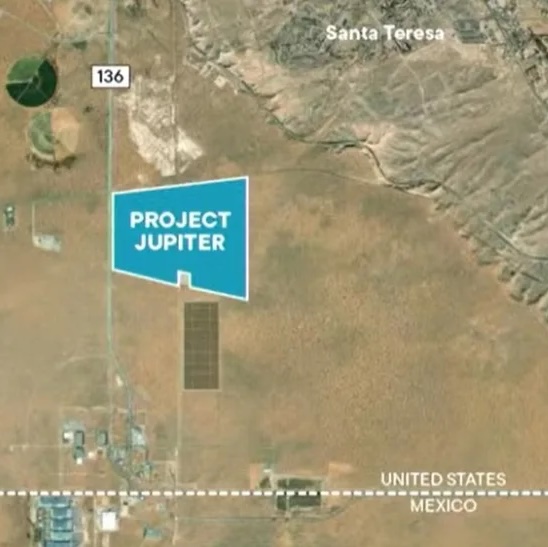
Digital systems often appear frictionless because the infrastructures that sustain them remain out of view. With three proposed data centers within a ten-mile radius, residents of the El Paso region again have a front row seat for intrusive infrastructure and extractive practices. This cluster invites work that makes infrastructures visible as cultural, political, ecological, and social formations that distribute resources, opportunities, risks, and power. Whose values will become embedded in infrastructure? Whose communities bear the costs or receive its benefits? How might digital humanities help communities visualize, critique, resist, or re-imagine infrastructures rooted in social justice, sustainability, local knowledge, identity, and collective well-being?
Boundaries, Categories, and What Counts
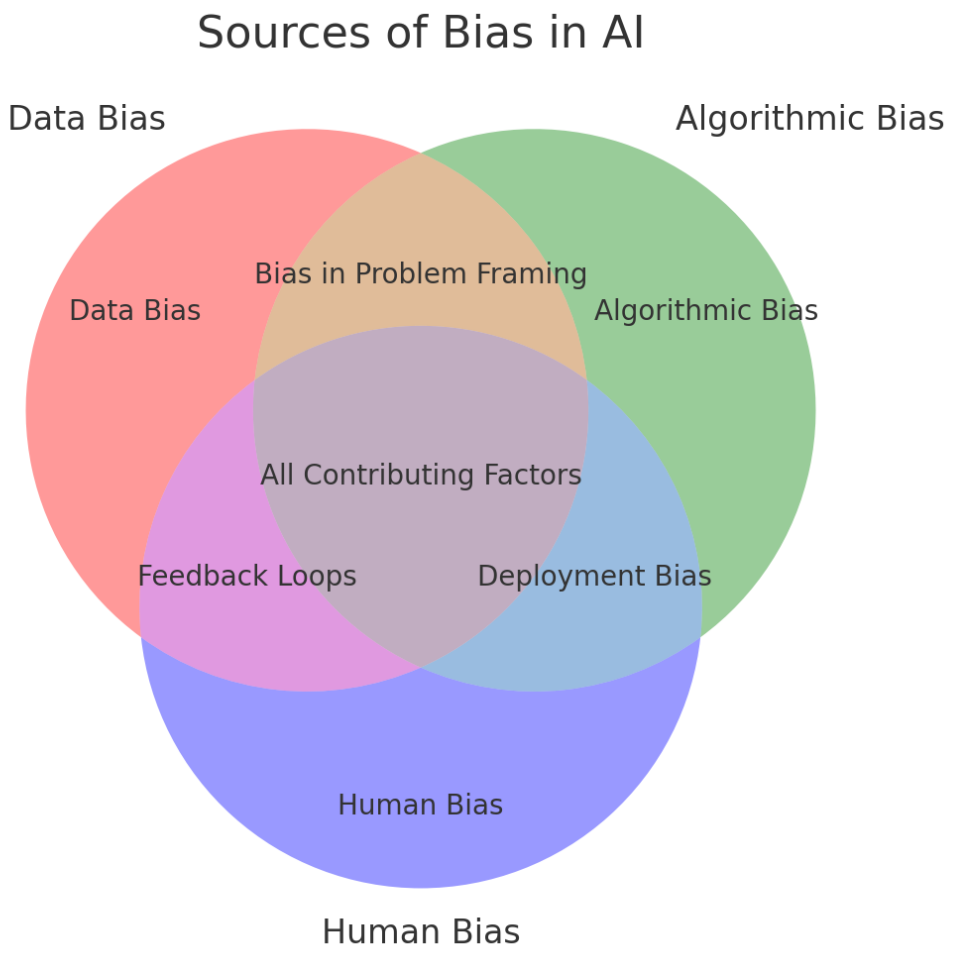
Every expression draws boundaries. Archives decide what merits preservation. Metadata determines which characteristics matter. Algorithms classify, rank, weigh, and exclude. Maps define and scale centers and peripheries. Datasets establish categories. This cluster explores classification itself as a humanistic problem of interpretive meaning making given how digital systems define, oversimplify or challenge inherited identity, knowledge, evidence, language, history, and value. How can trans-border knowledge, forged in multilingual and multicultural contexts and rife with contested histories, help shape digital and data practices in ways that resist universalizing assumptions and essentializing practices?
Mapping Beyond the Map
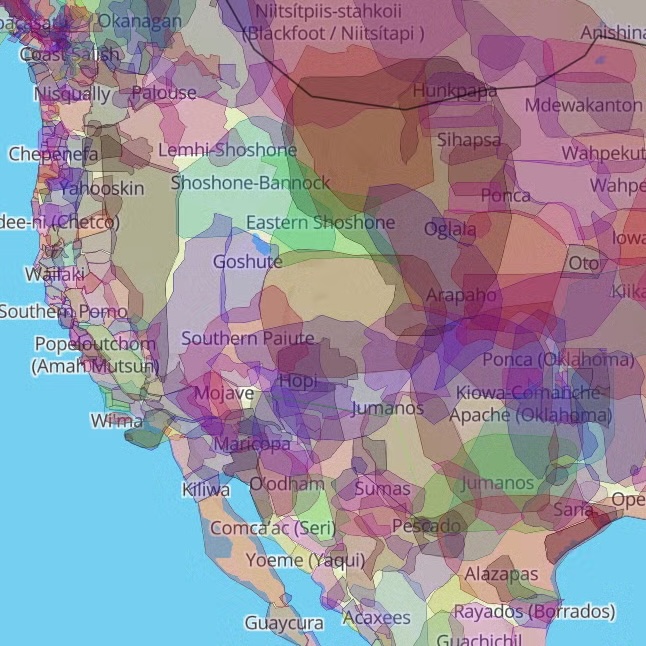
Maps organize relationships, values, and ways of knowing. They are not only tools to represent space. This cluster welcomes work that explores mapping as an epistemological practice of visualizing cultural worlds that resists flattening into coordinates and challenges the assumption that Western cartography is the default language of spatial knowledge. What becomes possible when mapping moves beyond the cartographic and toward forms of representation that can hold memory, story, kinship, emotion, ceremony, movement, uncertainty, and multiple, sometimes competing, understandings of place?
Small Data, Thick Knowledge
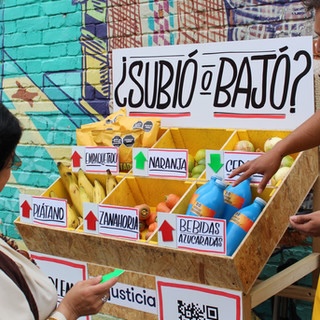
The largest datasets are not always the richest ones and many of the questions most urgent to communities are locally grounded. This cluster explores what is gained by working at smaller scales. Oral histories, neighborhood archives, family collections, local newspapers, community organizations, and ephemeral records often resist the logics of aggregation because gaining scale is not worth losing contextual richness. How can small data help us reconsider what counts as data, reveal ways qualitative evidence can be represented digitally, and redesign computational methods around care, context, and accountability?
Humanistic Futures of Artificial Intelligence
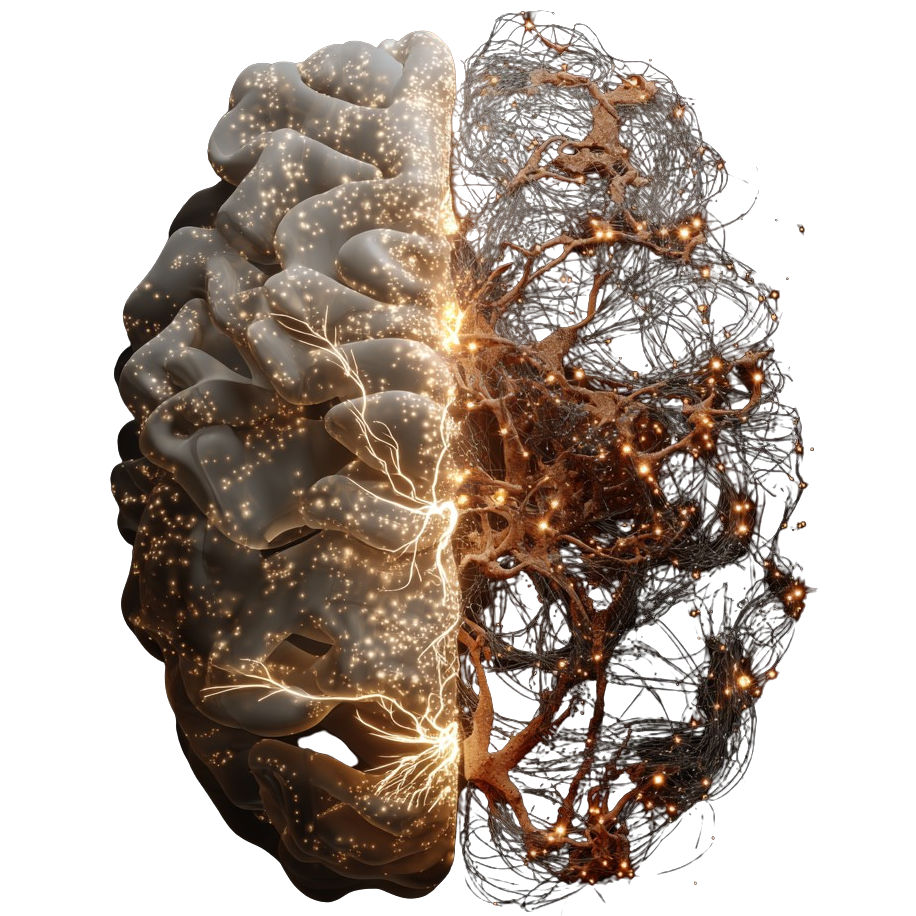
It seems artificial intelligence is on an inevitable trajectory of expansion. But instead of assuming technological progress indicates innovation, we invite contributions that ask what digital futures can we build that we would want those that follow to inherit. This cluster interrogates AI as a cultural, historical, rhetorical, and political phenomenon that reconfigures our present and has the capacity to imagine alternative futures. What kinds of intelligence, judgment, interpretation, and care should remain irreducibly human, and how might humanistic scholarship shape the futures of AI in ways that center human flourishing, plural epistemologies, public accountability, and community values?


