
UTEP Establishes the Borderlands Digital Humanities Center
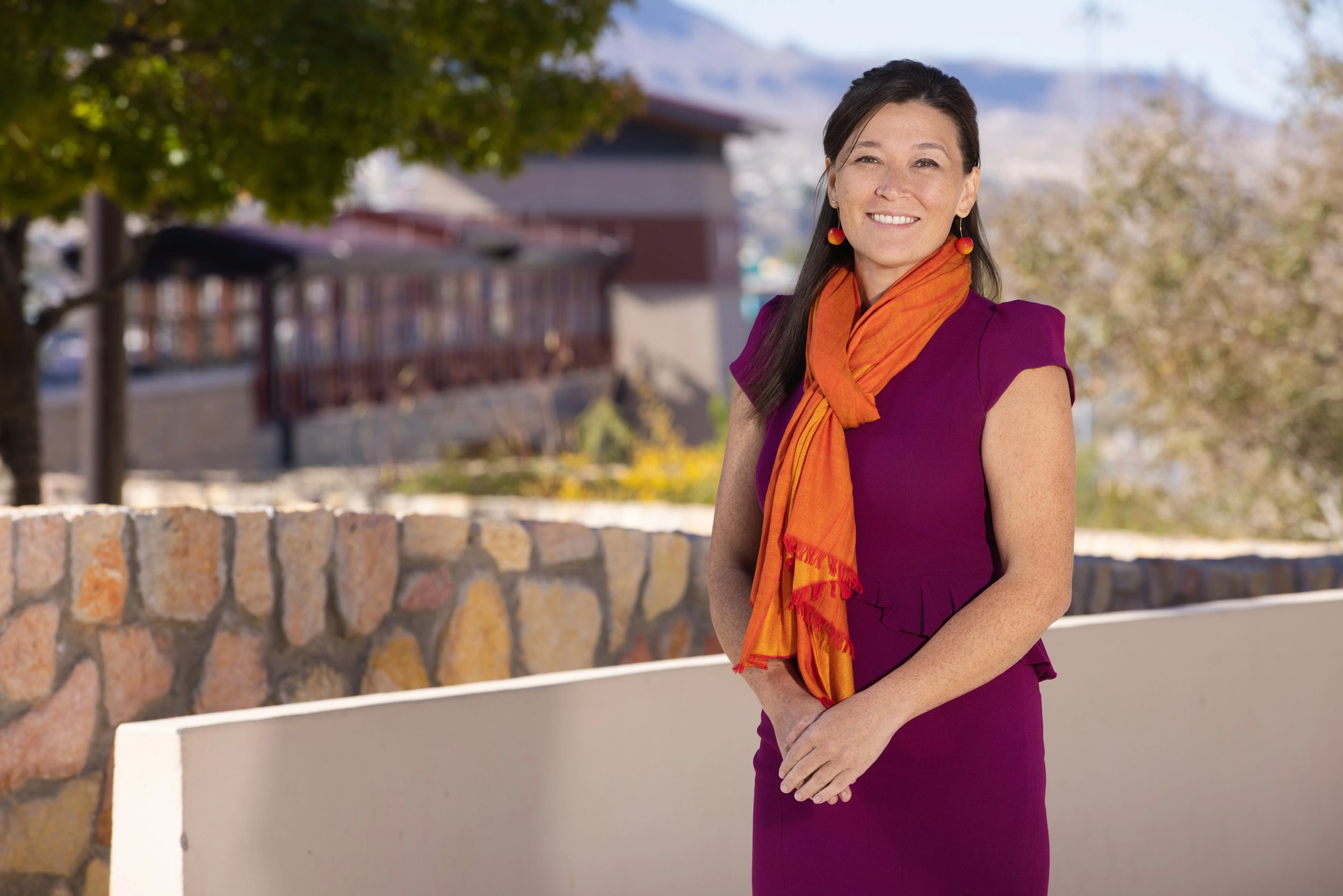 Seed funding is now available to faculty and graduate students through the new Borderlands Digital Humanities Center, a collaboration between the College of Liberal Arts and the University Library. The center, led by Elisabet Takehana, Ph.D., associate professor of English, leverages the field of digital humanities to support academic research across the University and to pursue binational, multicultural projects that further UTEP’s mission of access and excellence.
The digital humanities is broadly defined as the use of technology to expand knowledge in history, literature, philosophy and related fields. Digital humanists apply computer-based tools, such as quantitative analysis, geographic information systems and data visualization, to literature, surveys and other authored works, Takehana said. Digital humanists also create digital tools and critique the cultural and social impact they have on human life.
“Our goal is to make the Borderlands Digital Humanities Center a visible and dynamic forum for interdisciplinary and humanistic inquiry, that is also mindful of our borderland context,” Takehana said. “We will support the University and its research by accounting for the real impact of technological development on human imagination, institutions and communities, and develop digital skills and critical digital literacies that empower human agency in the age of big data and artificial intelligence.”
Currently, the center is striking partnerships around campus to fund projects that represent the wide swath of the digital humanities. One key differentiator of UTEP’s Digital Humanities Center is the effort to support projects that benefit the border region. Projects that have a predominantly community focus can range from helping people explore their family history to supporting efforts of community organizations.
“The Borderlands DHC presents an opportunity for scholars and students to address problems using digital tools and methodologies. Digital Humanities facilitates interdisciplinary approaches and collaboration,” said Anadeli Bencomo, Ph.D., dean of UTEP’s College of Liberal Arts. “The center’s programming will enhance partnerships with the community to support UTEP’s mission.”
Tenured or tenure-track professors and professors of practice or instruction may apply for seed funding. Graduate students may also apply with the support of a faculty collaborator. Teams of researchers are also invited to apply, but at least one faculty member must be in the College of Liberal Arts. For more information, please contact Elise Takehana at eotakehana@utep.edu.


