
MinerAlert
MinerAlert

August 2025
By Alexandra Sanchez '17
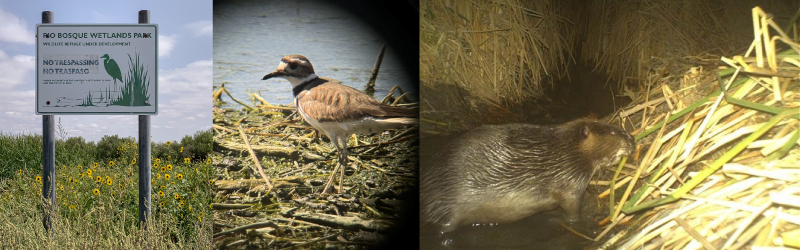
In Socorro, TX, just a short drive from the city, lies one of El Paso’s hidden gems—Rio Bosque Wetlands Park. The park is 372-acres, managed by UTEP’s Center for Environmental Resource Management. It is known for its trails, native plants, and wildlife and is a place where nature and history meet. UTEP alum Sergio Samaniego, who manages the park, has made it his mission to restore the park to what it once was—an active, thriving wetland in the heart of the desert.
Samaniego earned his master’s in environmental science from UTEP in 2019. Today, he leads efforts at Rio Bosque to recreate the native wetland and riparian habitats that once defined this stretch of the Rio Grande. “We’re working on bringing back historic river valley conditions that existed before the river was channelized in the 1930s,” he explained. “That includes planting native cottonwoods and willows, removing invasive species like salt cedar and tumbleweeds, and reintroducing the region’s original biodiversity.”
Managed by UTEP’s Center for Environmental Resource Management (CERM), Rio Bosque is a public park owned by the City of El Paso. Though many in the community may not realize it exists, the park is one of the few places in the region where visitors can experience a thriving wetland ecosystem. The best part of it is that it’s completely free to visit from sunrise to sunset.
The park also has much wildlife, with the most popular being the birds. “At various times of the year, hundreds of bird species pass through or live at the Bosque,” Samaniego shared. The park is also home to bobcats, coyotes, and even a beaver that makes its rounds along the historic river bend—remnants of the original Rio Grande path before it was re-routed for flood control.
Water management is a key challenge in maintaining the wetlands, especially in the face of El Paso’s dry climate. The park relies on a combination of treated wastewater from the nearby Roberto Bustamante Wastewater Treatment Plant, irrigation water from the El Paso County Water Improvement District, and groundwater pumped onsite. “Without these three water sources, the wetland wouldn’t be possible,” Samaniego noted. “Last year, we recorded less than three inches of rain. That’s why our partnerships and water planning are so crucial.”
In addition to habitat restoration, community engagement is a cornerstone of Rio Bosque’s mission. From school field trips to hands-on workshops, the park regularly hosts events where locals can connect with nature in meaningful ways. “One of our most popular community workdays happens in the winter, when we plant cottonwoods and willows,” he said. “It’s powerful to see volunteers come together and physically contribute to the park’s future.”
How can the community get involved? By attending the monthly workdays held every third Saturday (except December), or by simply visiting and spreading the word. The staff are usually on site from 8 a.m. to early afternoon to answer questions or guide visitors.
For Samaniego, the most rewarding part of his work is witnessing transformation, both in the landscape and in the people who visit. “I get to use my background in science, get my hands dirty, and watch real change happen. Seeing wildlife take advantage of the ecosystems we build or watching someone’s face light up after a quiet walk through the trails—it makes it all worth it.”
And for those visiting for the first time? “You can actually walk along a historic bend of the Rio Grande that once flowed through the park,” he said. “It’s like a walk back in time, before all the development happened.”
As more people discover this hidden gem in Socorro, Samaniego hopes they walk away with a deeper appreciation for what El Paso’s natural spaces have to offer. “Rio Bosque is more than a park,” he said. “It’s a reminder of what used to be and what we can bring back with a little care and community.”