
MinerAlert
MinerAlert
Written by Allysa Tellez
A large steel door stands in the way of millions of dollars at the Federal Reserve of Dallas El Paso Branch. It takes two hands to open, but no one dared to show off their arm strength in front of other University staff and faculty.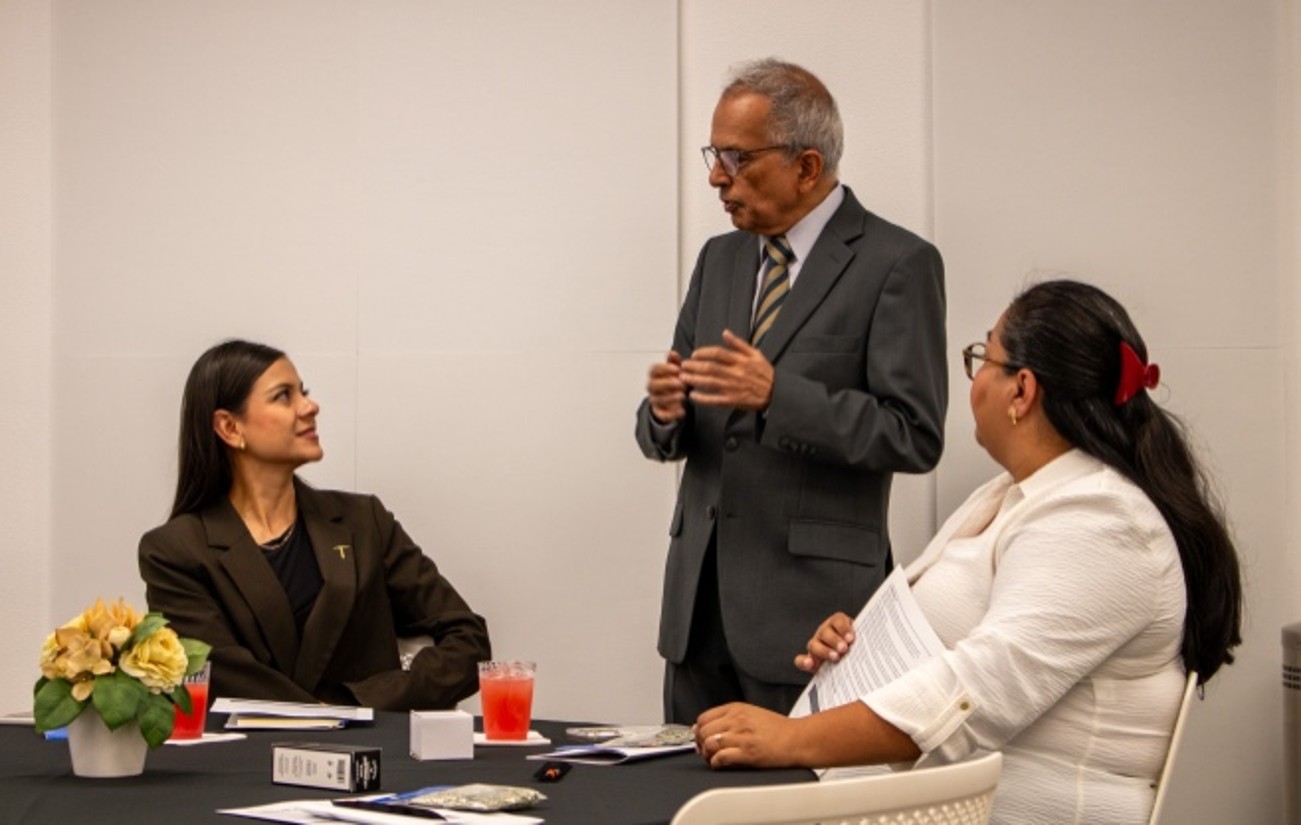
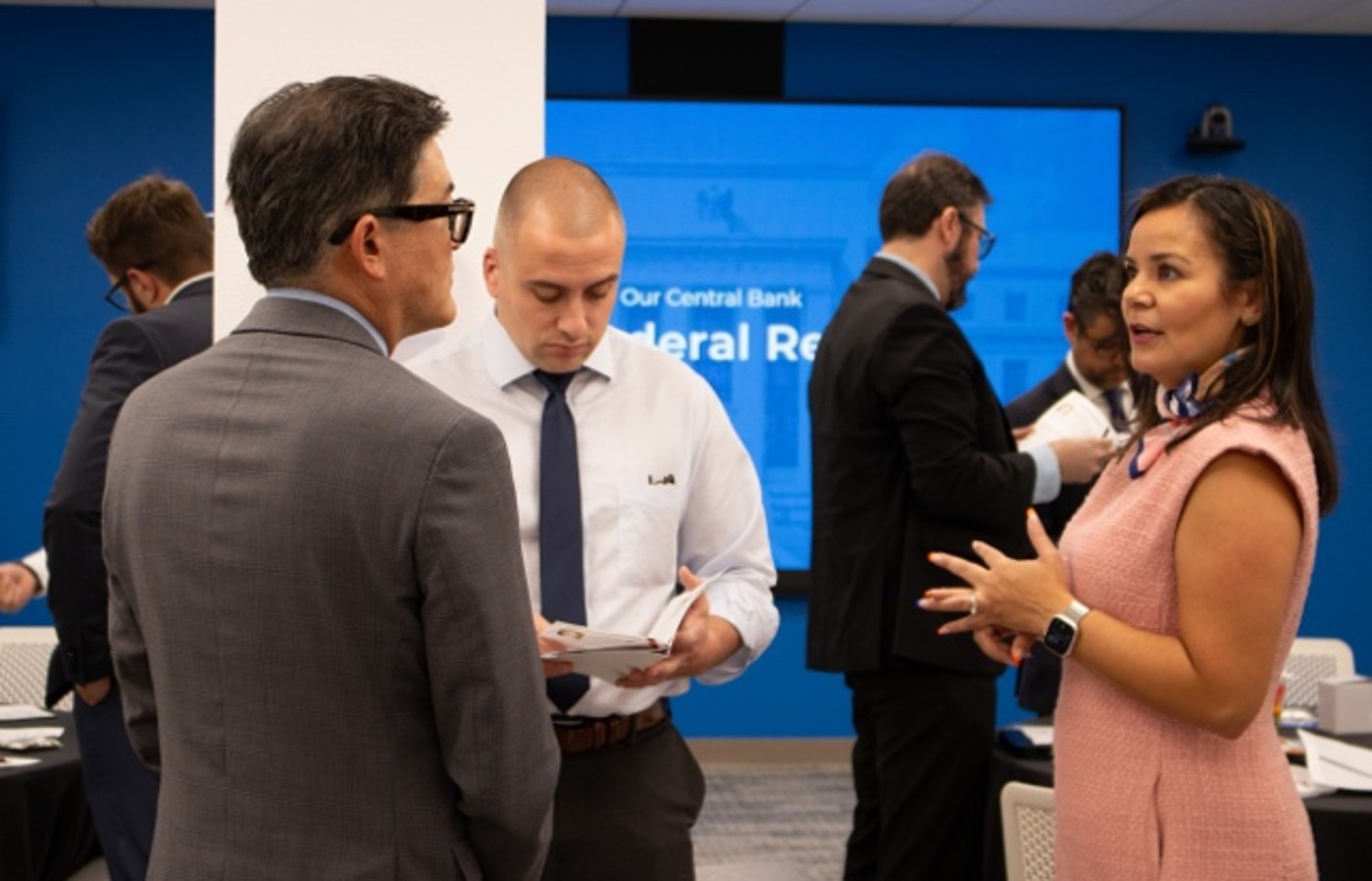
The excursion marked the third gathering of Impact Collective, a place-based networking initiative for faculty from The University of Texas at El Paso and Texas Tech Health El Paso administered through UTEP's Division of Research and Innovation. Representatives from the City of El Paso also attended to discuss potential opportunities for collaboration.
The El Paso Branch opened in 1918 as the first branch established by the Federal Reserve Bank of Dallas, and it remains the only Federal Reserve office located on the U.S.-Mexico border. Attendees received a tour of the facility and a presentation about the Federal Reserve Bank of Dallas El Paso Branch and its role in tracking the U.S.-Mexico economy, cross-border trade, and maquiladora activity.
Participants included professors and researchers from Texas Tech University Health Sciences Center El Paso; representatives from the City of El Paso's Strategic and Legislative Affairs Department; and Yvonne Gaddy, a researcher at the UTHealth Houston School of Public Health.
From UTEP, attendees included several faculty members from the College of Education, including Dean Clifton Tanabe. Also in attendance were James Carney, executive director of the W.M. Keck Center for 3D Innovation, and Amar Gupta, a Regents Professor specializing in artificial intelligence. Gupta said he flew in from Boston specifically for Impact Collective.
Representing industry, David Marek, founder of HealthAtlas, an El Paso startup focused on health care access along the U.S.-Mexico border, and DropDev, an artificial intelligence consulting and software company, was eager to connect with UTEP faculty and staff.
The goal of Impact Collective is to spark and strengthen research partnerships throughout the region by bringing together individuals with shared interests and priorities. Jolene Keipp, proposal development specialist and Impact Collective program manager, said the event was successful and that she is encouraged by the ongoing conversations among university and community partners regarding funding opportunities and future engagement.
"We may not always be able to trace those outcomes directly back to Impact Collective, and that's okay," Keipp said. "If the relationships keep moving forward, that's the impact we're hoping for."
Keipp has already seen the program grow. Research and Innovation's first Impact Collective brought together eight participants. More than 25 attended the most recent excursion to the Federal Reserve.
"Each event fosters new connections and creates unique opportunities for collaboration. I hope Impact Collective continues to feel warm and meaningful as it helps forge innovation and shared vision," Keipp said.
The next gathering is planned for December 2026.
Last Updated on October 27, 2026 | Originally published October 23, 2026