
MinerAlert
MinerAlert
Research Development is located in Kelly Hall, 7th floor, West Wing
2101 Sun Bowl Drive
500 W University Ave (general address)
El Paso, TX 79968
researchdev@utep.edu (General Inbox)
Belief in an idea, in its relevance, and in its potential to matter. From Vision to Impact features early-career faculty whose first major awards mark a turning point. These stories go beyond recognition. They show how mentorship, preparation, and institutional commitment converge to launch trajectories that endure.
This is where UTEP invests early and thinks long.
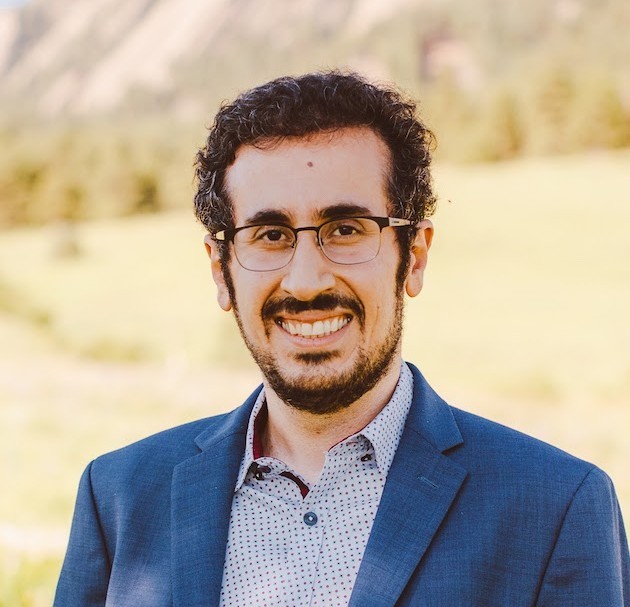
Artificial intelligence is increasingly embedded in the software systems that shape everyday life, from healthcare technologies to critical infrastructure. As these systems grow more complex, ensuring they operate transparently, fairly, and accountably has become a central challenge for computing research. This is the focus of Dr. Saeid Tizpaz‑Niari’s work.
Dr. Saeid Tizpaz‑Niari from the Department of Computer Science received the prestigious NSF CAREER award in 2025 for his proposal, " CAREER: Metamorphic Debugging for Responsible AI‑Software Development." The project focused on developing principled debugging techniques for AI-enabled software systems to detect and resolve responsibility-related issues, such as transparency, accountability, and impartiality, prior to public deployment. Recognizing that traditional debugging approaches are insufficient for AI‑software, the research proposed a novel metamorphic debugging framework that examines relationships across multiple program executions rather than individual runs in isolation.
While at UTEP, Dr. Tizpaz‑Niari’s work centered on addressing cybersecurity and performance challenges in software and machine learning systems, alongside developing methods to support privacy and fairness in algorithmic inference. In addition to his research activities, he contributed to the academic mission through teaching in the Department of Computer Science. The CAREER project also included education-related activities, with research outcomes contributing to computing curriculum expansion and increased awareness of responsible AI‑software development.
Today, although no longer at UTEP, Dr. Tizpaz-Niari continues research at the intersection of software engineering, AI, and cybersecurity, including the development of debugging tools and techniques for safety-critical and socio-critical problems.
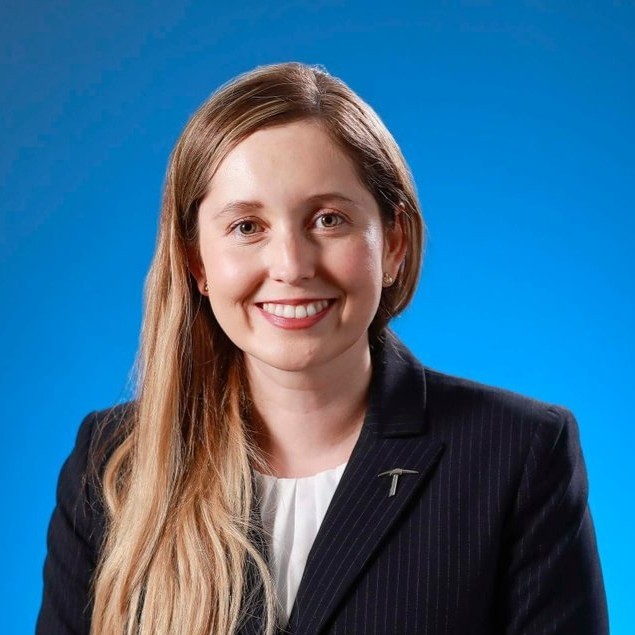
Rivers shape landscapes, carry life-sustaining water, and at times threaten the communities that depend on them. Understanding how turbulent flows interact with sediment and landforms is essential for predicting floods, managing infrastructure, and protecting ecosystems. This is the focus of Dr. Laura Alvarez’s research.
Dr. Alvarez received the NSF CAREER award in 2023 for her project, Understanding the Physics of Turbulent Flow, Erosion and Depositional Patterns in River Systems. Her work provides both theoretical and numerical frameworks for understanding how rivers evolve and for modeling their behavior more accurately.
Since joining UTEP in 2020, Dr. Alvarez has established herself as a rising leader in environmental modeling and geospatial sensing. She directs the GeoSenSE Lab (Geospatial Sensing and Sampling for the Environment), where she integrates physics-based models, machine learning, and autonomous systems, including aerial and aquatic robots, to study river dynamics and environmental change.
Her contributions include advancing river system modeling and sediment transport analysis, pioneering hybrid approaches combining artificial intelligence with fluid dynamics, and bridging disciplines through her role as an adjunct faculty in Electrical and Computer Engineering.
The societal relevance of her work is wide-reaching. From flood risk management to infrastructure planning and ecological conservation, her research equips scientists and engineers with the knowledge needed to respond to environmental challenges in dynamic river systems.
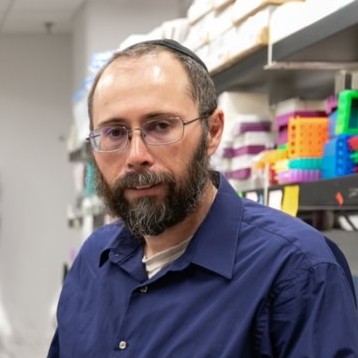
Everyday decisions, from the simplest routines to the most complex dilemmas, are guided by intricate neural circuits. Dr. Alexander Friedman investigates hidden mechanisms underlying cost-benefit choices and how stress, aging, and disease alter their function.
He received the NSF CAREER award in 2023 for his project Defining the Mechanistic Role of Striosomal Microcircuits in Decision-Making on striosomal circuits in the brain’s basal ganglia. This work examines how these circuits influence decision-making and contribute to the development of neuropsychiatric conditions.
Since joining UTEP in 2020, Dr. Friedman has established himself as a leader in computational neuroscience and behavioral physiology. At the Friedman Laboratory for Neuronal Circuit Computation, his team develops computational, electrophysiological, and optical methods to study both healthy brain function and disorders such as PTSD, addiction, and Huntington’s disease.
His accomplishments include recognition as a Kavli Fellow of the National Academy of Sciences in 2023, UTEP’s Rising Researcher Award in 2024, and multiple high-impact publications, including three in Cell. He also developed the RECORD system, a customizable platform for studying behavioral strategies in rodents.
Dr. Friedman’s work bridges neuroscience, computation, and education. By training students in innovative methods while advancing the science of decision-making, he is deepening the understanding of human behavior and opening new possibilities for mental health research.
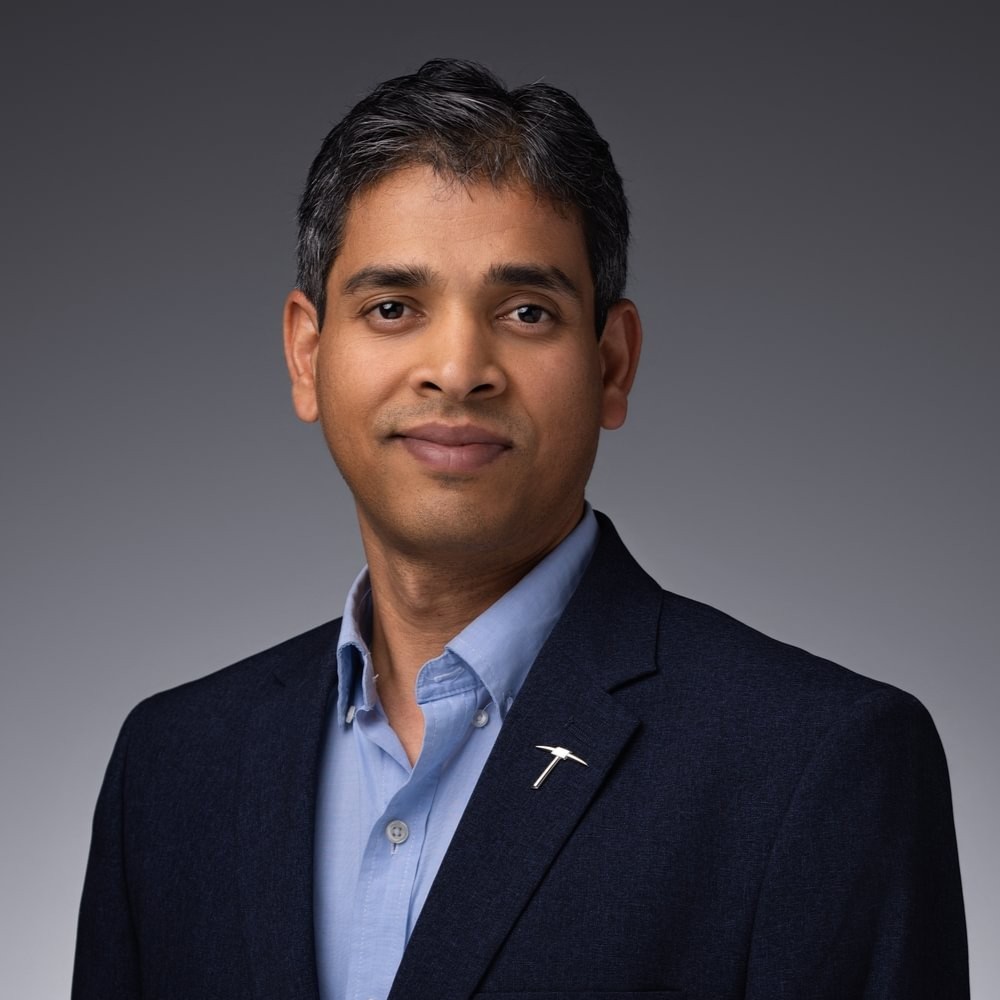
Modern life runs on invisible infrastructure, from energy grids to industrial networks. A single vulnerability can have a ripple effect across entire societies. Dr. Deepak Tosh is developing tools to enhance the security and resilience of these systems.
With his NSF CAREER award in 2023 titled ”Critical Infrastructure Resiliency through Robust Provenance and Information Sharing,” he launched new research on provenance frameworks that safeguard critical infrastructure and defend against rogue devices through continuous authentication. His work strengthens the trustworthiness of systems where failure is not an option.
At UTEP, Dr. Tosh leads efforts in blockchain-based data provenance, cyber-threat information sharing, and security for the Internet of Battlefield Things. His interdisciplinary approach draws on game theory, mechanism design, and multi-agent learning to address threats in both civilian and military environments.
He has collaborated with the Air Force and Army Research Labs to develop secure systems for cloud and battlefield settings. He has authored 73 publications with nearly 2,800 citations, advancing solutions that serve national security and industry alike. Just as importantly, he prepares students with hands-on cybersecurity training, so they graduate ready to solve real-world problems.
Dr. Tosh’s vision is to defend the essential systems society depends on, ensuring resiliency and security in an uncertain world.
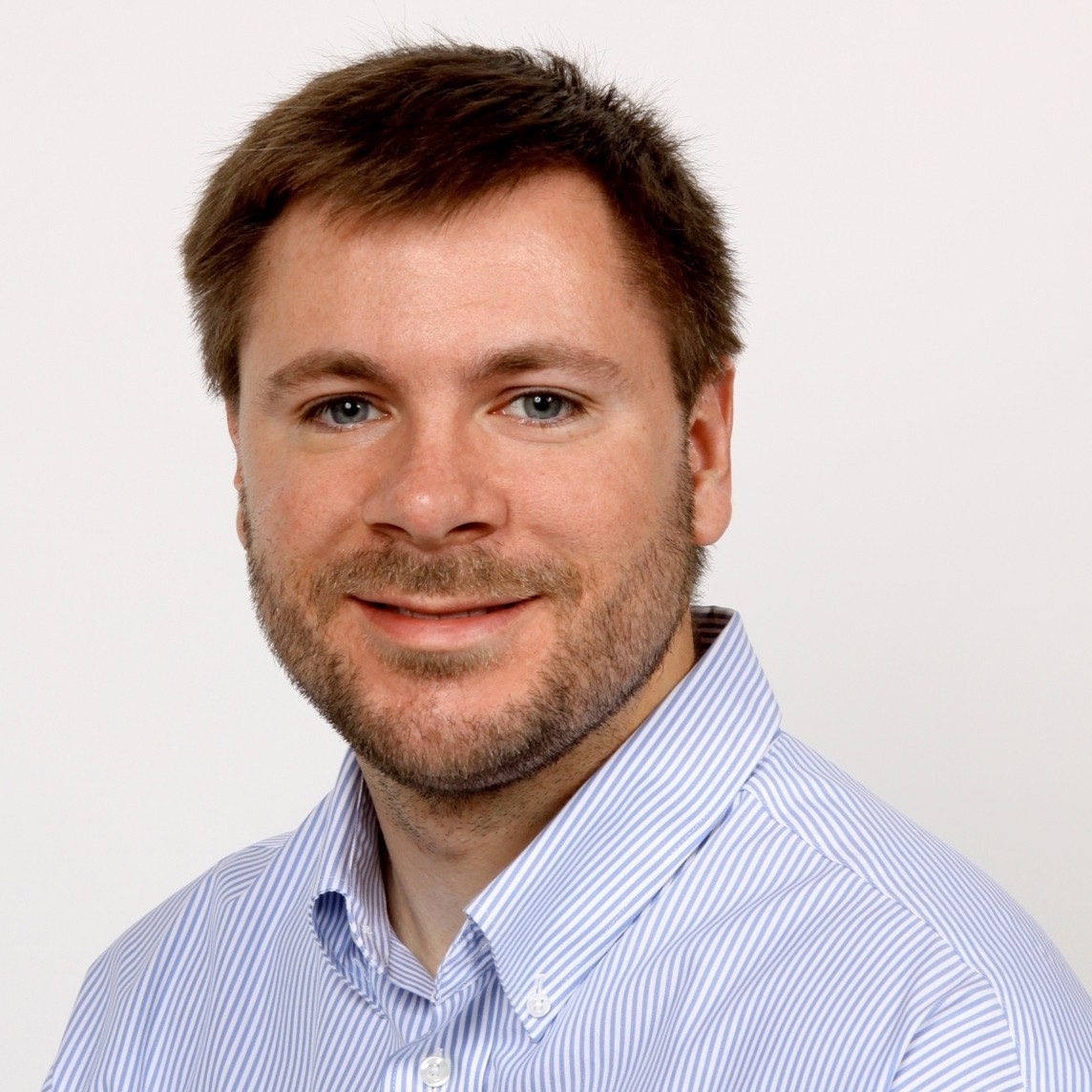
How can autonomous systems make reliable choices when the environment is uncertain, and the stakes are high? This question has guided Dr. Christopher Kiekintveld’s career in artificial intelligence and computational game theory.
Dr. Kiekintveld’s NSF CAREER award in 2013 supported early work on robust strategic reasoning for multi-agent systems, laying the foundation for applications in infrastructure protection, security, and intelligent technologies. Since then, his research has resulted in 156 publications, with more than 5,600 citations, and has been recognized with the David Rist Prize and multiple best paper awards.
The reach of Dr. Kiekintveld’s work extends far beyond theory. His computational methods have been deployed in real-world decision-support systems now used by the Federal Air Marshals Service and the Transportation Security Administration. These tools help protect national security by guiding strategies in complex, adversarial environments.
At UTEP, Dr. Kiekintveld also serves as Graduate Program Director for Computer Science, mentoring students who will lead the next generation of AI and cybersecurity research. His work demonstrates how rigorous theory, when combined with practical application, can transform how intelligent agents interact acrosscontexts ranging from border security to e-commerce.
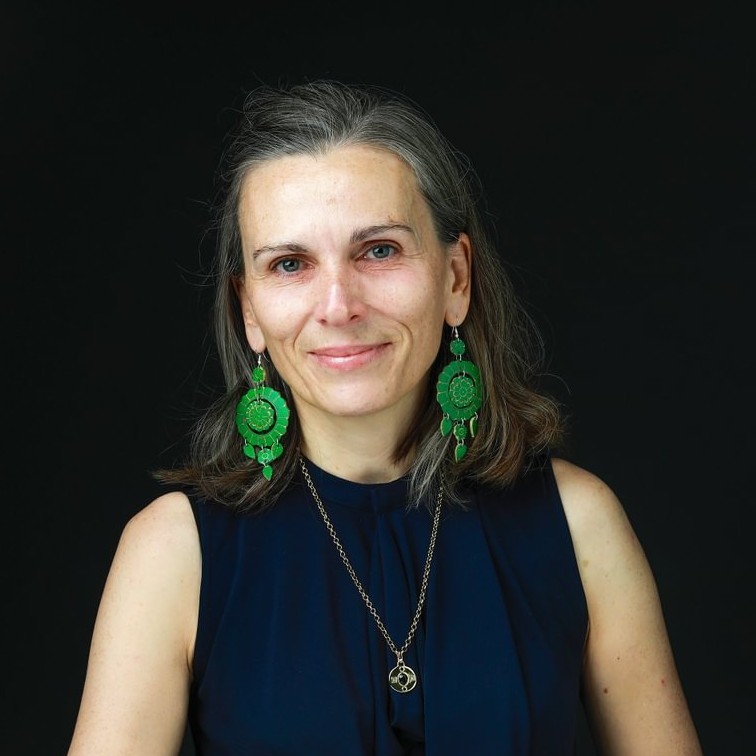
Uncertainty is at the core of many of today’s most pressing challenges. Whether in cybersecurity, biomedical engineering, or nuclear safety, systems must be designed to make reliable decisions under pressure. Dr. Martine Ceberio has built her career around advancing the computational tools that make this possible.
In 2010, she received the NSF CAREER award for her project, Symbolic-Numeric Constraint-Based Solutions for Real-World Scientific Problems. This research expanded problem-solving techniques in numerical constraint solving, laying the groundwork for applications that enhance the reliability of systems in high-stakes environments. Since then, Dr. Ceberio has authored 114 peer-reviewed publications, garnering nearly 1,000 citations, and advancing research in decision-making under uncertainty, global optimization, and interval-constraint solving. She has also earned recognition for her educational leadership, including the 2025 Piper Professor Award for excellence in teaching and mentorship. As Associate Dean for People, Culture, and Environment, she strengthens academic experiences and fosters collaboration across the College of Engineering.
Beyond UTEP, her leadership has broadened opportunities for women in computing through the Association for Computing Machinery – Women (ACM-W) chapter, the National Center for Women & Information Technology (NCWIT) Aspirations in Computing program, and a Google-funded initiative that introduces undergraduate women to research.
Dr. Ceberio’s vision is clear: to prepare both systems and people to make sound decisions in uncertain environments. By shaping the technical and educational dimensions of computing, she has become a national leader in both research and mentorship.
Earthquakes remind us how powerful and unpredictable our planet can be. Understanding the stresses that build along fault systems is critical for protecting communities. Dr. Bridget Smith-Konter has dedicated her career to modeling those forces, from the San Andreas Fault to the icy moons of our solar system.
In 2009, she received the NSF CAREER award for her project, An Integrated Geologic, Geodetic, and Paleoseismic Study of Plate Boundary Stress Evolution and Geoscience Education Utilizing the EarthScope. This work focused on modeling the stress evolution of the Pacific–North American plate boundary using time-dependent fault-deformation models informed by geologic, geodetic, and paleoseismic data.
During her time at UTEP, Dr. Smith-Konter was a trailblazer in geophysics and planetary science. She created advanced 3D models of crustal deformation and stress accumulation along the San Andreas Fault System. She also contributed to geodetic imaging of major seismic events, including the 2018 Kīlauea eruption and the 2019 Ridgecrest earthquake. Her research extended beyond Earth to model tidal stress and failure dynamics on icy moons such as Enceladus and Titan.
Her accomplishments include the NSF CAREER award in 2009, the UTEP Outstanding Research Award in 2008, and more than $1.4 million in federal funding from NASA and NSF between 2008 and 2009.
Today, although no longer at UTEP, her research continues to inform earthquake hazard assessment, planetary geology, and geoscience education. By integrating data across disciplines and even across worlds, Dr. Smith-Konter has reshaped how scientists understand stress accumulation and its consequences.
Clean water, sustainable energy, and targeted therapies often begin at the molecular scale. Dr. Juan Noveron designs self-organizing materials that address these needs in medicine, water treatment, and energy.
In 2008, he received the NSF CAREER award for his project, Metal-Mediated Supramolecular Materials in Water: Towards Programmable Molecular Complexity with DNA-Delivery Functions. This work advanced supramolecular chemistry in aqueous environments, enabling the development of materials with DNA-delivery functions and other bio-relevant applications.
Since joining UTEP in 2003, Dr. Noveron has built a nationally recognized program in nanochemistry, bioinorganic chemistry, and supramolecular science. His record includes 80 peer-reviewed journal articles, 4 U.S. patents, seven invention disclosures, and more than 250 conference abstracts. His publications have been cited 4,821 times, with an h-index of 41.
His recognition reflects both scholarly and institutional impact. He received the UT System Regents’ Outstanding Teaching Award in 2009 for excellence in undergraduate education. He has served as Provost’s Faculty Fellow and contributed to University-wide initiatives, such as the Honors Program and the Intellectual Property Committee.
The reach of his work extends from laboratories to communities. His research supports innovations in clean water technologies, gene delivery systems, and sustainable materials. At the same time, he provides students with hands-on experience in innovative chemical science, strengthening both UTEP’s research ecosystem and the workforce it develops.

Solar storms are more than distant celestial events. They can disrupt satellites, interfere with communications, and strain Earth’s power grids. Dr. Niescja Turner’s research seeks to explain how energy from the sun moves into and through Earth’s magnetosphere, shaping the phenomena we know as space weather.
During her time at UTEP, she received an NSF CAREER award in 2003 titled, Dynamics and Evolution of Magnetic Storms in Varying Solar Wind Conditions examining the behavior of the ring current under different solar wind conditions and phases of the solar cycle and laid the foundation for her broader career in space physics.
Dr. Turner has since become a nationally recognized expert on the magnetosphere, geomagnetic storms, and satellite-based data analysis. She has published extensively in leading journals, including the Journal of Geophysical Research and Solar Physics. Her work has been cited nearly 1,900 times, with an h-index of 16.
Her accomplishments include a NASA Group Achievement Award for contributions to the POLAR Satellite Electric Field Instrument Team, the Rice University Distinguished Space Physics Alum Award in 2014, and a leadership role on the American Geophysical Union task force that redefined scientific misconduct to include harassment and discrimination. Her research continues to advance the science of space weather while informing public policy and the design of technologies that keep modern life connected. Although no longer at UTEP, she remains active and productive in her field of research.