MinerAlert
MinerAlert
Biodiversity Hotspot
Endangered:
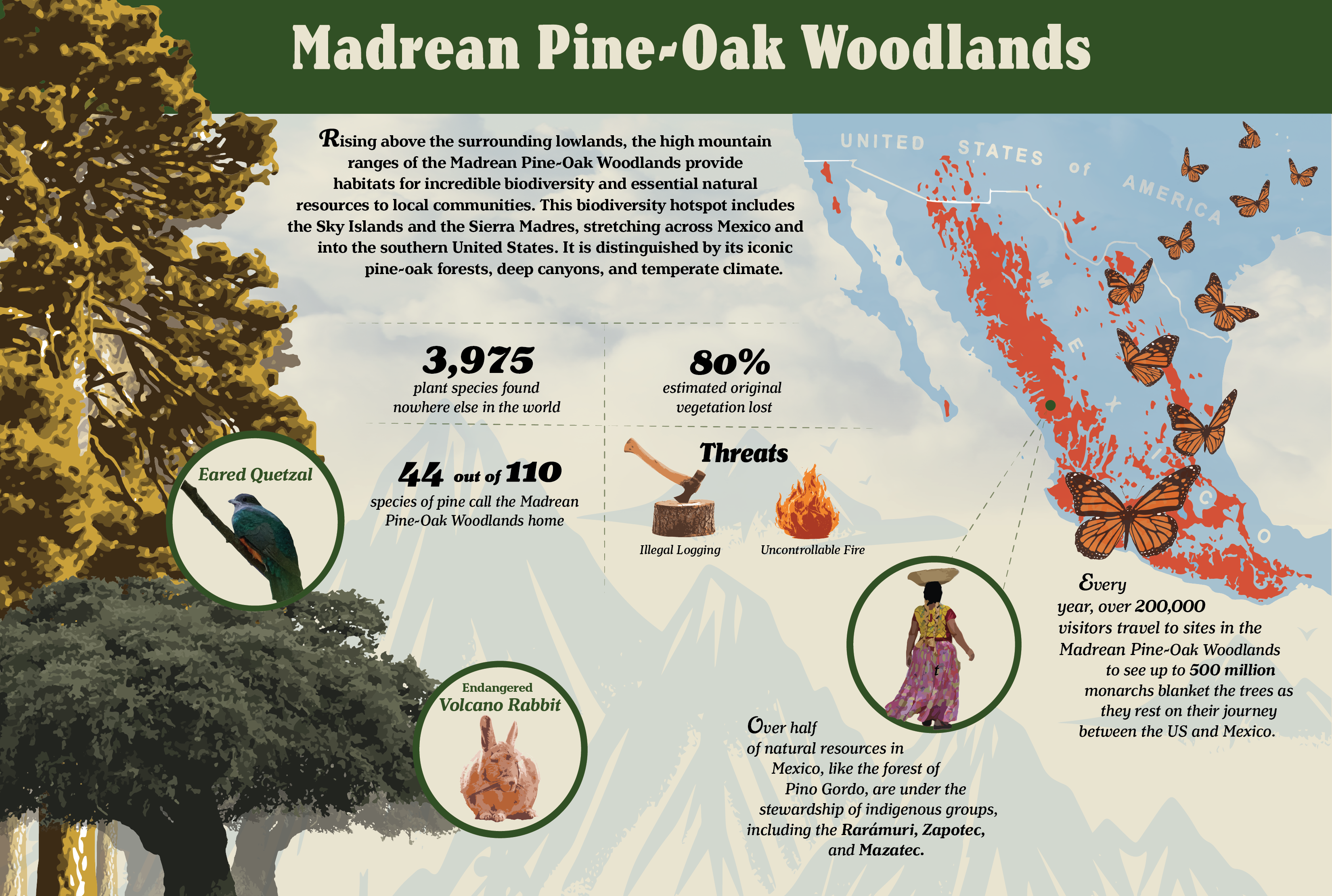
Rising above the surrounding lowlands, the high mountain ranges of the Madrean Pine-Oak Woodlands provide habitats for incredible biodiversity and essential natural resources to local communities. This biodiversity hotspot includes the Sky Islands and the Sierra Madres, stretching across Mexico and into the southern United States. It is distinguished by its iconic pine-oak forests, deep canyons, and temperate climate.
3,975 plant species found nowhere else in the world
80% estimated original vegetation lost
44 out of 110 species of pine call the Madrean Pine-Oak Woodlands home
Threats
Over half of natural resources in Mexico, like the forest of Pino Gordo, are under the stewardship of indigenous groups, including the Rarámuri, Zapotec, and Mazatec
Every year, over 200,000 visitors travel to sites in the Madrean Pine-Oak Woodlands to see up to 500 million monarchs blanket the trees as they rest on their journey between the US and Mexico.
Tarahumara Salamanader
Ambystoma rosaceum
Least Concern
AQUATIC/TERRESTRIAL
What are the major threats to the Madrean Pine-Oak Woodlands?
Logging, wildfires, overgrazing, and to a lesser extent mining have led to the loss of over 80% of the region’s pristine vegetation.
Conserving these cross-border woodlands is a challenge, with the hotspot spanning both the United States (Arizona, New Mexico, and Texas) and Mexico. National parks, state parks, and regulations on logging and grazing exist, but enforcing rules in remote areas is difficult.
The Mexican Centers for Education and Training in Forestry train local communities in sustainable agriculture and fire control. Only around 6% of the hotspot is currently protected, though international partnerships are working to safeguard more of this vital region.
Parque Ejidal San Nicolás Totolapan is a natural protected area and ecotourism park in Mexico City. Opened in 1998, they are committed to the conservation, preservation, and restoration of ecological and water resources, and above all, their human capital, which consists of 334 ejidatarios (shareholders of common land) and 220 workers.
For the community in San Nicolás Totolapan, conservation is a lifelong commitment and a source of deep pride. “For 27 years, we’ve worked in partnership with various government agencies to protect 2,300 hectares of forest, where hunting, logging, and the extraction of plants and animals are strictly prohibited. Our flagship species is the white-tailed deer, and through our Environmental Management Unit, we currently care for 20 individuals. We also protect endemic and endangered birds like the acorn woodpecker and the long-tailed wood-partridge. One of the most meaningful moments in our work happened years ago when strong winds destroyed the fence of our deer enclosure, and some deer escaped into the higher forest. At first, it was heartbreaking—but thanks to our camera traps, we’ve since confirmed that these deer are thriving and reproducing in the wild. That’s the real reward: seeing them free and safe, always protected by the community of San Nicolás Totolapan.”
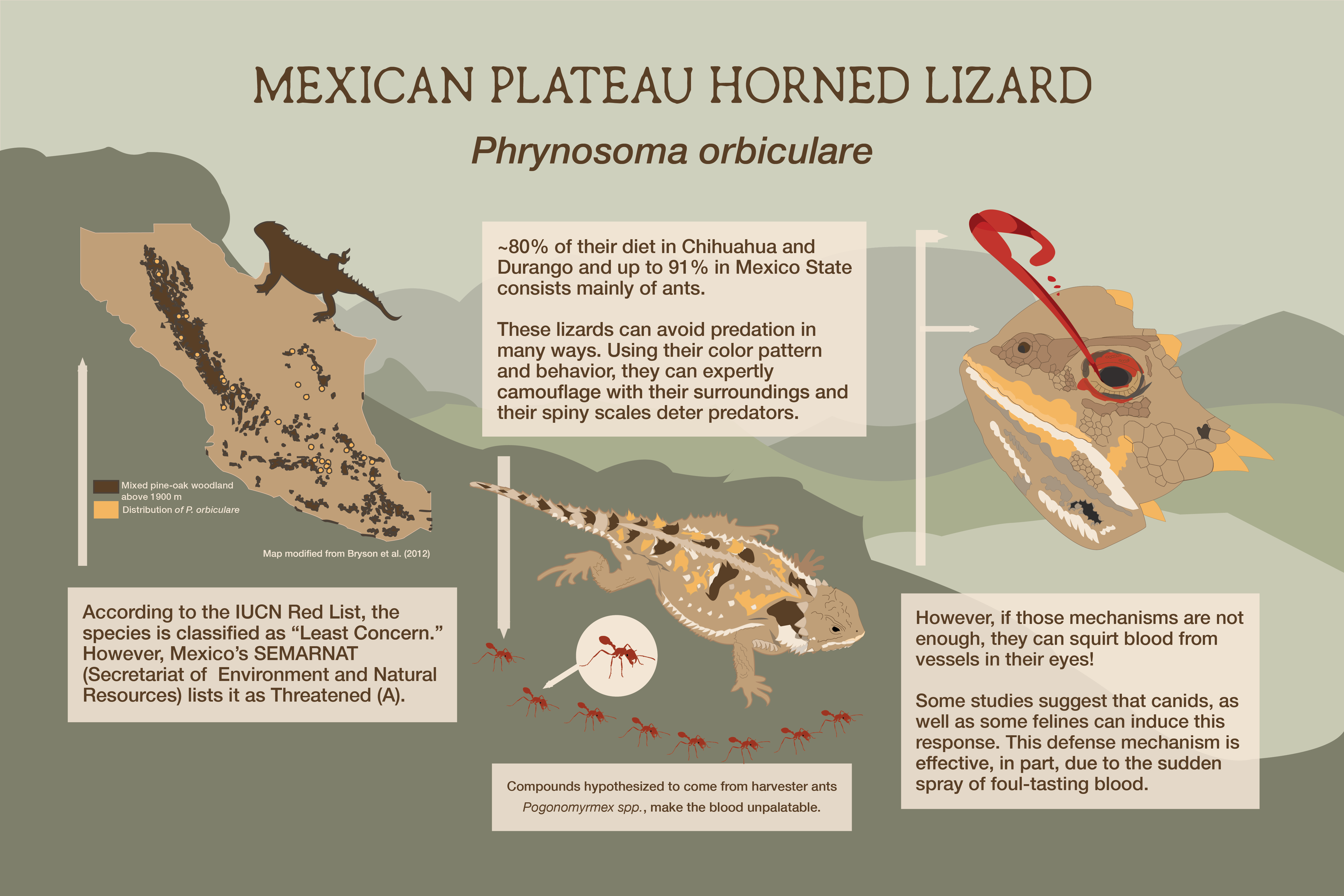
Mexican Plateau Horned Lizard
Phrynosoma orbiculare
Least Concern.
~80% of their diet in Chihuahua and Durango and up to 91% in Mexico State consists mainly of ants. These lizards avoid predation in several ways. Using their color pattern and behavior, they camouflage with their surroundings, and their spiny scales help deter predators.
However, if those mechanisms are not enough, they can squirt blood from vessels in their eyes. Some studies suggest that canids, as well as some felines, can trigger this response. This defense mechanism is effective in part because of the sudden spray of foul-tasting blood.
Compounds hypothesized to come from harvester ants (Pogonomyrmex spp.) may make the blood unpalatable.
Duges Spiny Lizard
Sceloporus dugesii
Least Concern.
Range & Habitat:
Behavior:
Fun Fact:
Diet:
Reproduction And Lifespan:
Kapok
Ceiba aesculifolia
Least Concern
Habitat:
Look at these prickles:
Other common names:
POP:
In the winter, the fruit capsules burst open with a loud pop, releasing cotton-like fibers that are attached to seeds into the wind. A single fruit capsule can send up to 200 flying seeds across the forest floor.
During the Yaqui Wars (1533–1929) between the Yaqui and the Spaniards, the Yaqui used the kapok roots as an emergency source of food and liquid. The roots could be roasted or eaten raw, while sucking on them allowed access to the tree’s liquid.
The seeds were also used to treat allergies, and the fibers within the seed capsules made fluffy stuffing for bedding. Kapok fibers from a closely related species (Ceiba pentandra) are still used today in clothing and are considered a sustainable alternative to traditional down.
Yaqui warrior (Photo by Fernando Llaguno)
Ridged-Nose Rattle Snake
Crotalus willardi
Least Concern
Diet:
Tarahumara Frog
Rana tarahumarae
Vulnerable
This species is only found in montane canyons with oak and pine–oak woodlands of the Sky Islands. It no longer occurs in Arizona and is now restricted to the Sierra Madres. (image description)
Females may lay up to 1,650 eggs during the breeding season, which runs from April to May.
Researchers testing museum specimens from the 1980s found chytridomycosis, a fungal disease that may explain the mysterious die-offs during that period.
This species is vulnerable to aggressive predators, heavy metal poisoning, flooding, drought, and disease. Conservation groups have been working to reintroduce it to Arizona since 2014.
Tarahumara frogs do not have vocal sacs, but they still produce a variety of sounds such as gentle snoring, whining, and even a squawk. They are the only species in their group known to vocalize.
Diet:
The Ocote
Pinus montezumae
Cones
Needles
Bark
Size
The Ocote is endemic to the Madrean Pine-Oak Woodland Hotspot, but is only found in Mexico.
It is typically found on slopes or in valleys throughout the hotspot, but grows especially well in volcanic soil at high elevations.
The scientific name epithet montezumae is based on the last Aztec emperor, Montezuma II.
The Ocote plays a significant role in a popular Mexican War of Independence story about a hero named Pipila.
During the battle of Guanajuato, Spanish forces barricaded themselves inside a grain storehouse.
A miner named Pipila carried a torch made of Ocote wood and set fire to the doors. The smoke blinded the Spaniards, allowing the Mexican people to enter and defeat them.
Texas Madrone
Arbutus xalapensis
Occur in Mexico, south-west New Mexico, and throughout Texas. In the United States, it is easiest to find in the Trans-Pecos and Edwards Plateau regions.
The bark is papery and peels back, revealing new bark underneath that ranges in color from white to red.
The flowers have an urn shape and range in color from pale pink to white. They are pollinated by bees and other insects.
The tree produces red berries that are eaten by birds and mammals such as thrushes and white-tailed deer. Birds disperse the seeds through their droppings.
The Texas madrone is an evergreen tree known for its striking red bark and can reach heights of up to 40 feet. Although many seeds are dispersed, very few germinate. Attempts to cultivate the species have had low success rates due to its need for specific growing conditions.
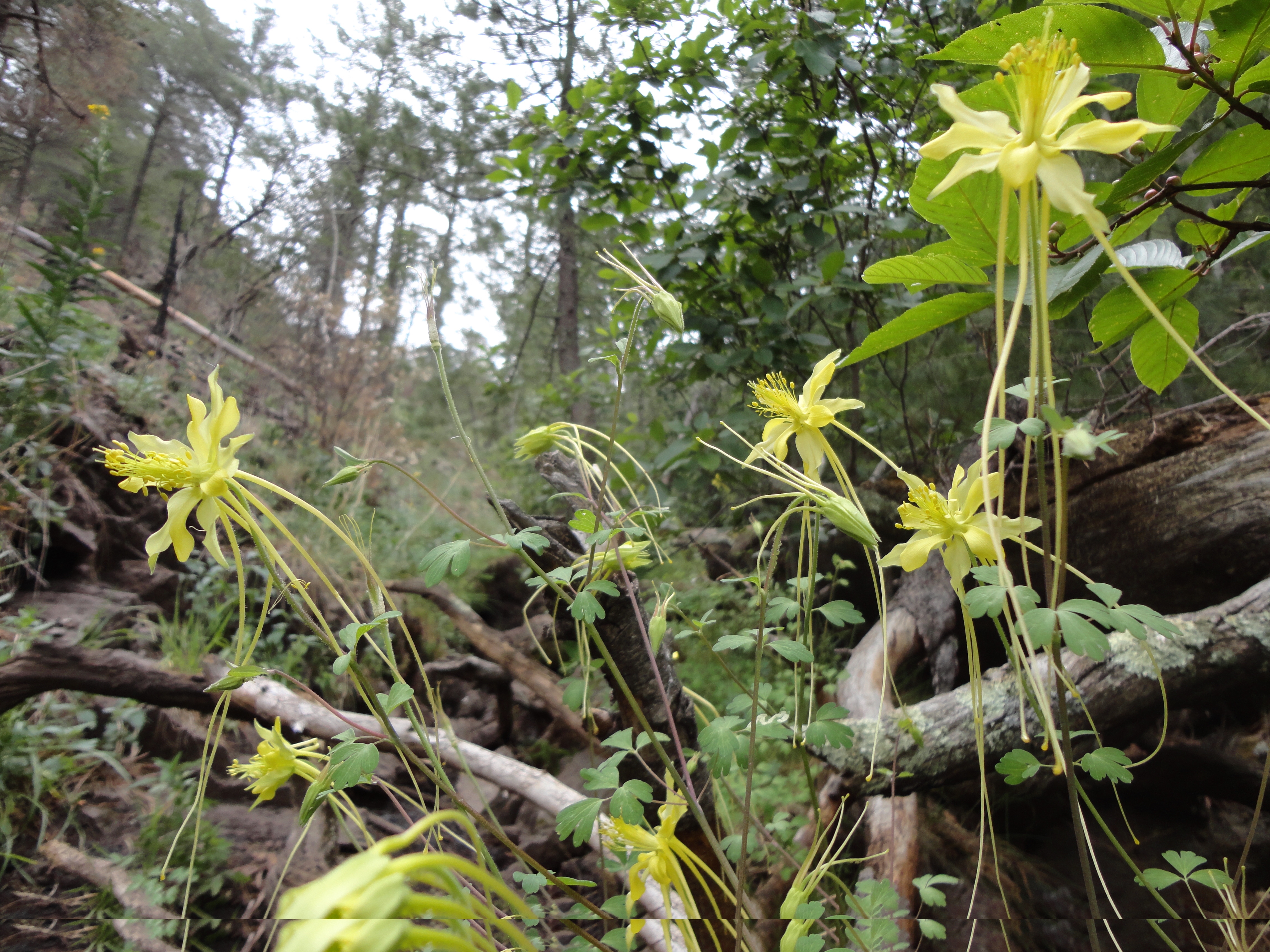
One of the most awe-inspiring and isolated places I have ever botanized is the Tobe Gap Trail, which leads to a hidden watershed at the base of Mount Livermore, the second-highest peak in Texas. This closed canyon in the Madrean Pine-Oak Woodland hotspot shelters towering 60-foot-tall ponderosa and southwestern white pines. Vines of wild cucumber drape dense stands of Gambel oak, and the understory bursts with longspur columbines, sunflowers, fragrant mints, geraniums, and patches of giant male fern with three-foot fronds. While surveying this lush refuge, I had the rare privilege of documenting the federally endangered herb, Livermore sweet cicely, found nowhere else in the United States. The silence in the canyon is almost overwhelming, broken only by the calls of birds that rely on this sky island during their migration. Surrounded by the scent of pine, juniper, and wildflowers, the place feels untouched—like a sanctuary lost to time. In the heart of the Davis Mountains, it is a living reminder of how biodiversity endures in even the most unexpected corners of the Chihuahuan Desert.
– Jeff Keeling, Graduate Student
“Uno de los lugares más inspiradores y aislados en los que he botanizado es el sendero de brecha Tobe, el cual lleva a una cuenca escondida en la base del Monte Livermore, el segundo pico más alto en Texas. Este cerrado cañón en el punto crítico del bosque de Pino-Encino Madrense refugia pinos ponderosa y pinos blancos del suroeste que se elevan hasta los 60 pies de altura. Enredaderas de pepino silvestre cubren las densas arboledas de roble de Gambel, y el sotobosque revienta con plantas aguileñas de espuelas largas, geranios y pedazos de helecho macho gigante con frondas de casi un metro. Mientras contemplaba este exuberante refugio, tuve el raro privilegio de documentar a la hierba en peligro federal, Cerifolio o Mirra de Livermore, que no se encuentra en ningún otro lugar de los Estados Unidos. El silencio del cañón es casi abrumador, interrumpido sólo por los cánticos de los pájaros que dependen de estas elevadas tierras durante su migración. Rodeada por el olor del pino, el enebro y las flores silvestres, este lugar se siente intacto — como un santuario perdido en el tiempo. En el corazón de las montañas Davis, es un recordatorio vivo de cómo la biodiversidad perdura en las esquinas más inesperadas del Desierto Chihuahuense.”
– Jeff Keeling, Estudiante de Posgrado