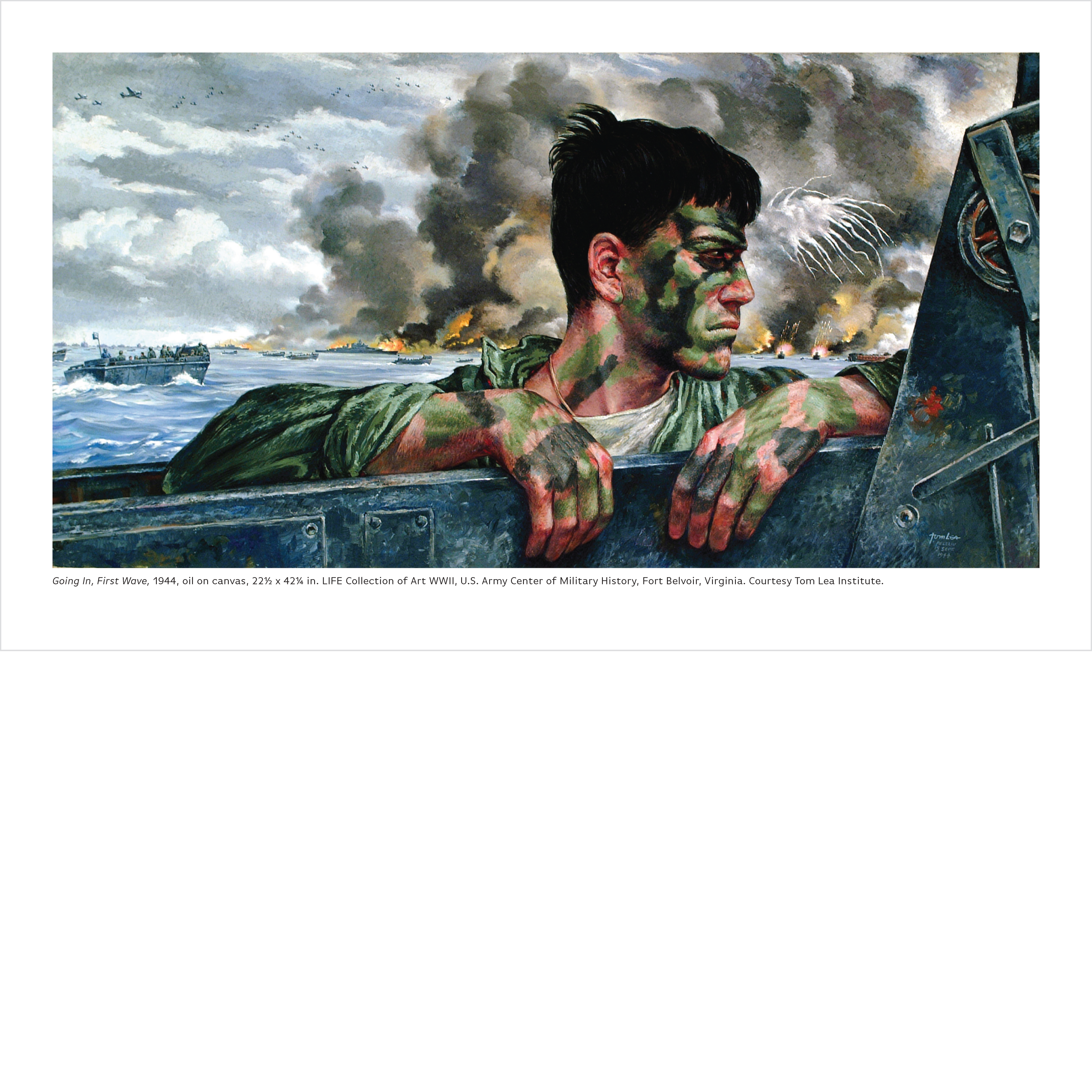
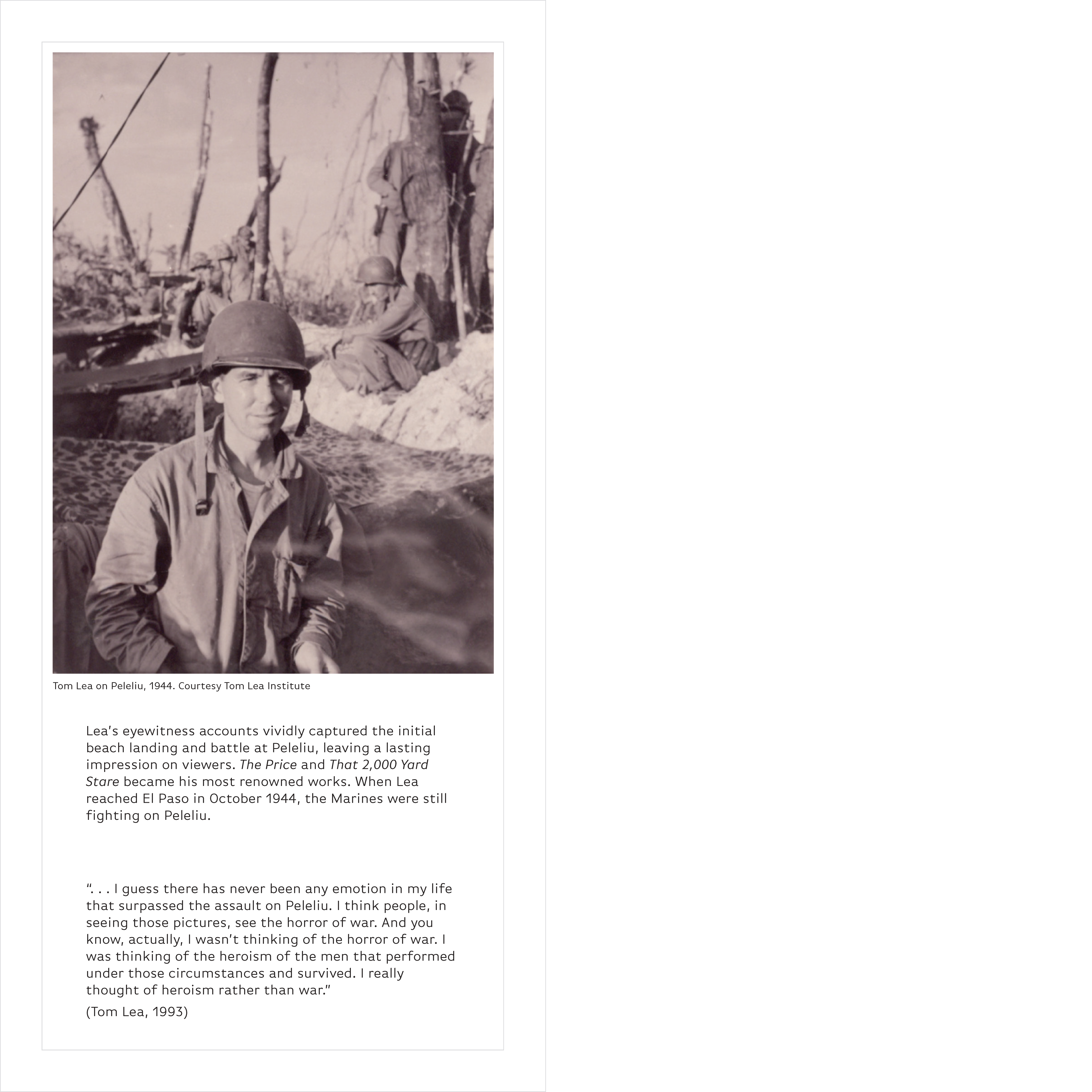
In September 1944, Lea landed on Peleliu, a small island
in the South Pacific, with the First Marine Division. He
remained on the island during the first thirty-two hours
of the U.S. assault on the Japanese, memorizing what he
saw as he tried to survive one of the bloodiest battles of
WWII. Afterward, from a naval vessel offshore, he
recorded the burden of his memory in a sketchbook with
shaking hands.
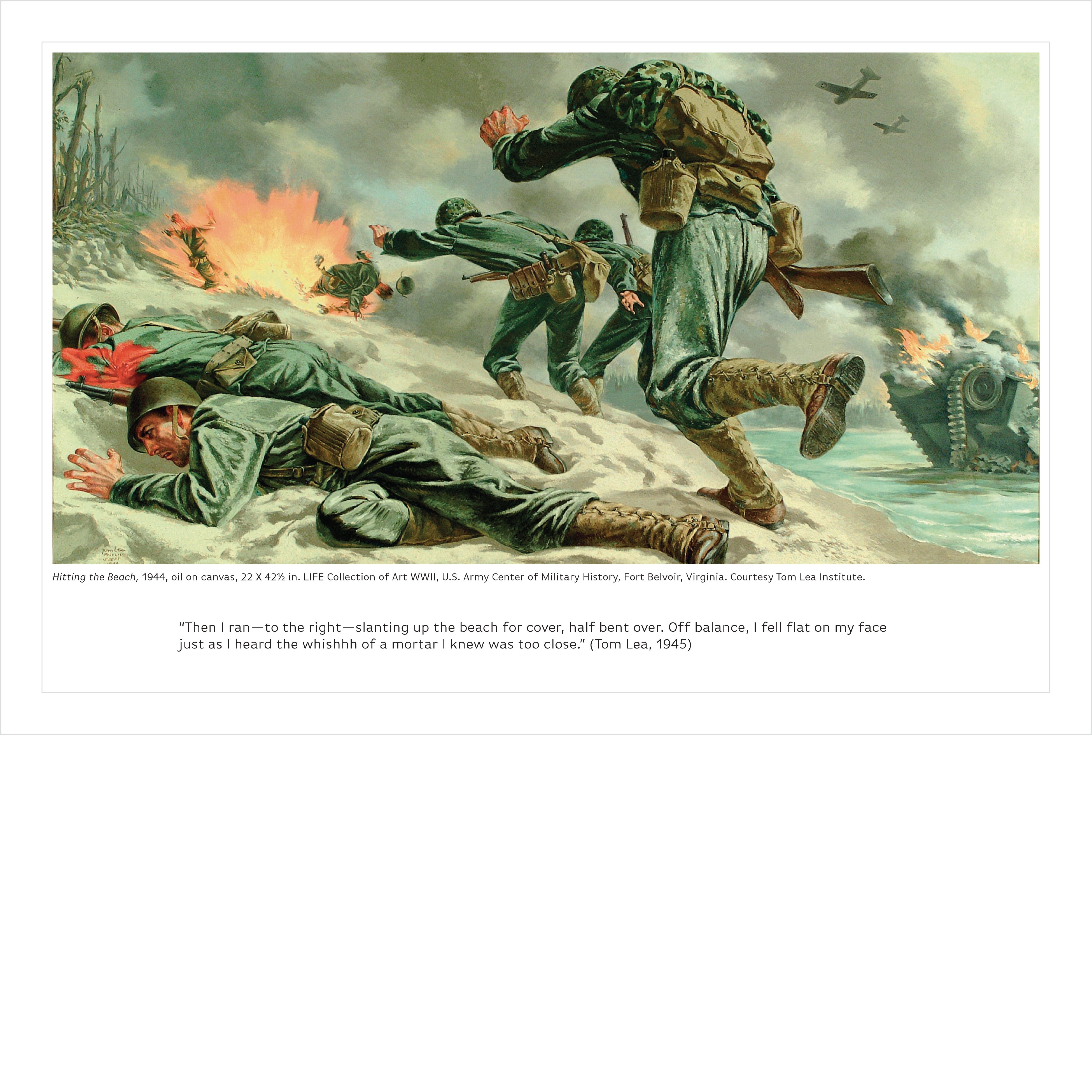
“Then I ran—to the right—slanting up the beach for cover, half bent over. Off balance, I fell flat on my face just as I heard the whishhh of a mortar I knew was too close.” (Tom Lea, 1945)
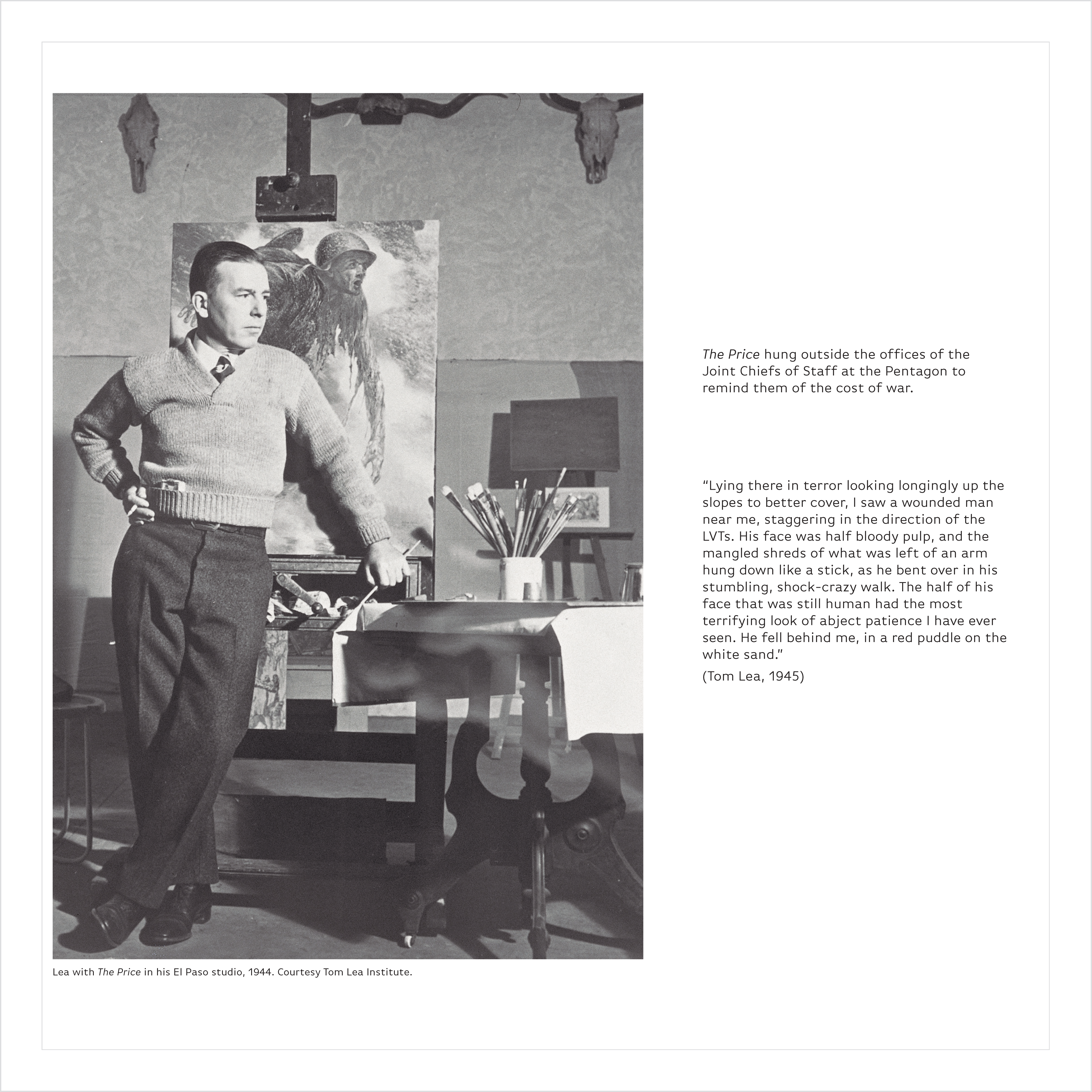
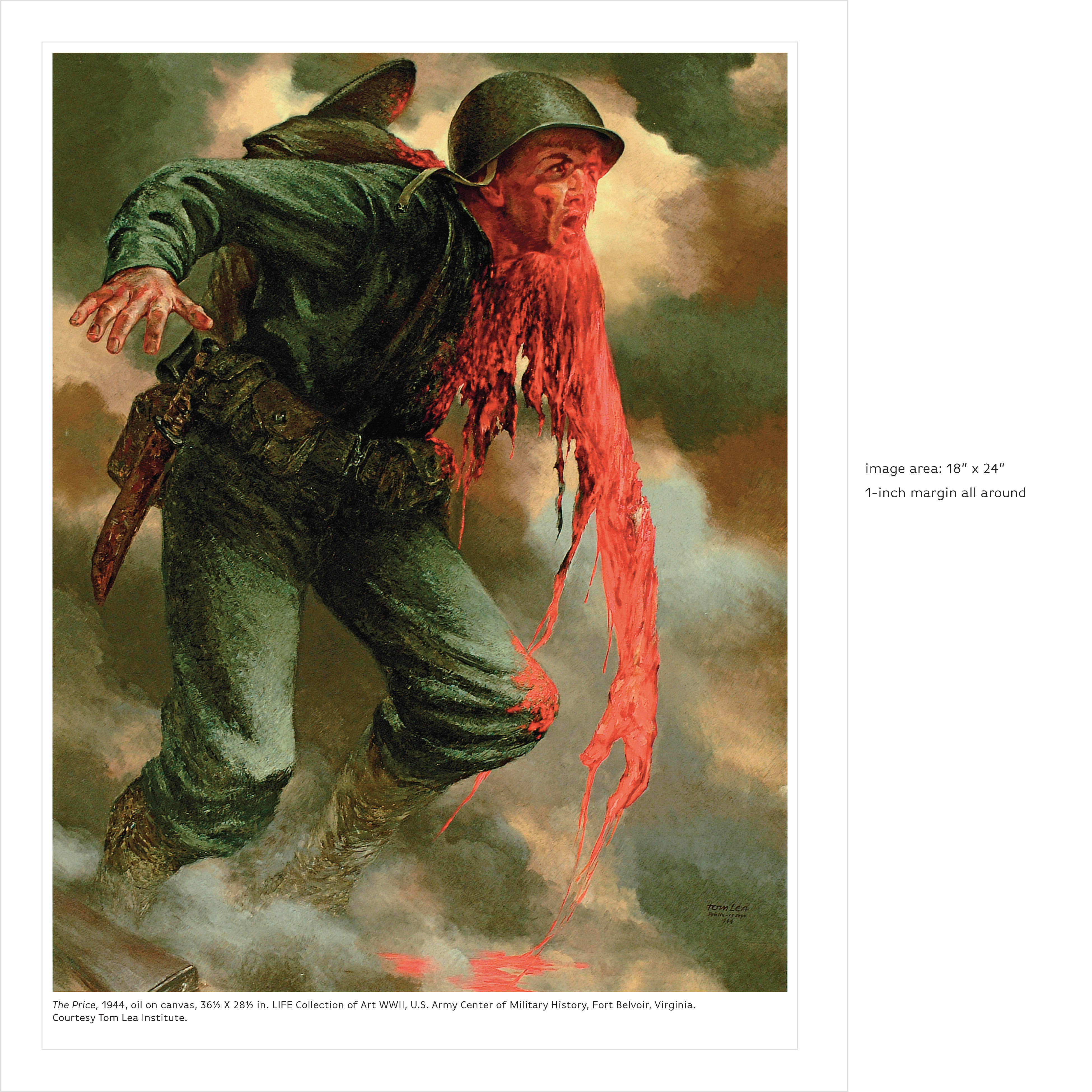
The Price hung outside the offices of the Joint Chiefs of Staff at the Pentagon to remind them of the cost of war.
“Lying there in terror looking longingly up the slopes to better cover, I saw a wounded man near me, staggering in the direction of the LVTs. His face was half bloody pulp, and the mangled shreds of what was left of an arm hung down like a stick, as he bent over in his stumbling, shock-crazy walk. The half of his face that was still human had the most terrifying look of abject patience I have ever seen. He fell behind me, in a red puddle on the white sand.”
(Tom Lea, 1945)
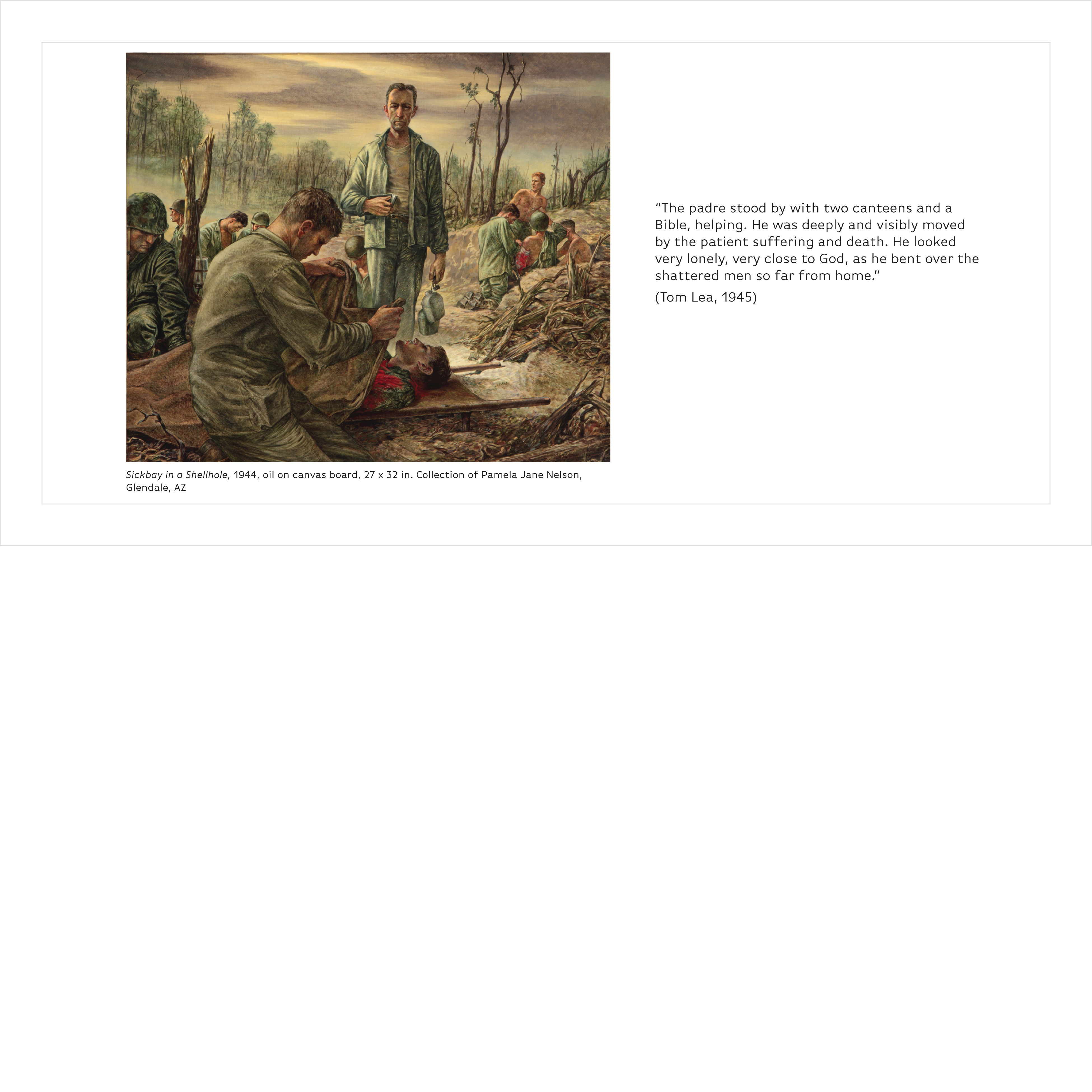
“The padre stood by with two canteens and a Bible, helping. He was deeply and visibly moved by the patient suffering and death. He looked very lonely, very close to God, as he bent over the shattered men so far from home.”
(Tom Lea, 1945)
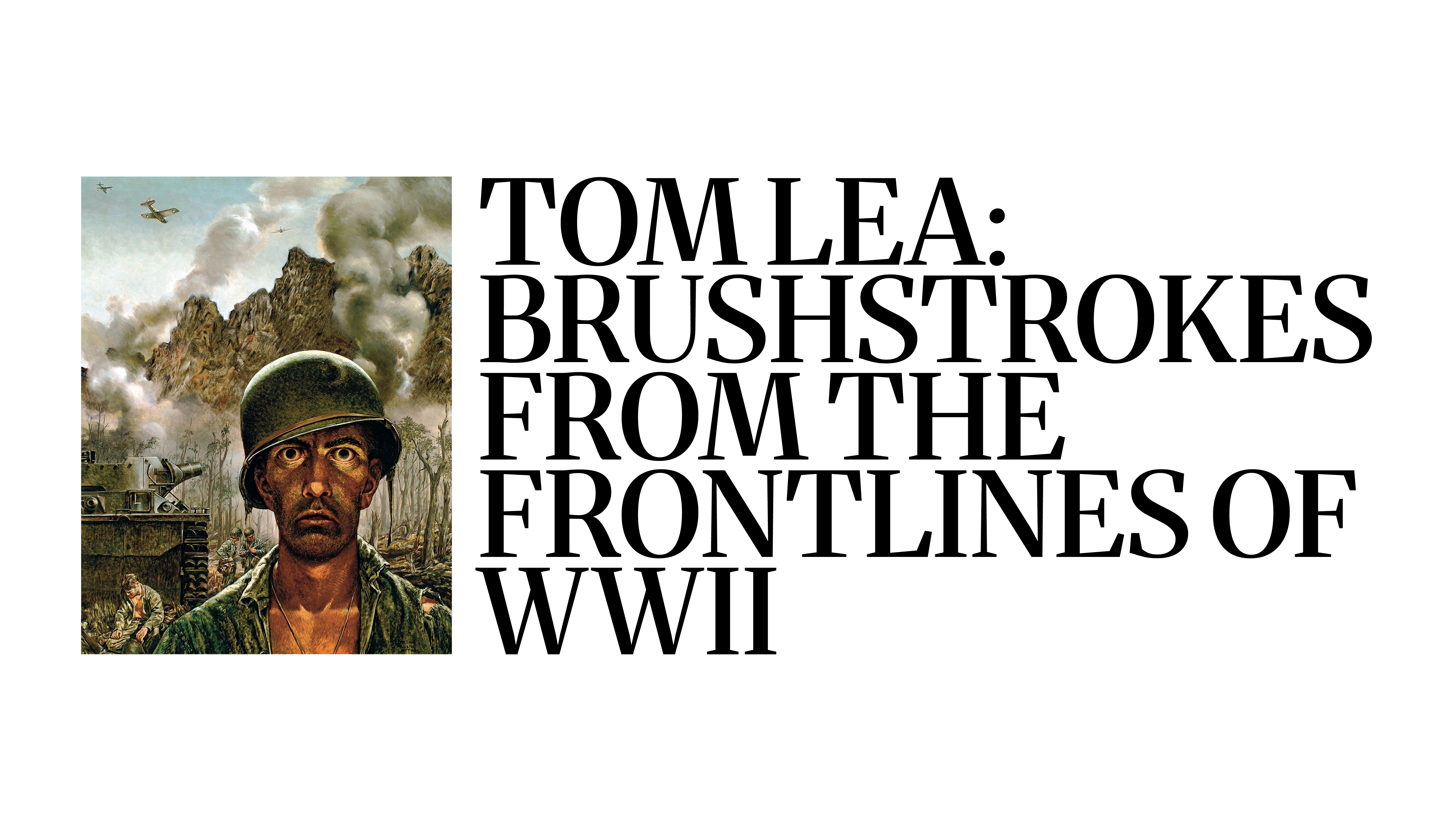
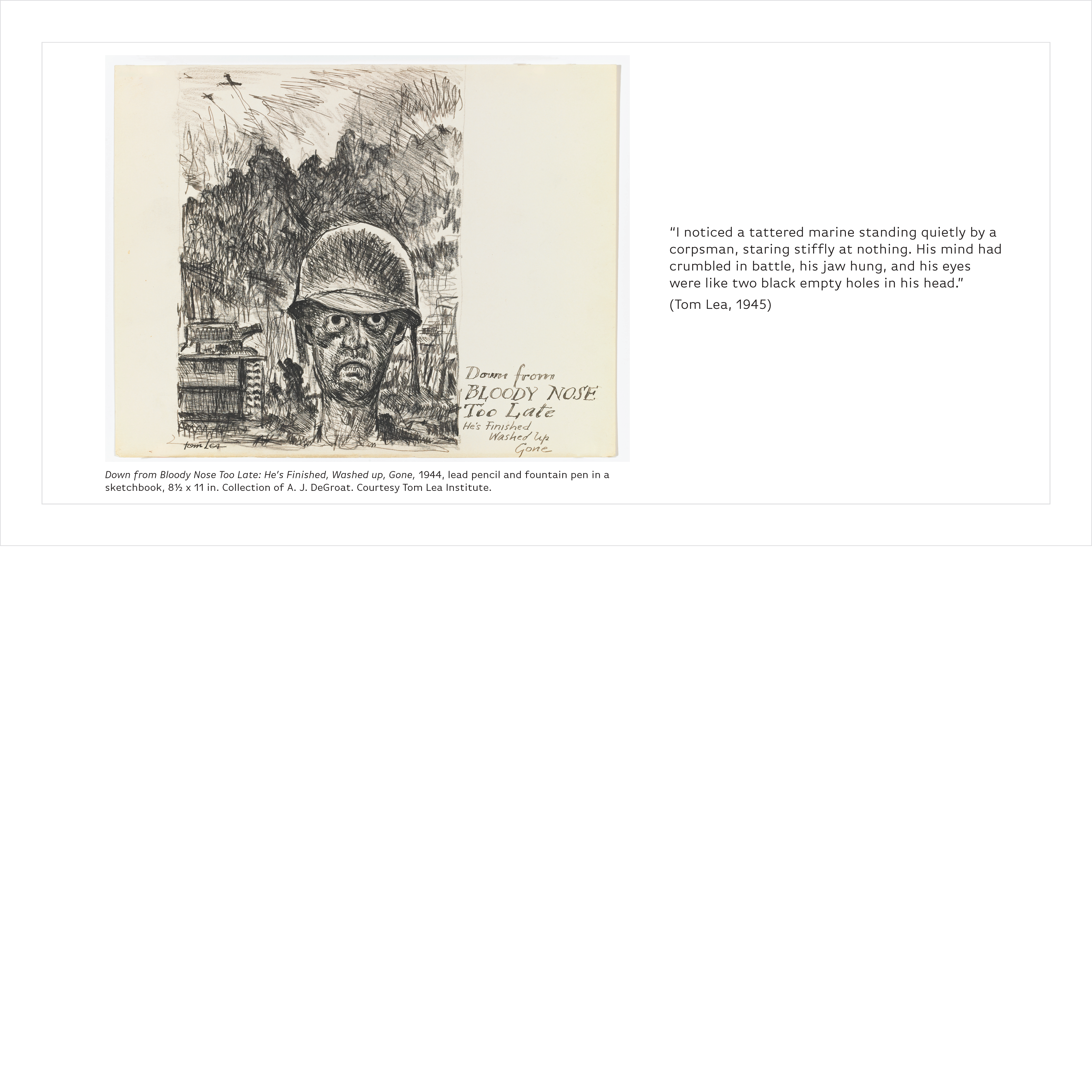
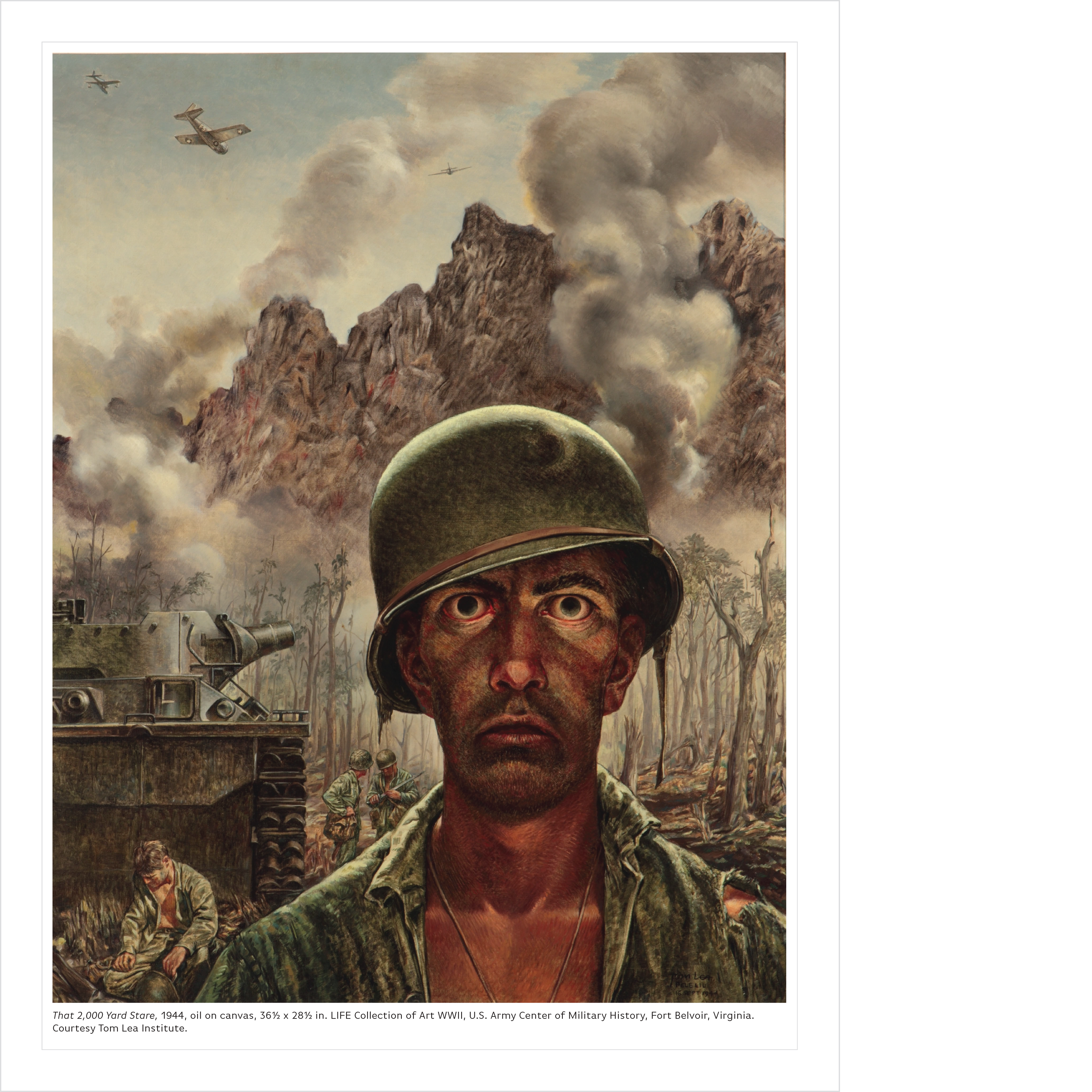
“I noticed a tattered marine standing quietly by a corpsman, staring stiffly at nothing. His mind had crumbled in battle, his jaw hung, and his eyes were like two black empty holes in his head.” (Tom Lea, 1945)
Lea’s eyewitness accounts vividly captured the initial beach landing and battle at Peleliu, leaving a lasting impression on viewers. The Price and That 2,000 Yard Stare became his most renowned works. When Lea reached El Paso in October 1944, the Marines were still
fighting on Peleliu.
“. . . I guess there has never been any emotion in my life that surpassed the assault on Peleliu. I think people, in seeing those pictures, see the horror of war. And you
know, actually, I wasn’t thinking of the horror of war. I was thinking of the heroism of the men that performed under those circumstances and survived. I really thought of heroism rather than war.” (Tom Lea, 1993)