
CHS Professor Receives Competitive Cancer Research Grant
Published August 8, 2025
By Darlene Muguiro
UTEP College of Health Sciences
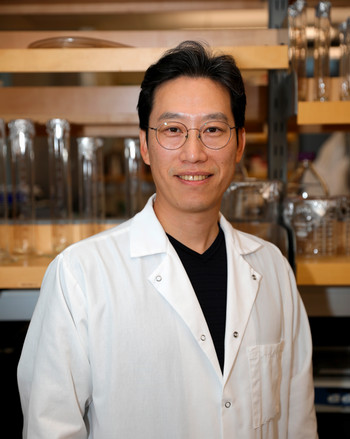
Dr. Kisuk Min, assistant professor of Kinesiology, was recently selected for a highly competitive academic research grant from the Cancer Prevention and Research Institute of Texas (CPRIT). This year, CPRIT invested more than $93 million for cancer research and prevention. Min’s $200,000 two-year pilot study grant will focus on gathering preliminary date elucidating the role of specific gene called MKP-5 in chemotherapy-induced cardiotoxicity; specifically, how lower levels of the MKP-5 gene yield a protective effect on cardiac tissue among cancer patients receiving chemotherapy.
Min expressed his surprise about having been selected for the grant, following a limited submission process at UTEP that yielded only two CPRIT proposals, including his. Min’s project is among others from institutions across Texas with prestigious cancer research programs.
“This was a very competitive process, and honestly, I was not expecting this good news. In fact, when I opened the email and saw the word “congratulations,” I thought it was to congratulate the other professor who had submitted their project,” he said.
Min explained that while chemotherapy is the standard treatment for cancer, it has many serious side effects, including weakening the heart tissue. This is most often seen in older cancer patients. In these cases, oncologists are not able to increase the dosage of the medication because patients’ heart tissue is too weak.
“The mortality rate of older adult cancer patients is higher because their doctors have to lower the chemotherapy dosages to protect the heart,” he said. “But if we can protect the heart tissue against this toxic effect, we can ultimately increase the percentage of these patients who are able to complete their treatment.”
Min’s grant is based on a prior project that demonstrated MKP-5 deficient mice exhibit cardioprotective effects against heart failure compared to wild-type mice. The study proved Min’s theory that lower levels of MPK-5 provides a cardioprotective impact was correct. The results were published in 2021 in Frontiers in Immunology.
“Based on these results, we expect to see a similar protective effect with the removal of the MPK-5 gene in this new project. But this time, we will be looking at the impact on muscle tissue among mice who are being treated with doxorubicin, a common drug used to treat various cancers,” he said.
Min emphasizes, “The significance of my research, which utilizes both animal and cell models, lies in identifying and developing innovative therapeutic strategies such as MKP-5 inhibitors for cancer patients, with the goal of improving cure rates, extending survival, and ultimately enhancing patients’ quality of life.”
Min hopes his work will lay the foundation for future studies examining the effects of MKP-5 reduction in human cancer patients. Looking ahead, he aims to collaborate with the Paul L. Foster School of Medicine at Texas Tech University Health Sciences Center El Paso and local hospitals to obtain heart tissue samples from cancer patients, enabling further advancement of this research.
###
Go Miners!


