
STEM Education: What It Is, Why It Matters and 6 Key Benefits
Last updated August 2026
Since the term “STEM” was coined by the U.S. National Science Foundation in 2001, the importance of STEM education has become a critical topic. The initial concern was a proficiency gap in science, technology, engineering and mathematics compared with other nations, posing a risk to the country's global economic competitiveness. That concern underscored the need for stronger STEM education.
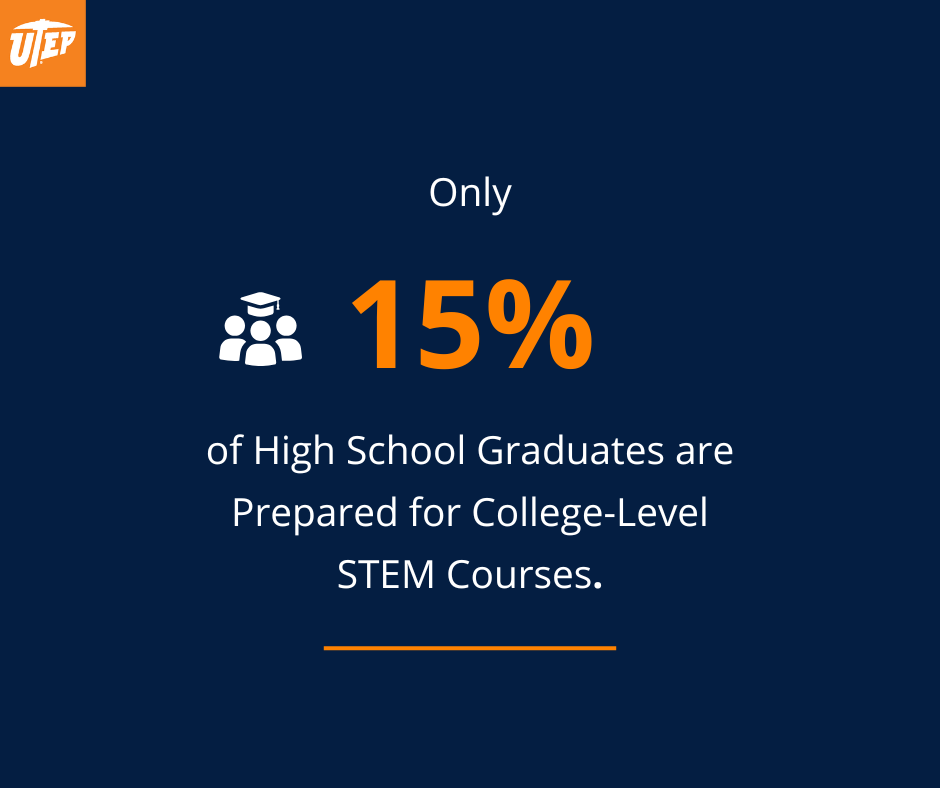
Unfortunately, that gap persists. According to ACT’s 2025 Graduating Class Profile Report, only 15% of ACT-tested high school graduates met the ACT STEM College Readiness Benchmark, highlighting the continued need to strengthen students’ preparation for college-level STEM coursework.
This readiness gap is even larger for students from underserved communities. To address it, we need to provide better resources, fairer access and more effective STEM teaching to prepare students for college and their future careers.ide better resources, fairer access, and more effective STEM teaching to prepare students for college and their future careers.
What Is STEM Education?
STEM stands for science, technology, engineering and mathematics. But STEM education is more than simply teaching these four subjects separately.
STEM education integrates the four areas into a cohesive, interdisciplinary and applied approach to learning. Rather than limiting students to academic theory, a strong STEM curriculum helps them apply knowledge across subjects to real-world questions and problems.
For example, students in STEM classes may be asked to identify a problem, use scientific and mathematical concepts to develop a possible solution, test their ideas, analyze the results and make improvements. This type of hands-on STEM learning helps students make connections across different subjects while building practical problem-solving skills.
As a result, students in any subject can benefit from STEM education. That’s one reason some educators and organizations use the term STEAM, which adds the arts or other creative disciplines to the approach.
The critical thinking, collaboration and applied reasoning developed through STEM learning can strengthen how students approach challenges across disciplines.
Why Is STEM Education Important?
A robust STEM education system is not just about preparing future scientists; it helps students become stronger thinkers, collaborators and innovators.
STEM education gives students opportunities to ask questions, analyze information, test ideas, learn from failure and find solutions to complex problems. These skills are increasingly valuable as technology continues to transform how people live and work.
The workforce reflects that growing importance. According to the National Center for Science and Engineering Statistics’ 2026 “STEM Talent: Education, Training and Workforce” report, the U.S. STEM workforce grew 26% between 2013 and 2023, compared with 9% growth in the non-STEM workforce.
The report also highlights continued challenges in K-12 STEM education. In a 2023 international assessment, U.S. eighth-grade students scored in the middle of 18 advanced economies in science and in the bottom third in mathematics.
Access to effective STEM education can help prepare more students for a wider range of opportunities while building broadly useful skills they can carry into other areas of study and work.
Let’s explore six of the key benefits of STEM education for students
6 Key Benefits of STEM Education
1. It Builds Innovative Thinking
One of the primary advantages of STEM is that it prepares students to become more innovative thinkers. This is especially important as rapid advances in science and technology create complex problems that require new approaches.
Through experimentation, students in a strong STEM program learn to observe, analyze and tackle issues from unique angles. This type of thinking helps them approach unfamiliar situations with flexibility, persistence and confidence.
A recent study found that using design thinking in STEM classes helps students get better at solving problems and generating creative ideas. Researchers worked with high school students who followed steps such as understanding the problem, brainstorming, building models and testing them. The students became better at applying science and math in practical situations.
The study shows how applied STEM learning can help students respond to new challenges with greater flexibility and originality.
2. It Fosters Lifelong Curiosity
STEM-focused education has become increasingly important as technology and engineering continue to evolve.
STEM learning encourages students to ask questions, investigate how things work and search for solutions rather than simply memorize information. That curiosity can encourage lifelong learning and help students adapt as technologies, industries and career requirements continue to change.
By encouraging exploration and discovery, STEM education helps students become more comfortable learning new concepts, testing ideas and responding effectively when circumstances change. These habits can serve them well throughout their education, careers and everyday lives.

3. It Inspires Creativity and Ingenuity
STEM activities give students room to experiment, imagine and develop their own approaches. Because of this, students learn to analyze questions both critically and creatively. Open-ended, STEM-focused activities cultivate creativity by motivating students to use their own ideas and resources to interpret a situation and develop possible solutions.
A recent study found that students become much more creative when they learn through hands-on STEM projects.
Researchers reviewed data from eight earlier studies and discovered strong evidence that this type of learning helps students use science and math in new, flexible ways. The study also showed that project-based STEM learning helps students think more deeply, understand concepts better and address challenges by making connections across different subjects.
4. It Develops Collaboration and Communication
Most STEM careers don’t take place in silos. Engineers, scientists, researchers and other professionals often work together to address complex challenges, test ideas and evaluate results.
Team projects, especially in STEM subjects, allow students to collaborate on complicated problems and develop valuable interpersonal skills. These kinds of projects also allow teachers to observe how their students communicate, compromise and lead discussions with their peers.
This peer-to-peer collaboration prepares students to excel in STEM careers as well as other fields where effective communication, teamwork and leadership are key.
5. It Teaches Resilience and Builds Confidence
One important benefit of STEM education is the resilience students can build through experimentation, which inherently involves trial and error. This process teaches students a valuable life lesson: Failure is not an endpoint but a steppingstone to success.
Accepting and learning from failed attempts makes eventual success more rewarding and motivates students to keep trying. This resilience is a critical skill that empowers them to believe in their own abilities, even when facing difficult challenges.
6. It Prepares Students for High-Demand Careers
Perhaps the most tangible benefit of STEM education is the career opportunity it can help provide.
According to the U.S. Bureau of Labor Statistics, employment in STEM occupations is projected to grow faster than employment in non-STEM occupations over the next decade.
A STEM focus in school can help prepare students for career paths in areas such as engineering, computer science, environmental research, mathematics, health sciences and data technology.
And even for students who ultimately pursue careers outside traditional STEM fields, the habits developed through STEM learning can remain valuable across a wide range of professions.
The Takeaway: The Purpose of STEM Education
Ultimately, the purpose of STEM education is to help students understand how science, technology, engineering and mathematics can work together to address real-world challenges.
These six points are just a few of the many advantages of STEM education. By providing students with a solid foundation in science, technology, engineering and mathematics — and teaching them how to apply that knowledge — we empower them with skills and confidence they can use in school, their careers and throughout their lives.
How Can You Encourage STEM Learning in Your Class?
Educators can encourage STEM learning by giving students opportunities to ask questions, experiment, collaborate, solve problems and connect classroom concepts to real-world situations.
UTEP’s online Graduate Certificate in STEM Education is a resource for teachers and educational leaders looking to increase STEM literacy through formal and informal learning opportunities across a variety of settings. The program focuses on practical approaches to engaging modern, multicultural students, with coursework spanning mathematics and science education, educational technology and more.
Educators interested in taking the next step can also explore UTEP’s online M.A. in Education with a Concentration in STEM Education, which prepares educators to advance as leaders in STEM education.
Through stronger STEM teaching and learning, educators can help more students build the skills and confidence to support their continued learning and growth.


