
How to Become an ESL Teacher: Your Action Plan for a Global Career
Teaching English as a Second Language (ESL) allows you to build an impactful career while helping others communicate confidently, access better employment and education opportunities, and integrate into their communities.
At the same time, you’ll gain meaningful connections with people from diverse backgrounds, develop valuable communication and cross-cultural skills, and enjoy the flexibility to teach online, abroad, or in classrooms and programs of all types.

In this guide, we’ll cover everything you need to know, including:
- How to become an ESL teacher
- What to do if you don’t have a degree
- How to specialize in teaching adults
- The best certifications and job opportunities
What Is Teaching English as a Second Language (ESL)?
Teaching English as a Second Language means helping non-native speakers develop fluency in reading, writing, listening, and speaking—a skill set that is in higher demand than ever.
According to the British Council, there are an estimated 1.5 billion English learners worldwide, and the global language‑learning market is booming. Global Market Insights valued it at $61.5 billion in 2023 and projects it will grow by about 20% annually through 2032. This growing demand creates strong opportunities for qualified ESL teachers in a variety of learning environments.
What Are the Career Options for ESL Teachers?
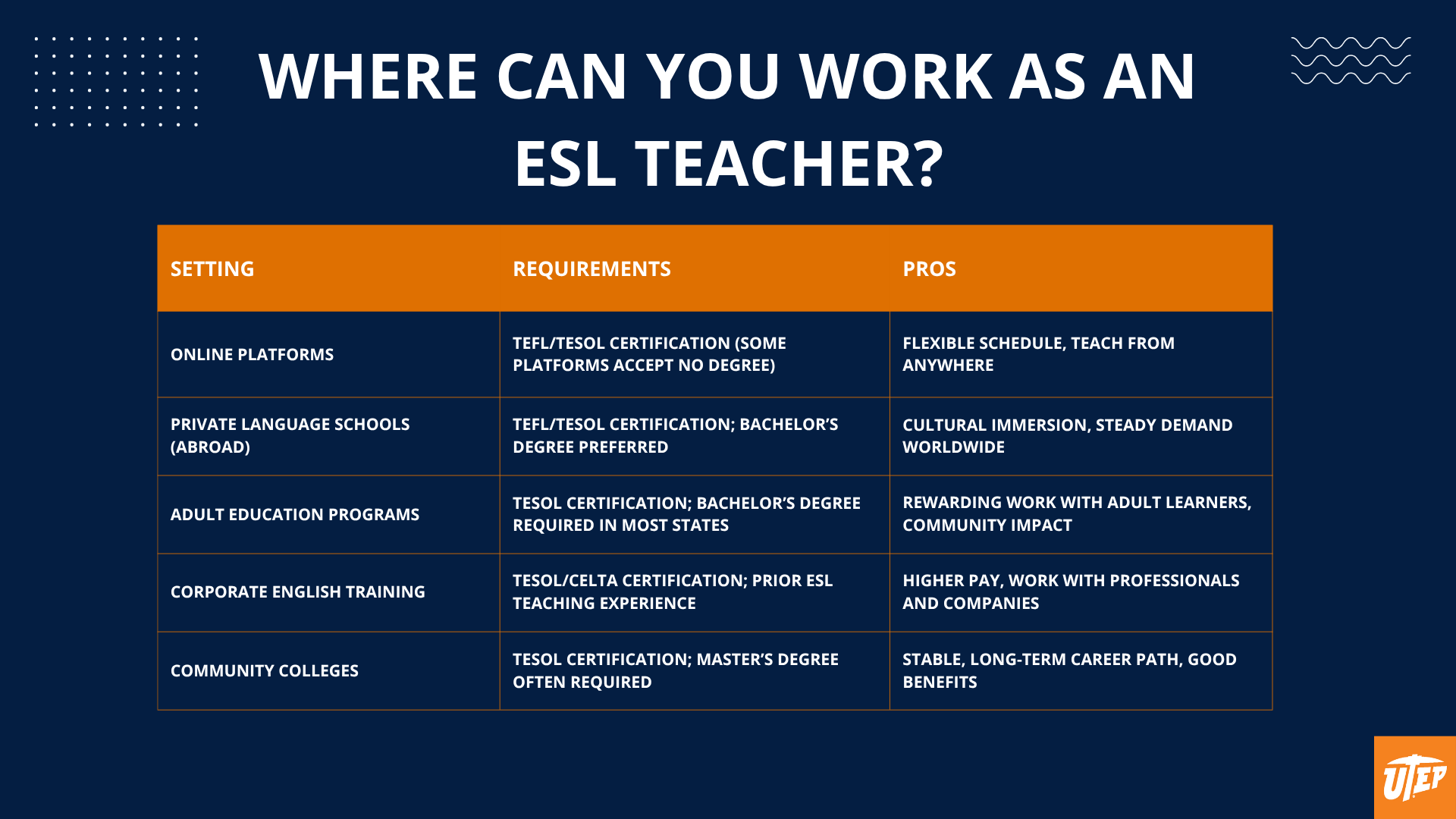
One of the biggest advantages of becoming an ESL teacher is the wide variety of career paths available. You can teach almost anywhere English language instruction is needed. Here are the most common options:
1. K–12 Schools (U.S. and Abroad): Many ESL teachers work in public or private elementary, middle, and high schools.
2. Adult Education Programs: Community colleges, literacy programs, and continuing education centers frequently hire ESL teachers.
3. Language Institutes and Academies: Private language schools exist in nearly every country and often serve a mix of children, teens, and adults.
4. Online ESL Teaching: Platforms like Preply, Cambly, and iTalki connect you with students around the globe and allow you to set your schedule.
5. Corporate English Training: Many global companies hire ESL instructors to provide English training for their employees.
6. University and College Programs: Institutions of higher education often have intensive English programs (IEPs) to prepare international students for academic coursework.
Learn how educators progress to leadership roles in How to Become an Early Childhood Director.
How to Become an ESL Teacher (With or Without a Degree)
Here’s your streamlined action path:
1. Start with a Certification (TEFL, TESOL, CELTA)
- Choose a TEFL (100+ hours) or TESOL course from a reputable provider.
- Look for a program that includes teaching practicum or job placement assistance.
- No degree? A good TEFL certificate can still get you hired.
2. Build Teaching Experience Immediately
- Tutor English learners online through platforms like Cambly or Preply.
- Volunteer with immigrant communities or ESL nonprofits.
- Record sample lessons to build a demo portfolio.
3. Pick Your Teaching Setting
- Want to teach abroad? Research visa and degree requirements by country, and check job boards like TEFL, Dave’s ESL Café, or GoAbroad for open positions in schools and language institutes around the world.
- Want to teach online? Set up profiles on ESL marketplaces like Cambly, Preply, or iTalki and optimize your intro video to attract students. You can also use job boards like Teach Away or ESL Base to find virtual teaching positions with established companies.
- Want to teach locally? Look into substitute roles, adult education programs, community colleges, and local job boards or district websites for ESL openings.
4. Apply with Confidence
- Highlight certifications, teaching experience, and intercultural skills.
- Customize your resume for each job (online vs. in-person, kids vs. adults).
- Follow up after applying. ESL hiring cycles move fast.
5. Want to advance further (if you already have a bachelor’s degree)?
Consider These Advanced Programs:
- Master of Education in Bilingual Education: Prepares you for leadership roles and advanced teaching positions in bilingual or dual-language settings.
- Master’s in Special Education with a Concentration in Bilingual Special Education: Opens doors to specialized roles working with diverse learners in public and private schools.
- Graduate Certificate in K-12 English Language Learning (ESL): Ideal for certified teachers seeking to prepare for state ESL supplemental certification.
Note: These programs require a bachelor’s degree for admission and can position you for higher salaries, long-term career growth, and eligibility for K–12 public school or administrative roles.
Considering further credentials? Read Do Teachers Really Need a Master’s Degree? for insight.
How to Become an ESL Teacher Without a Degree
It is possible to teach English without a degree, especially online or abroad in countries with more flexible hiring policies. However, your options will be more limited compared to teachers who hold a bachelor’s degree or pursue advanced credentials.
Without a degree, you’re less likely to qualify for public school positions, long-term contracts, or higher-paying roles. That said, there are still pathways to start gaining experience and building your career.
Focus on:
- TEFL Certification: Non-negotiable for credibility.
- Online Teaching Jobs: Sites like Cambly, iTalki, and AmazingTalker hire non-degree holders.
- Entry-Level Programs Abroad: Countries like Costa Rica, Mexico, Cambodia, and some Eastern European nations hire ESL teachers without degrees, especially if you’re certified.
- Private Tutoring: Offer conversational English or exam prep (IELTS, TOEFL) via social media or local networks.
Highlight native fluency, communication skills, and your ability to engage learners. Experience often trumps academic background, especially in online teaching.
If you want to boost earnings, see Bilingual Teacher Salaries: What to Expect and How to Earn More.
How to Become an ESL Teacher for Adults
Teaching adults is a growing niche, driven by immigration, career advancement, and continuing education.
Take These Steps:
- Specialize Your Certification
- Choose a TEFL/TESOL program with modules on adult education or business English.
- Or pursue a CELTA, which focuses on teaching adults.
- Learn Adult-Centered Methodology
- Focus on real-world English, needs assessments, and functional language (emails, interviews, presentations).
- Use task-based learning, roleplay, and case studies.
- Target These Jobs
- Community college ESL programs
- Corporate language training firms
- Job-readiness or workplace English programs for immigrants
- Private coaching (business professionals, international graduate students)
Download free adult ESL lesson plans from reputable sites (ESL Library, British Council, or VOA Learning English) and adapt them for your learners.
Looking at long-term career growth? Discover What Can I Do with a Master’s in Education? for advanced opportunities.
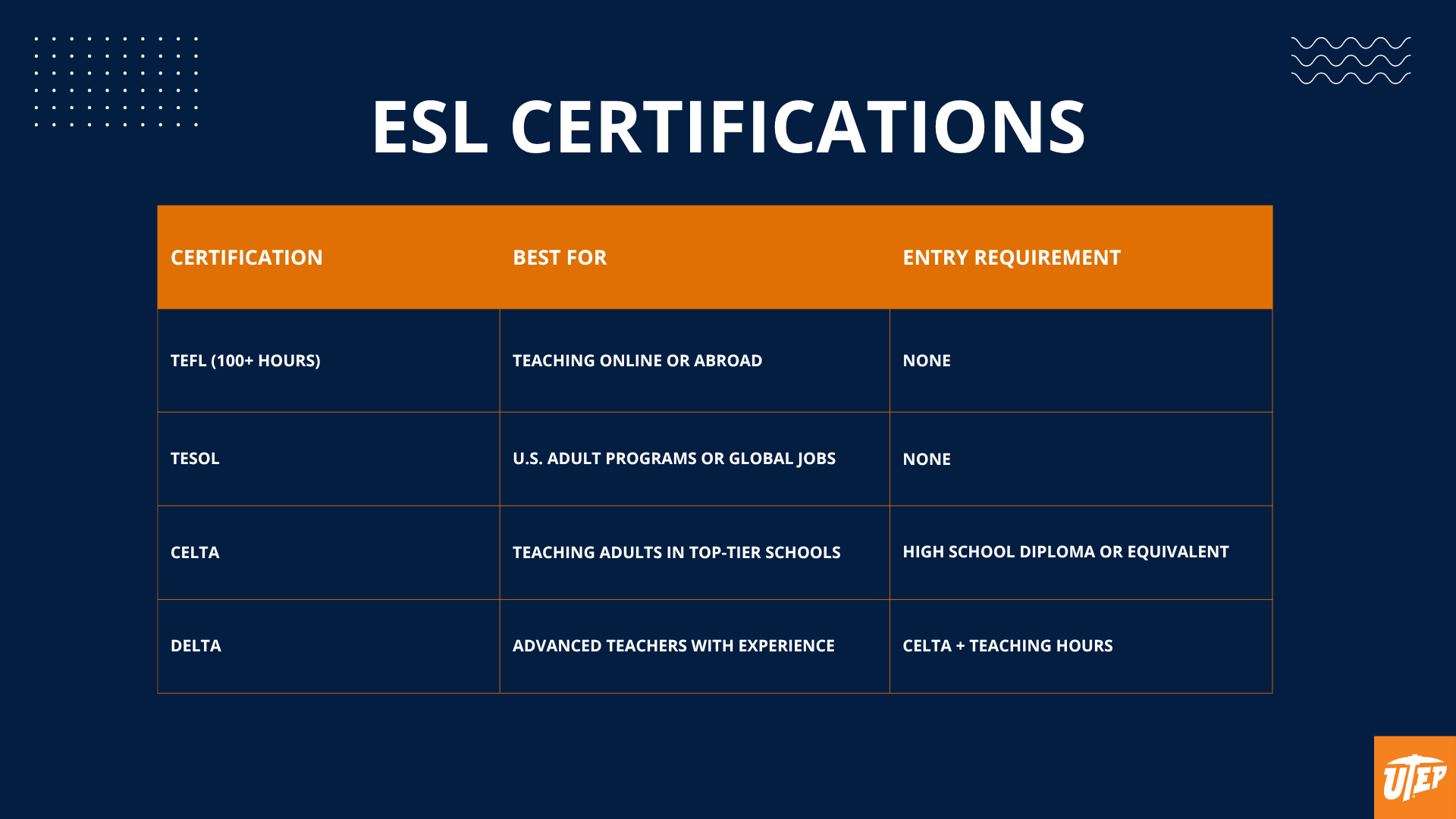
Key Certifications to Launch Your ESL Career
The right certification can open doors to better jobs, higher pay, and greater flexibility as an ESL teacher. While there are many programs available, some carry more weight with employers than others. Below are the most recognized certifications in the field and who they’re best suited for.
UTEP also offers the Online Graduate Certificate in K-12 English Language Learning (ESL).
- Designed specifically for certified teachers who want to prepare for state ESL supplemental certification.
- Fully online and can be completed in as few as two semesters.
- Courses can be applied to the M.Ed. in Bilingual Education or the M.A. in Linguistic Diversity and Educational Equity.
- Provides the intensive training needed to teach K–12 English learners in ESL classrooms and across content areas.
Note: This program requires a bachelor’s degree for admission and does not lead to initial teaching certification.
Planning to advance academically? Check out Master’s Degrees for Teachers to see how graduate credentials can boost your options.
Ready to Take the Next Step?
Teaching English as a Second Language is a rewarding career, but the proper training can make all the difference. If you’re ready to expand your opportunities, increase your earning potential, and make a bigger impact in the classroom, explore the flexible online programs we’ve designed for busy teachers like you.
Discover all of our online programs and find the perfect path to grow your ESL teaching career.


