
7 Reasons to Pursue Your RN to BSN (and Why a BSN in Nursing Is Important)
According to the American Association of Colleges of Nursing (AACN), the number of nurses holding a Bachelor of Science in Nursing (BSN) is at an all-time high. For the first time in history, over 70% of the U.S. nursing workforce has earned a BSN.
But why is the BSN in nursing so important? And what makes it a smart move for RNs who want to advance their careers? Below, we share seven compelling reasons to be a nurse with a BSN, from higher salaries to better career opportunities.

Reasons to Become a Nurse with a BSN
1. High Employer Demand for BSN-Prepared Nurses
Healthcare providers are increasingly prioritizing BSN-prepared nurses. AACN data shows that 71.7% of employers prefer candidates with a BSN, and 41% require it. Even more impressive, 76% of BSN graduates had job offers by the time they graduated, a higher employment rate than both ADN and MSN graduates. This strong demand makes the BSN one of the most valuable credentials for nurses in today’s job market.
2. Higher Earning Potential (Including BSN Salaries in Texas)
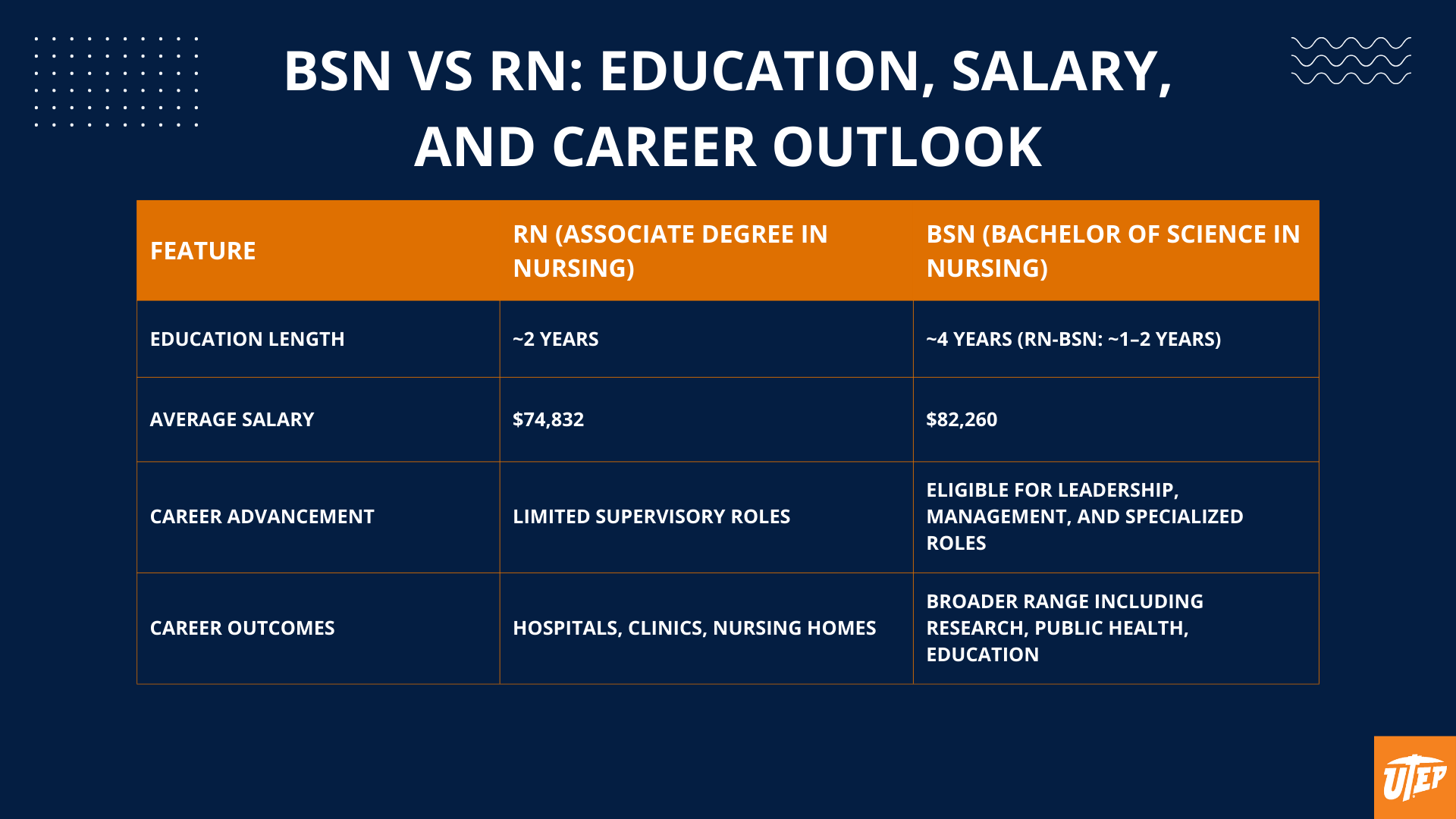
If you’re wondering about the salary of a BSN in Texas, the numbers speak for themselves. According to Payscale, the average BSN salary is around $82,260, compared to $74,832 for those with an ADN (Associate's Degree in Nursing). In Texas specifically, BSN salaries often reflect the state’s high demand for skilled nurses, with opportunities in large healthcare systems, specialty hospitals, and leadership roles.
The combination of employer demand and advanced education means that BSN-prepared nurses can earn more from the start and qualify for higher-paying specialty positions.
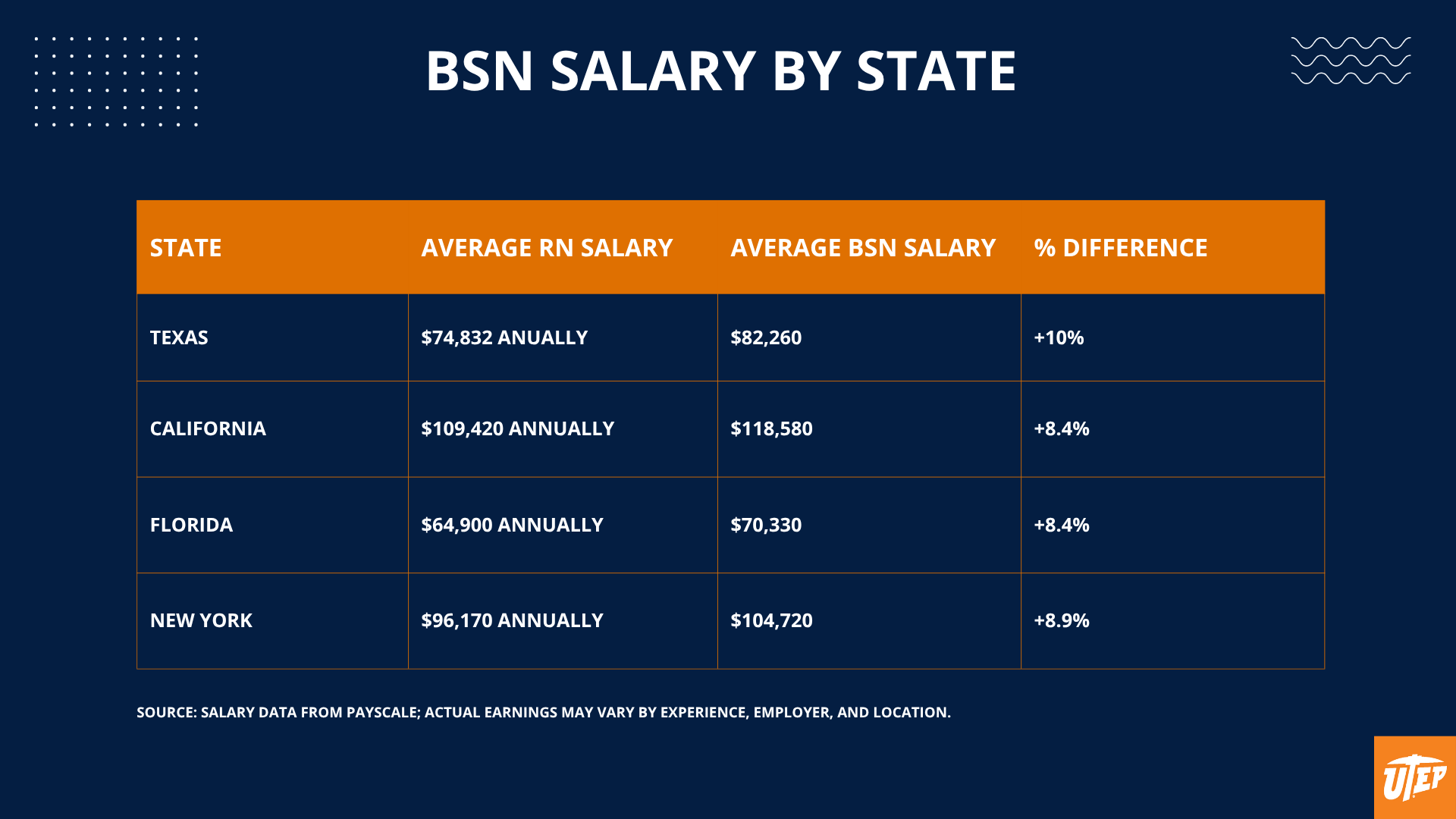
If you're wondering whether a BSN is worth the investment, the latest salary data makes a compelling case. Texas takes the lead with a solid 10% BSN advantage: bachelor's-prepared nurses there earn $82,260 compared to $74,832 for associate degree holders, which adds up to an extra $7,428 each year. California nurses see the highest paychecks overall, with BSN holders earning $118,580 versus $109,420 for ADN nurses, creating a $9,000+ annual advantage despite the state's higher cost of living.
This isn't just a regional trend: Florida and New York show similar BSN advantages of 8.4% and 8.9%. These consistent differences across such diverse markets suggest that hospitals and health systems recognize the value of that additional education. When you're looking at potential earnings over an entire nursing career, those annual advantages can add up to substantial financial gains that make the BSN investment worth considering.
3. Better Patient Outcomes
One of the top reasons to go into nursing is the opportunity to make a real difference in patients’ lives. Studies consistently show that BSN-prepared nurses are linked to better patient outcomes. An Institute of Medicine (IOM) report found that a 10% increase in nurses with a BSN correlates with a 4–5% decrease in patient deaths. This is largely due to BSNs’ stronger technical foundation, critical thinking skills, and communication abilities.
4. Qualification for Leadership and Academic Roles
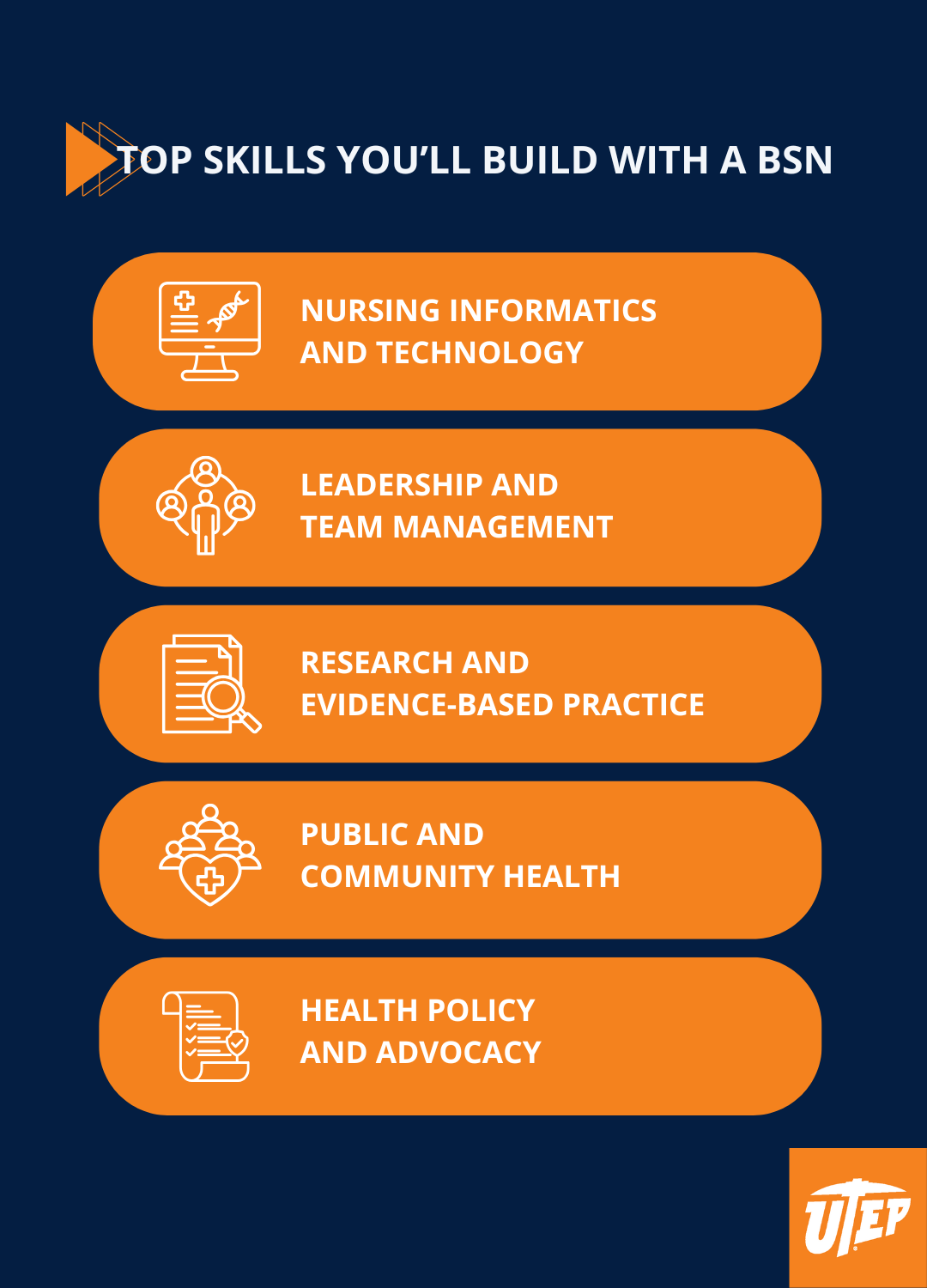
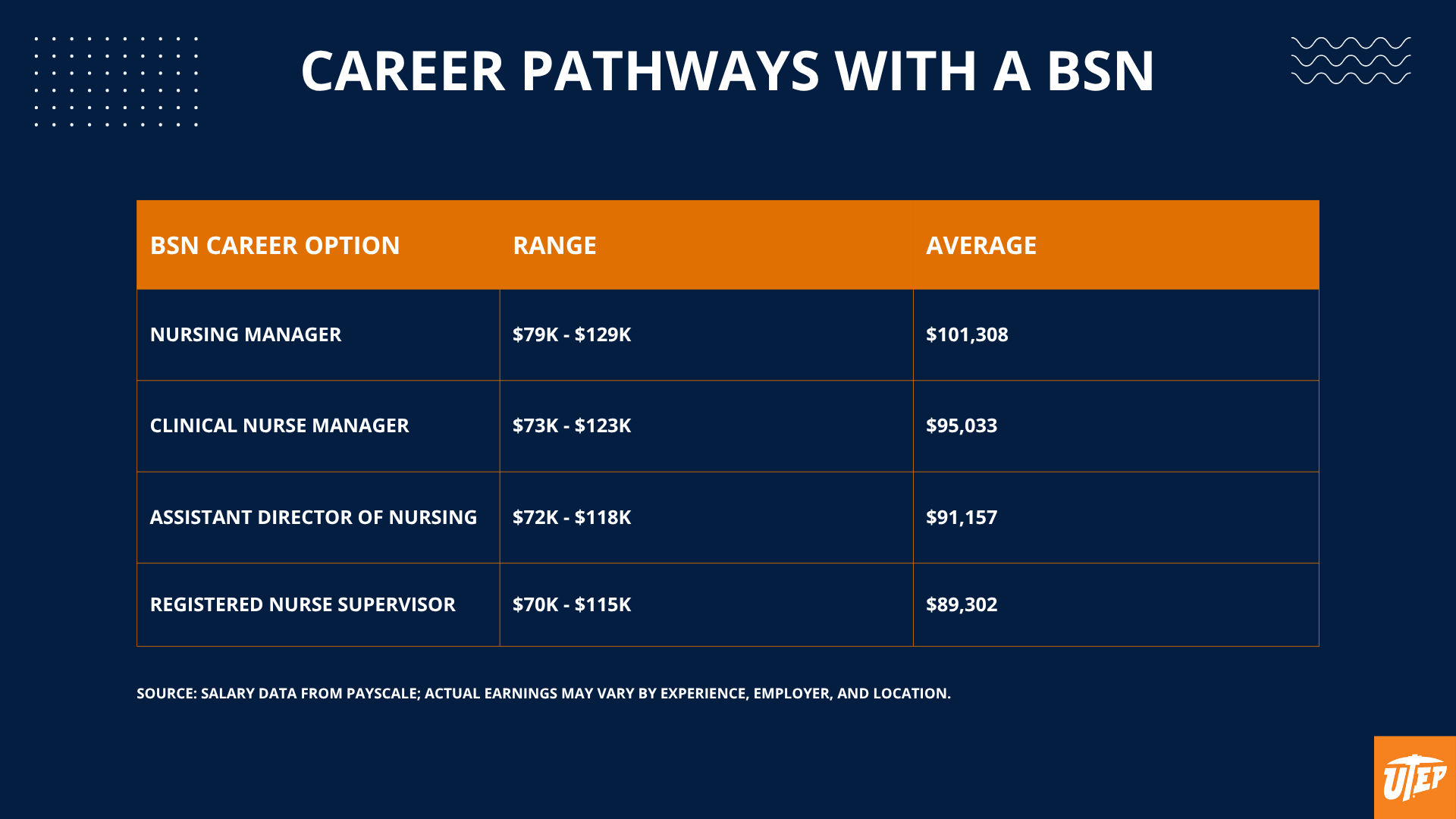
If you aspire to leadership, a BSN can open the door to positions such as nursing manager, clinical nurse manager, assistant director of nursing, or registered nurse supervisor. For those who prefer education over administration, BSNs can also lead to teaching positions in nursing schools, teaching hospitals, or universities.
5. Flexible Work, Life, and School Balance
Many working RNs successfully earn their BSN without leaving their jobs. RN to BSN programs, like UTEP’s, are designed with flexibility in mind, offering online courses that adapt to your schedule. Employers often provide tuition assistance or reimbursement, making it even more affordable to pursue this valuable credential.
6. Strong Career Outlook
Nursing remains one of the most in-demand and stable career paths in the U.S., and BSN-prepared nurses are especially well-positioned to benefit. Employers increasingly prefer or require a BSN, and the AACN continues to champion the goal of having 80% of RNs hold this degree. That focus, combined with the ongoing nationwide nursing shortage, means graduates can expect strong job prospects, career stability, and a wide range of advancement opportunities.
According to the AACN’s latest nursing enrollment report, enrollment in entry-level BSN programs rose by 4.9%, adding more than 12,000 students, marking the second consecutive year of growth after a recent dip. Applications to these programs increased by 8.5%, showing renewed energy and interest in the profession.
For aspiring nurses, this momentum in BSN and advanced degrees reflects a promising career landscape with growing opportunities to lead, specialize, and advance.
7. Achievable and Affordable with UTEP’s Online RN to BSN
UTEP’s RN to BSN program is 100% online, affordable, and designed for working nurses. You can finish in as few as 12 months and start enjoying the benefits of your BSN right away. Our world-class faculty — led by Dr. Janise Tinsman — ensures you get the education and support you need to succeed.
Take the Next Step in Your Nursing Career
If you’ve been considering advancing your education, now is the time. A BSN not only improves your earning potential and career prospects, but also enhances your ability to provide top-quality patient care.
Explore UTEP’s Online RN to BSN Program


