
UTEP MBA Alumnus Mick Martinez Connects Business Strategy, Community Impact at La Nube
The Big Picture
Mick Martinez once wanted to be a Disney Imagineer.
He was drawn to creativity, imagination and the power of experiences to move people — to make them see the world differently.
Today, that same creative foundation helps guide his work as Chief Strategy Officerat La Nube, where imagination is part of the mission, and strategy makes the mission last.
Martinez, a UTEP MBA alumnus, is one of three co-CEOs at La Nube, El Paso’s community-centered STEAM discovery center. His work combines creativity, operations, finance and strategy.
“Strategy gave me the language and discipline to connect imagination with operations,” Martinez said. “It helped me turn creative ideas into plans people could understand, support and bring to life.”
Why It Matters
La Nube is built around a big mission: To ignite imagination and inspire children of the Borderplex to discover, create and innovate.
Behind that mission is a serious business challenge.
Families need access, programs and staff need resources — and partnerships need structure. The nonprofit needs earned revenue, philanthropy, operations, planning and financial discipline to remain strong over time.
Martinez said that is where strategy — and the education he received at UTEP — become essential.

“Strategy is the bridge between our purpose and our responsibility.
Mick Martinez, UTEP MBA alumnus
“At La Nube, strategy means turning a big, hopeful mission into real decisions, real action and real impact,” he said. “Strategy is the bridge between our purpose and our responsibility.”
La Nube’s work is rooted in joy, curiosity and imagination, but those outcomes require planning behind the scenes, Martinez said.
“The joy families experience here is very real,” Martinez said. “But so is the planning, collaboration and financial discipline required to make that joy possible.”
UTEP MBA: Creativity to Strategy
Martinez’s path to business leadership did not begin in a traditional business setting.
His undergraduate background is in graphic design and media advertising, where he learned how design, storytelling and the user experience shape how people understand ideas.
That foundation expanded through leadership roles at UTEP, including Director of Marketing in Student Affairs and Assistant Vice President for Enrollment Marketing.
As his responsibilities grew, Martinez began to see the business systems behind creative work.
He learned that a strong idea is only the beginning. To bring it to life, leaders must understand budgets, people, operations, timing, trust and execution.
“Creativity is powerful,” Martinez said. “Inside an organization, an idea only becomes real when you understand the systems around it.”
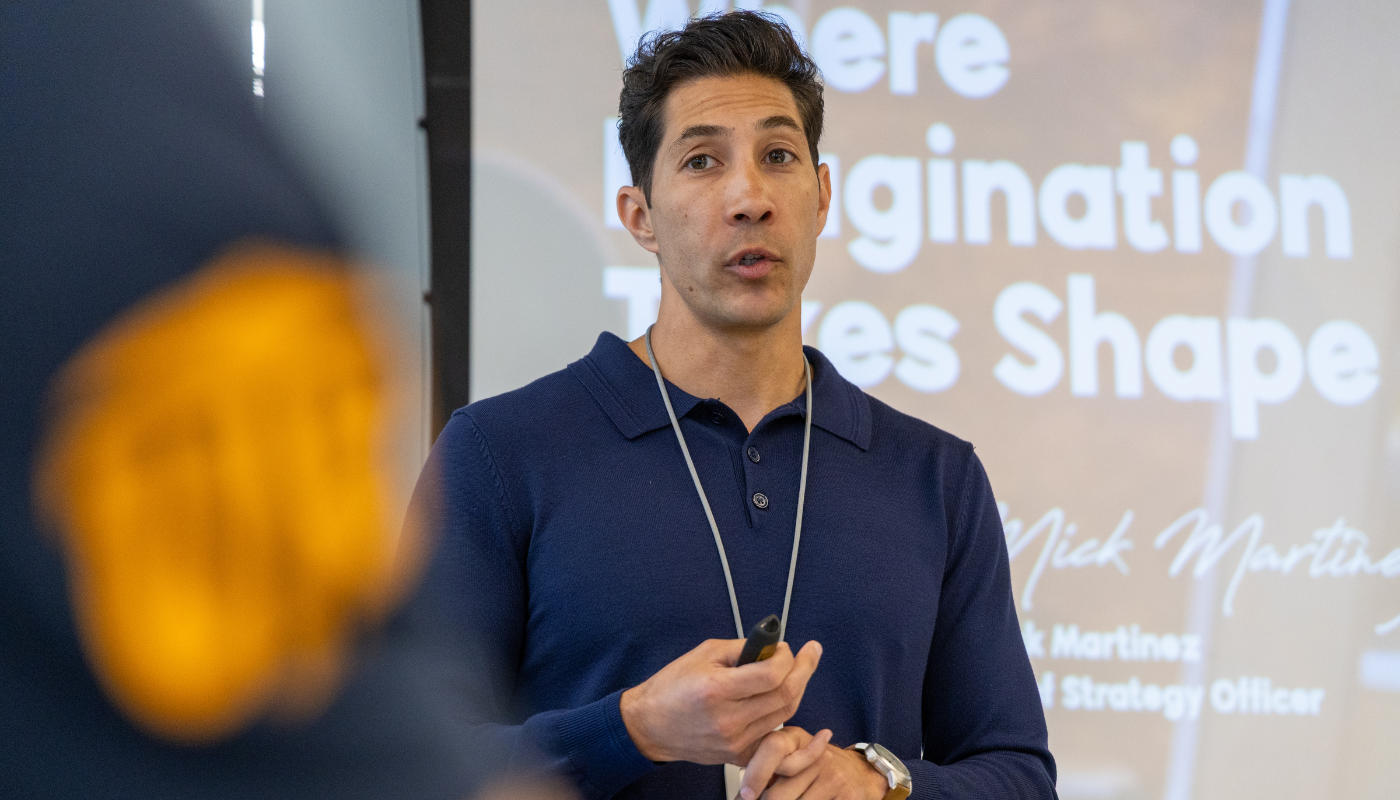
Martinez’s work at La Nube connects imagination with the business systems that help sustain access, programming and community impact.
The UTEP MBA Program strengthened and developed that perspective.
Martinez said one of the most valuable parts of the program was learning alongside classmates from different industries, roles and educational backgrounds.
That dynamic challenged him to listen differently, question assumptions and understand how the same problem can look different depending on where someone sits.
The UTEP MBA Program also trained him to think across functions — finance, operations, marketing, people, risk and sustainability — instead of looking at a project in isolation.
“A decision about a program is also a decision about revenue, staffing, access, guest experience, community impact and mission alignment,” Martinez said. “Very few meaningful things are accomplished alone.”
Inside the Work
Martinez sees La Nube as both a mission-driven organization and a startup.
That means the organization has to lead with imagination while staying disciplined about its business model.
Very few meaningful things are accomplished alone.
Mick Martinez, UTEP MBA alumnus
La Nube relies on earned revenue, programming, partnerships, philanthropy, donor support and public support. Martinez said those financial conversations protect the mission of La Nube.
“We talk often about imagination, access, learning and community impact,” Martinez said. “But we also have to talk about revenue, expenses, cash flow, pricing, earned income, philanthropy and long-term sustainability.”
of La Nube guests connect with the discovery center through La Nube for All and related access programs.
That work matters because access is central to La Nube’s purpose.
Martinez notes more than 37% of La Nube guests come from families who may not otherwise have the financial resources to visit, through ticket access programs and other La Nube for All efforts.
“Access at that level is inspiring,” Martinez said. “It also requires discipline, creativity and a resilient strategy.”
Leading a Learning Organization
La Nube encourages children to experiment, take risks, iterate and make discoveries.
Martinez believes the organization itself has to operate the same way.
Leadership, he said, means creating the conditions for people to test ideas, learn from mistakes, pivot when needed and keep improving.
“Lifelong learning starts with humility,” Martinez said. “No matter what title you hold or how much experience you have, there is always something to learn from the people around you.”
Martinez cites a vast network of mentors, colleagues, frontline staff, community partners, professional networks, conferences, reading and online education as his wayfinders for learning.
The Takeaway
Martinez encourages business students to think broadly about where their degrees can take them.
A business education, he notes, can lead to corporate careers — but it can shape work in nonprofits, cultural institutions, schools, public agencies, startups and community organizations.
A meaningful career does not mean you have to choose between impact and ambition.
Mick Martinez, UTEP MBA alumnus
“A meaningful career does not mean you have to choose between impact and ambition,” Martinez said. “You can do challenging, high-level, strategic work in places that directly serve people and strengthen communities.”
For students still figuring out how business connects to community impact, Martinez offers a direct answer: Communities need sustainable models, responsible resource management and leaders who can turn ideas into action.
“A business degree gives you tools,” Martinez said. “The question is where you choose to apply them.”
Last Updated on June 04, 2026 at 6:20 PM | Originally published June 04, 2026
Posted by Hunt Creative


