
Hunt Business Students Present Research at Tec de Monterrey Puebla
The Big Picture
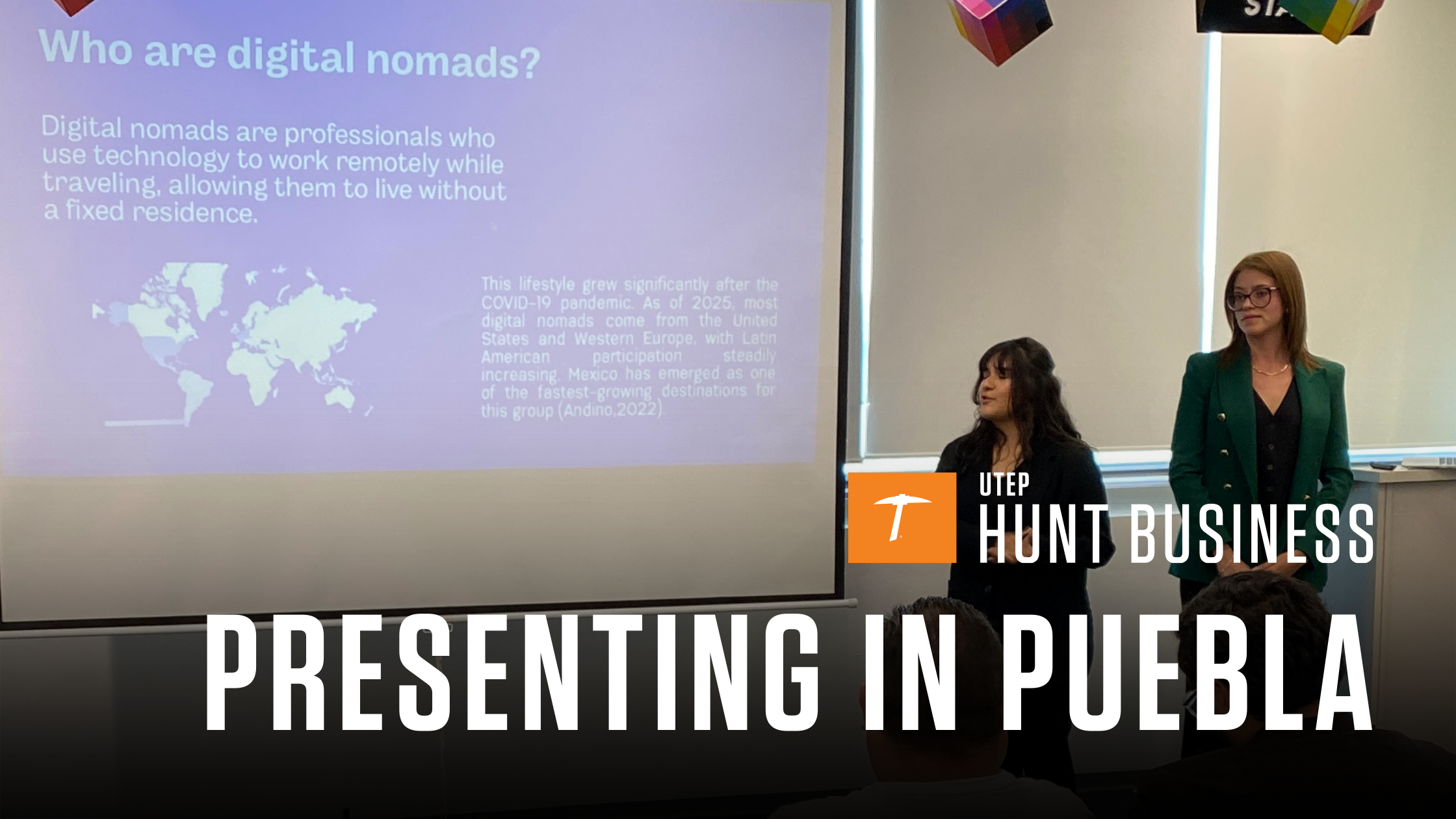
Two Hunt Business students, Mariel Yeverino and Marissa Ramirez, traveled with Associate Professor of Economics Jose Bucheli to the Tec de Monterrey Campus Puebla. There, they presented research conducted under the mentorship of Assistant Professor of Economics Rhet Smith alongside Tec students as part of an ongoing cross-campus collaboration. Over three days, the group participated in academic programming, met with faculty and students, and explored the historic centers of Puebla and Cholula.
Why It Matters
Opportunities like this provide Hunt Business students with direct experience in international research communities — an experience that both students described as meaningful, motivating, and unlike anything they had done before. The visit also strengthened UTEP’s partnership with Tec de Monterrey Campus Puebla and reinforced the value of creating similar opportunities for future cohorts.
What Happened
The visit opened with a team briefing on campus, followed by a full academic day that included:
- Final presentations in the Economic Competition with Tec’s social partner, Bitácora Social.
- Research presentations, where Yeverino and Ramirez delivered the final presentations, followed by a discussion with faculty and guests.
- Gender Week Conversation with Economists, a roundtable highlighting leadership and diversity in the discipline.
- Academic poster fair, with walkthroughs and feedback from faculty and invited guests.
The trip also included campus meetings, time with hosts, and cultural visits to downtown Puebla and the Cholula Pyramid complex.
Research Spotlight
Mariel Yeverino
Yeverino's project analyzed eight years of household data from ENIGH (2016–2024) to understand whether remittances act as an informal safety net in Mexico’s health and education systems.
She found that remittance-receiving households consistently spend a larger share of their budgets on health — especially during COVID-19 — and that these effects are strongest among poorer households with limited coverage. Educational spending effects were weaker and inconsistent, underscoring the structural barriers vulnerable households continue to face.
Marissa Ramirez
Ramirez's research examined where digital nomads are most likely to cluster across Mexico by constructing three indices based on services such as co-working spaces, cafés, gyms, cultural sites, and short-term rentals. Her results identify municipalities with the highest concentration of amenities associated with digital nomad behavior and the strongest potential to attract them in 2024.


