
MinerAlert
MinerAlert
An Emotional Support Animal (ESA), is not permitted on campus grounds. Emotional Support Animals (ESAs) are permitted to accompany a student only within their University-assigned residence, in accordance with the guidelines established by the U.S. Department of Housing and Urban Development and Section 504 of the Rehabilitation Act of 1973. However, ESAs are not permitted in any other University buildings or facilities outside the assigned residence.
The University supports the use of service and assistance animals on campus in compliance with applicable federal and state laws. At the same time, it recognizes the health and safety risks potentially created by unrestrained animals on campus. This policy discusses the processes and responsibilities involved with the use of service animals and assistance animals on campus. For additional information regarding Emotional Support Animals and Service Animals, please visit : https://www.utep.edu/student-affairs/cass/policies-and-guidelines/service-and-assistance-animals.html .
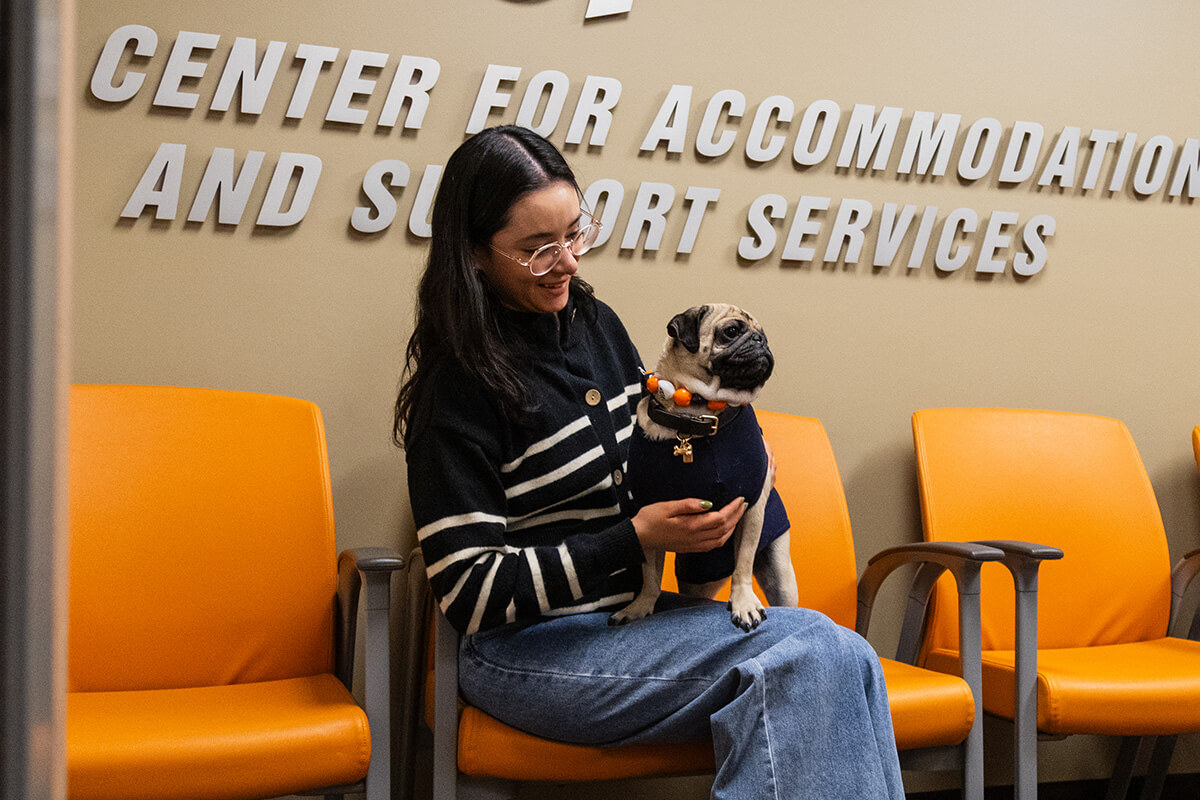
In accordance with federal and state law, the University of Texas at El Paso (UTEP) permits students with disabilities to keep an assistance animal within their UTEP housing assignment on University grounds.
However, assistance animals are not permitted in other University buildings, including campus dining facilities associated with the assigned University residential facility. Additionally, assistance animals are not allowed to accompany University employees into their workplace or any other University building.
Exception: Registered student organizations may hold stress reduction events, typically at the end of the semester, that include assistance animals. Interested organizations must submit an Event Request form via Minetracker to obtain all necessary approvals. Outdoor events involving assistance animals will be limited to Leech Grove or the Liberal Arts Lawn, depending on venue availability. Student organizations should review the Outdoor Space Policy for more information.
Typically, an assistance animal is prescribed by a community-based healthcare or mental health professional as an integral part of a person’s treatment process.
Documentation supporting an ADA accommodation request must follow University policy. The Handbook of Operating Procedures, Section VI, Ch. 2.4.4.2, specifies that:
The ADA policy can be found under ACCOMMODATIONS FOR INDIVIDUALS WITH DISABILITIES POLICY.
Students living in University housing are permitted to have no more than one service or assistance animal.
The Center for Accommodations and Support Services (CASS) is responsible for managing requests related to assistance animals in University housing. Students seeking approval to have an assistance animal in University housing must follow the procedures outlined on the following pages:
If a request for an assistance animal in University housing is denied, the student may appeal the decision to the University ADA Coordinator.